










Without GPS and constant communication: how AI is changing the operation of drones and missiles
Kyiv • UNN
AI helps drones and missiles navigate, recognize targets, and adjust their routes while electronic warfare is in effect. The technology cannot yet fully replace the operator.

Artificial intelligence is gradually becoming part of modern weaponry. It is used not only for data analysis but also directly in the operation of UAVs and missiles—for navigation, target recognition, and route adjustment. Such technologies are developing particularly rapidly amid the full-scale war in Ukraine. On the battlefield, satellite navigation can be jammed, while control channels can be disrupted. Under such conditions, software can take over some of the functions. UNN examined together with experts how AI is integrated into drones and missiles, what it provides in conditions of electronic warfare, and whether it can completely replace humans during the performance of a combat mission.
AI as a response to electronic warfare
One of the main drivers behind the development of autonomous systems has been electronic warfare. The enemy actively jams satellite navigation, control channels, and data transmission on the battlefield. As a result, a drone may lose contact with its operator or fail to receive the necessary navigation signals. AI could potentially solve this problem.
If artificial intelligence is capable of ensuring the operation of a weapon in the absence of the main communication or navigation channels, it can take over some control functions. Computer vision plays an important role here, enabling automatic target reacquisition. In such a case, electronic warfare may negatively affect the drone's operation for a certain period, but after communication is lost, control can be taken over by an autonomous control system, which will continue carrying out the programmed functions
However, he emphasized that it is still too early to talk about fully autonomous weapons.
I do not think that the operator will completely disappear from this process in the short term or even in the medium term. The operator will still be needed. Even if contact with the operator is lost, the operator can first guide the system to the area where the target is located, after which the drone begins searching for and identifying it independently. If, for example, a drone is tasked with flying 200 kilometers on its own, a system error may occur along the way. In such a case, the drone could potentially begin acting contrary to its intended purpose—including by creating a threat to friendly forces or civilians. Therefore, complete autonomy has serious limitations
Military analyst Oleksii Hetman, for his part, explained that modern AI in drones is primarily a complex computing system that can receive images from a camera, compare them with previously uploaded examples, and adjust the operation of the engines or control surfaces in order to direct its flight directly toward that target. At the same time, it does not "understand" the situation in the way an operator does.
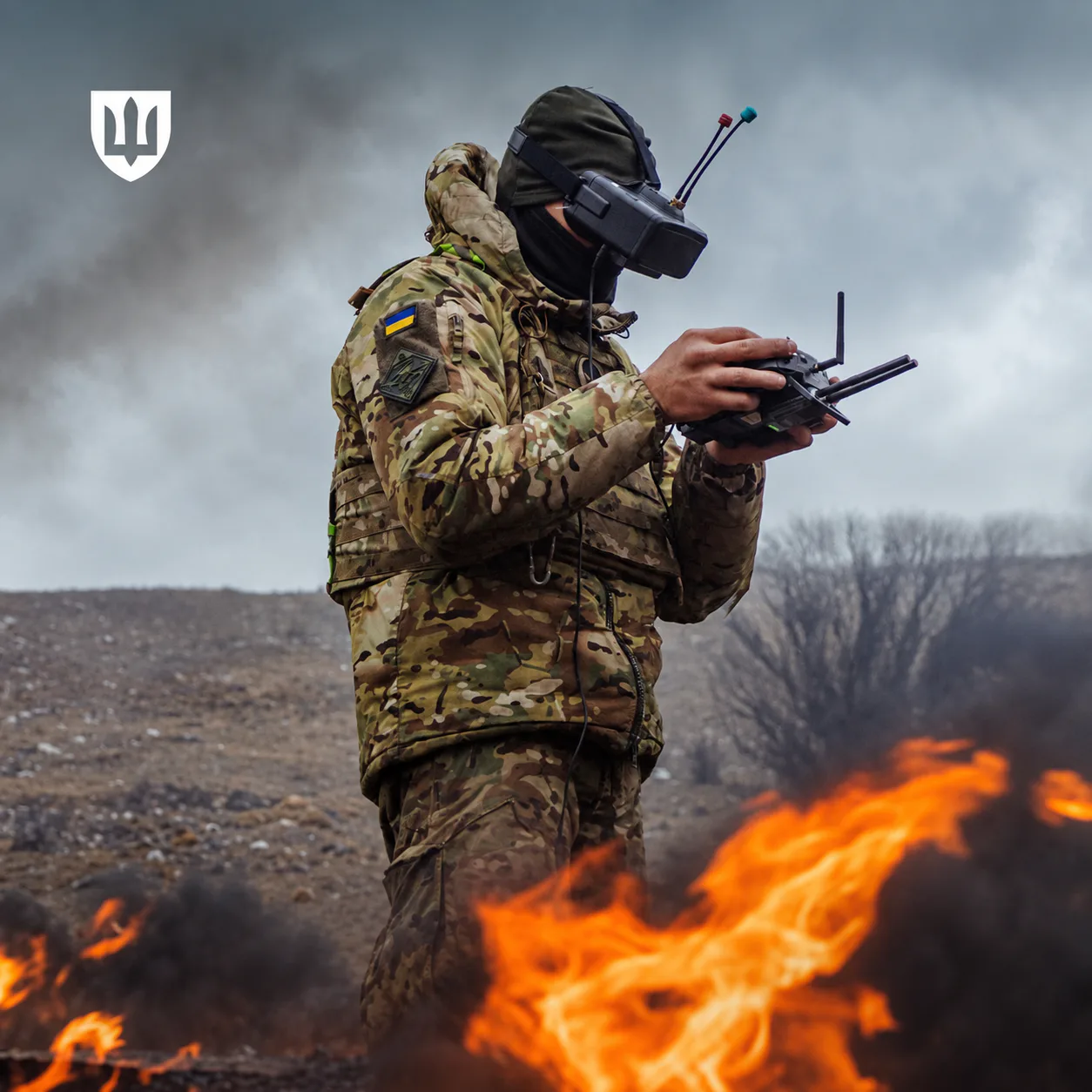
How AI differs in drones and missiles
Ukrainian companies are currently actively working on implementing AI in both drones and missiles.
We see the use of AI for target selection and recognition practically every time Ukrainian unmanned systems units demonstrate drones striking Russian logistics at long range. When, due to the distance from the operator or the inability to respond to a situation in real time within fractions of a second, the operator can no longer fully control the process, artificial intelligence comes into play. It helps guide the weapon directly onto the target. Moreover, this is not limited to automatic target reacquisition. There is another interesting aspect—the possibility of a drone operating autonomously. It can have a database containing images of various types of equipment—tanks, armored combat vehicles, and specialized transport—and carry out its assigned task independently
Another application of AI in drones is computer vision. The camera transmits an image, and the algorithm compares it with data prepared in advance. For example, photographs of equipment, infrastructure facilities, vehicles, or other characteristics of the target.
This allows the drone not only to move according to predetermined coordinates, but also to уточнювати its position directly during flight. In particular, the system can compare images of the terrain with a map and use the result for the final correction of the route.
According to Irina Terekh, CEO of the leading defense company Fire Point, the company uses precisely this approach.
We use it for visual comparison with a map in order to make the final correction of the target. But I would not say that this significantly changes the approach to using drones, since I still believe that the final decision should be made by a human
Irina Terekh noted that the company uses both the "man-in-the-loop" and "man-on-the-loop" approaches. The difference between these approaches lies in the level of operator involvement. In the first case, a human directly participates in the critical decision. In the second, the system independently performs certain stages of the task, but the operator can monitor its actions and retains the ability to intervene.
There are several options for this type of terminal operation. At present, we are primarily at the stage of collecting more accurate data for inertial platforms such as ours. At the same time, this helps correct the course and control the aircraft in the event of a prolonged loss of communication, since the system is capable of recognizing the target and making a final approach toward it. But at this stage, a human still has to be involved — "human-in-the-loop"
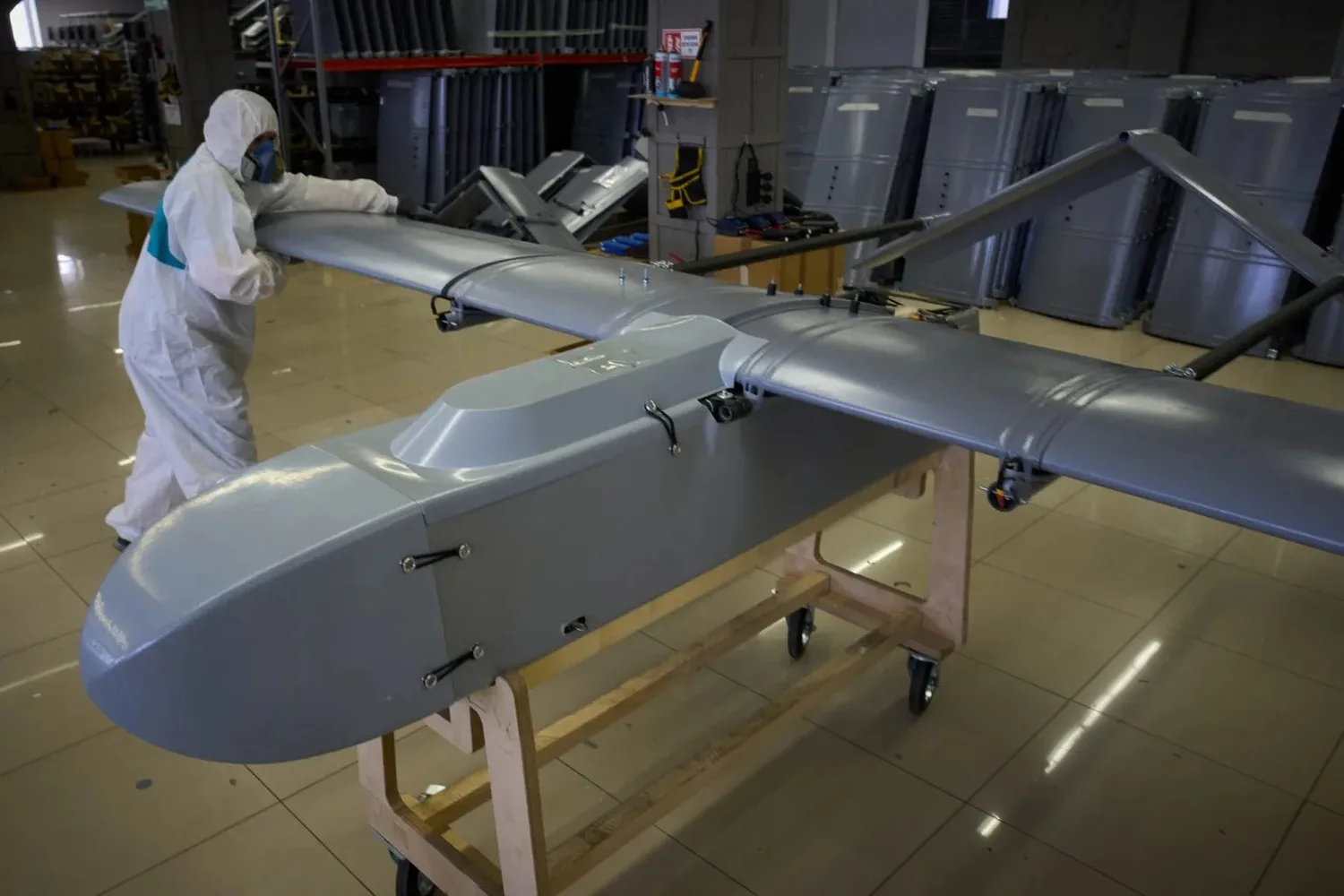
In missiles, the operating principles are similar, but the requirements are significantly higher because they move much faster. According to the expert, the task of AI in missiles may be related to the operation of guidance systems and increasing the accuracy of striking targets at given coordinates.
For example, if a missile enters the area of effect of electronic warfare systems and its primary systems are affected, artificial intelligence could potentially support the operation of individual systems, continue along the designated course and route, and also adjust guidance for a more accurate strike on the specified target
russia is also integrating AI into its attacks
In the conditions of a full-scale war, it is not only Ukraine that is improving its weapons. The enemy is also trying to use artificial intelligence to increase the autonomy of drones and counter Ukrainian electronic warfare systems.
The president’s freelance adviser on the development of technological areas of defense, Serhii "Flash" Beskrestnov, reported the use by russia of drones with elements of artificial intelligence. According to him, such systems can be used to make strike drones less visible to Ukrainian electronic intelligence.
At the same time, military experts note that there is no fundamental technological difference in the field of military artificial intelligence between Ukraine and russia.
Their drones with artificial intelligence operate according to similar principles. Artificial intelligence itself has no particular "national character" — its operating principle is the same regardless of whether the development is Japanese, Chinese, russian, European, or Ukrainian. The difference lies primarily in the speed of operation, memory capacity, computing power, and the component base on which the system is built. One board can be used, or another, but the operating principle remains the same
According to military expert Oleksandr Kovalenko, Ukraine is ahead of russia in creativity and high-tech development.
But this does not mean that Russia is significantly behind us. In certain areas, they may be approximately one or two steps behind. The difference is that Russia has more capabilities to counter such drones on its territory, in particular thanks to a greater number of air defense systems. They also have many problems and gaps in this system, but it works. We still have the problem of fully addressing the threat posed by jet-powered drones. And this issue should have been resolved not in an emergency mode over the course of a month, but as early as January 2024 — by preparing the appropriate range of means to be used after the enemy scaled up its use of jet-powered drones. Therefore, I would put it this way: technologically, we may be ahead of the enemy, but in practice, when it comes to responding to new threats, we often find ourselves behind
AI as part of the struggle for technological superiority
The war demonstrates that superiority increasingly depends not on a single specific technology, but on how quickly a country can develop, test, integrate, and use these technologies. Artificial intelligence is already being used to collect and analyze information, navigate without GPS, identify targets, and operate drones amid active electronic warfare. However, its main role at present is not to fully replace humans, but to transfer to the system certain functions that were previously performed by an operator.
For example, an operator can independently choose which vehicle to track or hunt for enemy servicemen. Artificial intelligence is not yet capable of making such decisions. It can identify an object that most closely matches an image or short video stored in its memory and head toward it. The main advantage here is that constant external control is not required. In a certain sense, a drone equipped with artificial intelligence cannot be confused by electronic warfare. It can continue carrying out the program embedded in it
That is why the struggle for technological superiority is increasingly turning into a struggle for data, computing power, and the ability to adapt to the new conditions of war.