










What to pack for a child’s school lunchbox and what to avoid — recommendations from the Ministry of Health
Kyiv • UNN
Half of the lunchbox should consist of vegetables, fruits and berries, and another quarter of protein-rich and whole-grain foods. The Ministry of Health recommends water and advises avoiding sweets.

A school snack should help a child remain energetic and focused throughout the day. A balanced lunchbox can be assembled without complicated dishes if vegetables and fruit, a source of protein, whole-grain products, and healthy fats are combined correctly. This is reported by the Ministry of Health of Ukraine, as UNN reports.
Details
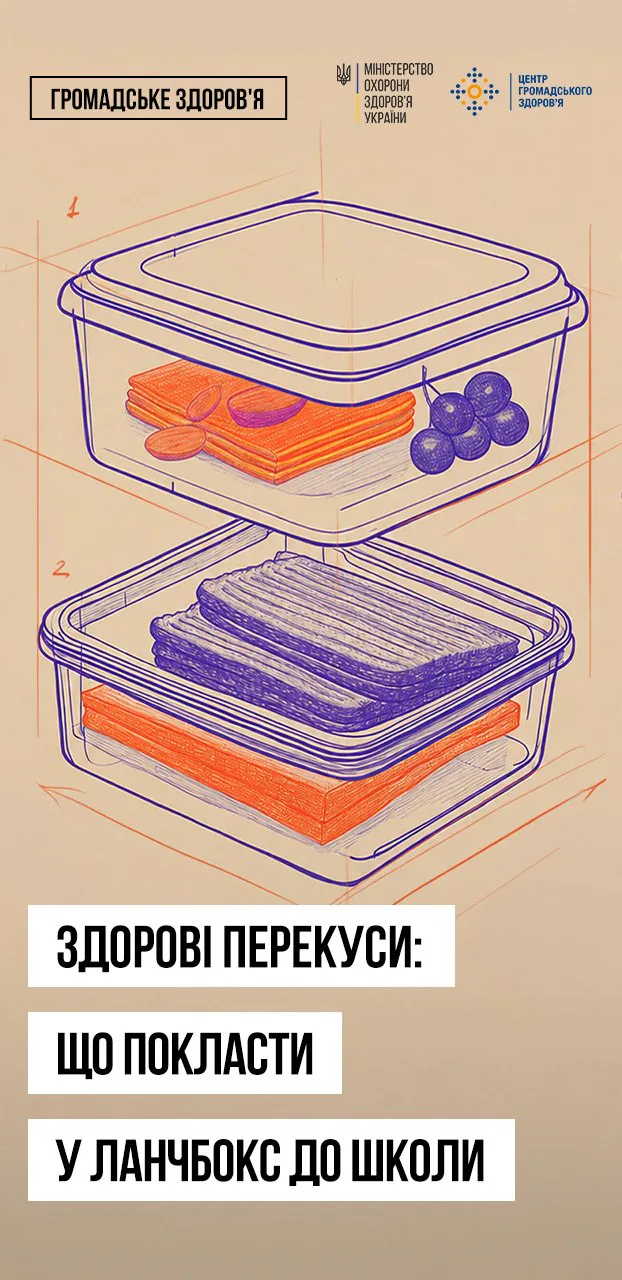
A school snack affects a child’s concentration, energy reserves and mood throughout the day. Parents often get lost among the advice and eventually put in the lunchbox whatever will simply "last" until lunch—sweets or sandwiches. In fact, preparing a tasty and healthy snack is not difficult if you follow the principles of the healthy eating plate
In particular, the ministry recommends using vegetables, fruit, and berries as the basis of a snack. They should make up approximately half of the entire lunchbox.
Give preference to seasonal products and make sure there is variety: the more colors, the better
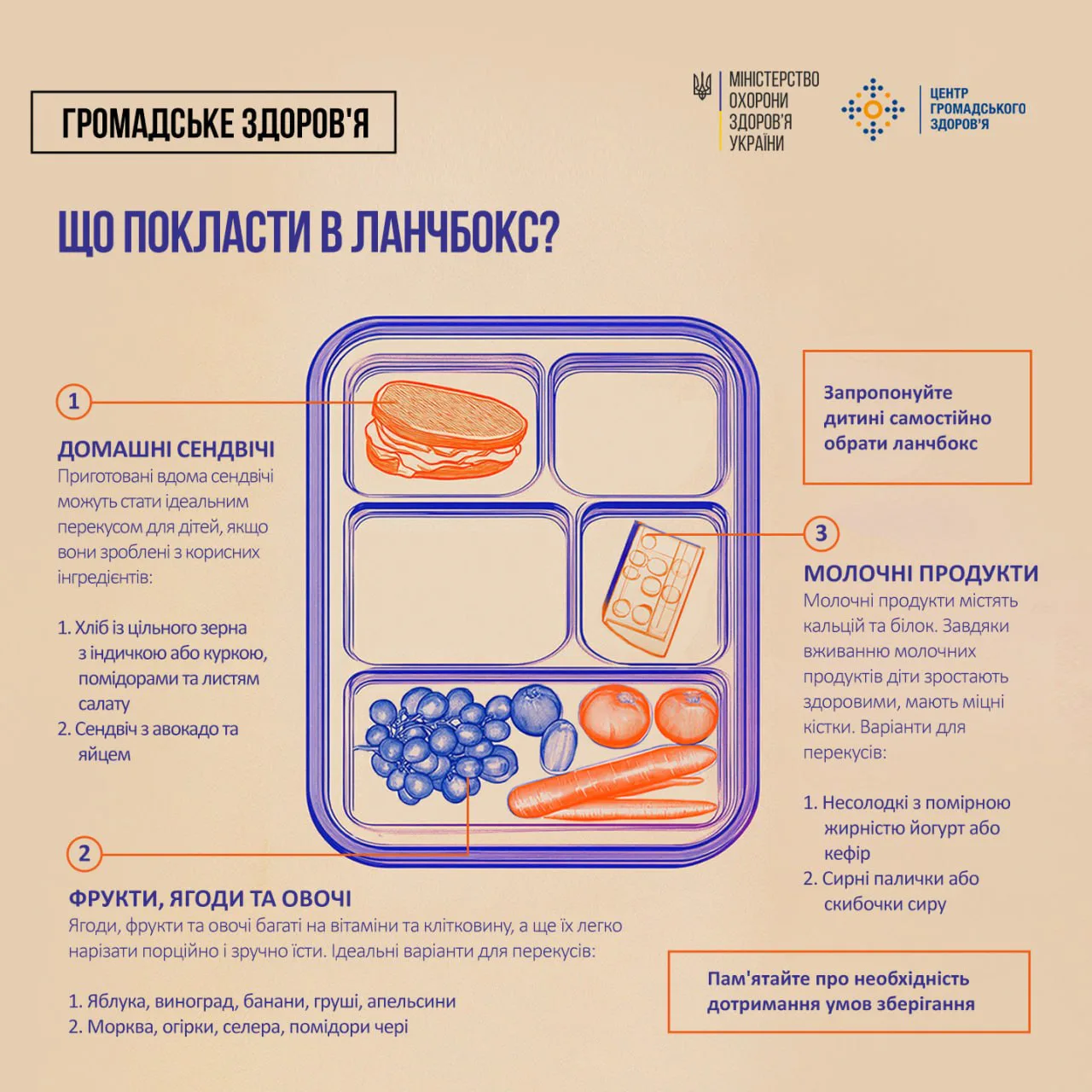
Another quarter should be allocated to foods rich in animal and plant protein. "baked chicken, stewed beans, boiled chickpeas, or homemade unsalted hummus, thick "Greek" yogurt without sugar, and so on. Adding plant-based protein to the diet is a simple way to diversify one’s diet and reduce the consumption of saturated fats, which meat dishes are often rich in
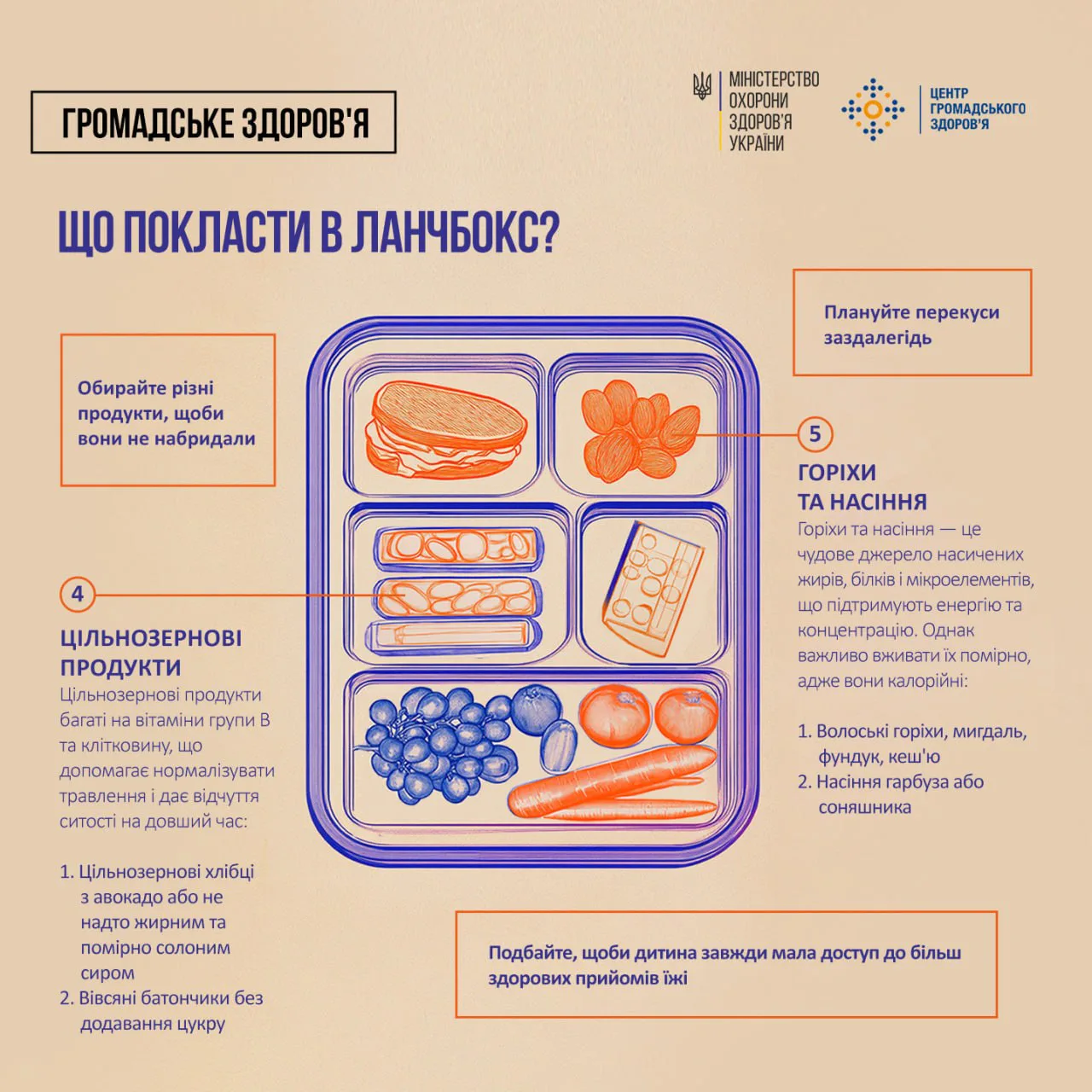
The remaining quarter can consist of whole-grain products: bread, crispbreads, homemade oatmeal cookies with minimal sugar content, or a small portion of porridge, no larger than a child’s fist. This can be oatmeal, buckwheat, pearl barley, brown rice, or quinoa. Such products contain complex carbohydrates and help keep children full longer, unlike fast simple carbohydrates (sugar).
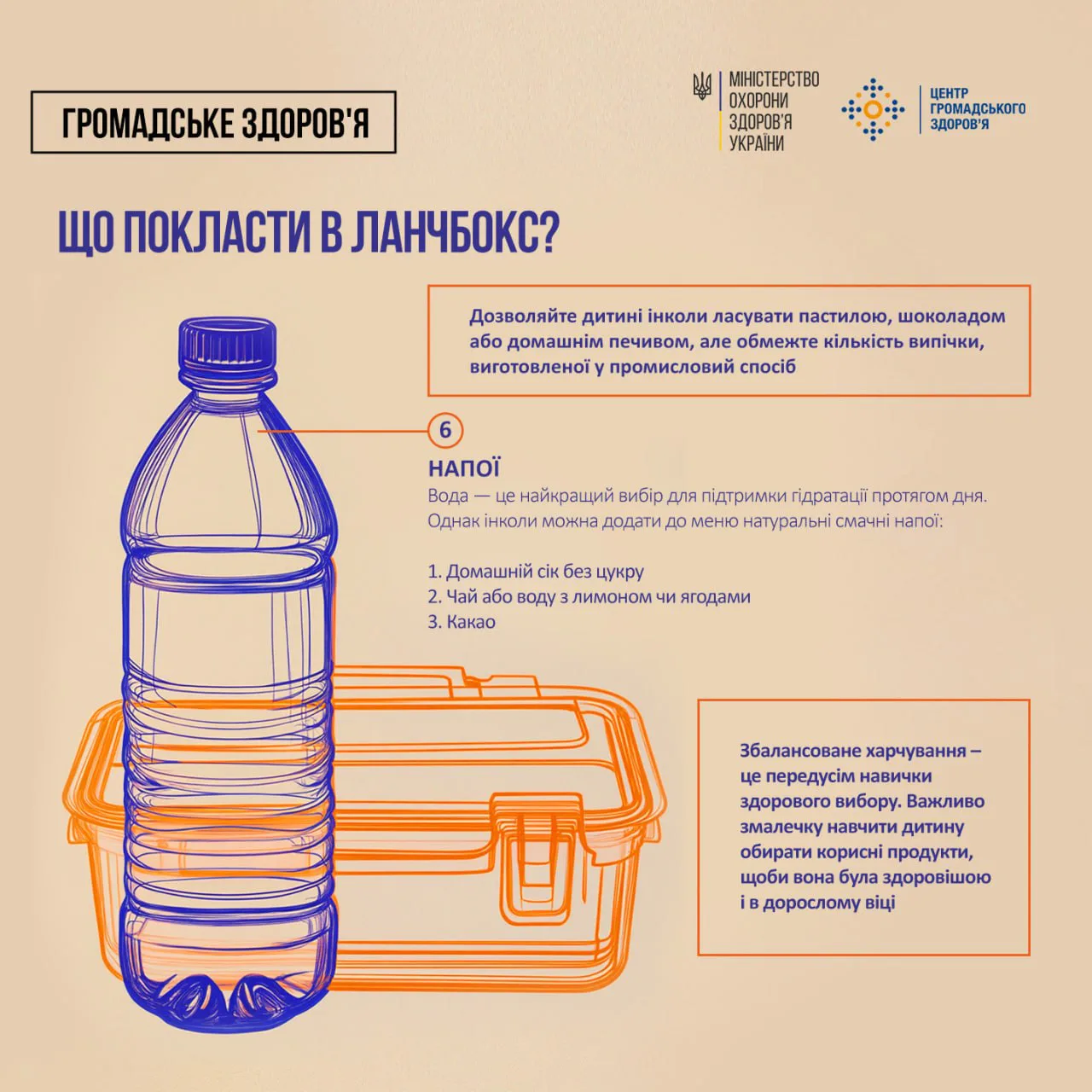
Nuts or seeds can also be added to a snack—they support the health of the cardiovascular system, brain, and skin and promote the absorption of vitamins. At the same time, it is best to give a child a bottle of plain water to drink. Unsweetened tea or compote without sugar are also suitable.
What is better not to put in a lunchbox
The Ministry of Health advises against putting the following "to take along":
- Foods that spoil quickly: eggs, fish, fatty meat,
soft cheese, and cream pastries. Products that require refrigeration must not be left at room temperature for a long time;
- Sauces (mayonnaise, ketchup, etc.): depending on their composition, they may contain a lot of fat, salt, and added sugar, and they also accelerate food spoilage;
- Foods high in salt: sausages, frankfurters, pâtés, processed cheeses, canned foods, etc.;
- Store-bought sweets: pastries, candies, and bars. It is
better to replace them with fresh fruit or berries. You can also add a small portion of dried fruit, homemade cookies with a minimal amount of sugar, or a few pieces of dark chocolate;
- Drinks with added sugar.
Let us remind you
Experts from Harvard University developed the "Healthy Eating Plate" model, which is a simple guide for forming a daily diet.