










Prices will continue to rise, with inflation expected to decline starting next year - NBU
Kyiv • UNN
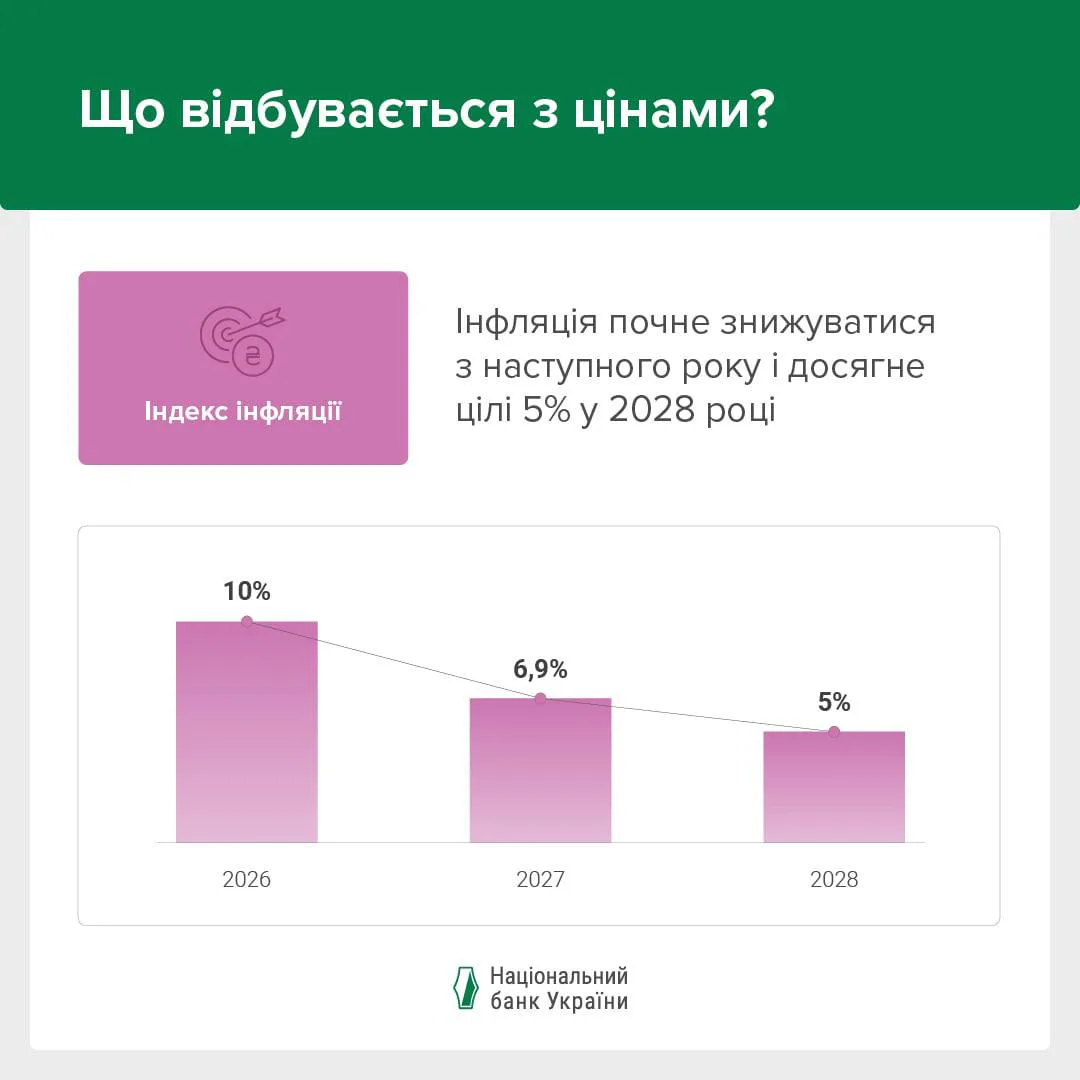
In July, inflation in Ukraine rose to 7.7% year-on-year. The NBU expects it to reach 10% by the end of 2026 and decline to 5% in 2028.

The rise in consumer prices began to accelerate in the summer, and this trend will continue through the end of 2026 — inflation is expected to reach 10%. A decline is forecast starting next year — to 6.9% in 2027 and 5% in 2028. The National Bank of Ukraine stated this on September 3, UNN reports.
What is happening with prices
At the end of spring and beginning of summer, inflation temporarily slowed, in particular due to the arrival of the new harvest of vegetables and fruit; however, it accelerated again in July.
In July, prices for goods and services increased by 7.7% year on year.
Why inflation is rising
According to the NBU, there are many reasons:
- higher electricity prices as a result of Russian shelling;
- higher fuel prices due to the war in the Middle East;
- increased business expenses for labor costs and resuming operations after air attacks;
- the weakening of the hryvnia exchange rate at the beginning of the year;
- robust consumer demand fueled by rising wages and high government spending.
What to expect next
The NBU expects inflation to accelerate to 10% by the end of the year. However, it will subsequently slow to 6.9% in 2027 and to the NBU's target of 5% in 2028.
According to the regulator's expectations, the following factors will contribute to this:
- a gradual reduction in budget expenditures;
- the full recovery of the energy sector as the security situation improves;
- increasing harvests, which will curb food price increases.
What the NBU is doing
At the same time, the National Bank promises to maintain "an active presence in the foreign exchange market to prevent excessive exchange-rate fluctuations." "And by means of a sufficiently high key policy rate, it will continue to support depositors' interest in hryvnia savings," the NBU notes.
These measures are expected to limit pressure on the hryvnia exchange rate and restrain elevated consumer demand, which is important for reducing inflation.