










"Death for big money": stories of clients of the scandalous Odesa clinic Odrex
Kyiv • UNN
"Wasp's Nest" – an investigation into the stories of patients of the Odesa clinic Odrex, where treatment costing hundreds of thousands of hryvnias ended in death, debts, and falsification of medical documents. Relatives of the deceased speak of aggressive financial pressure, possible medical errors, and systemic violations, demanding justice.

Odesa medical center "Odrex" found itself at the center of a high-profile scandal after the death of businessman Adnan Kivan within its walls. Two doctors - surgeon Viktor Rusakov and oncologist Maryna Bielotserkovska - were suspected, the latter was fired from the clinic almost immediately after the patient's death. After the publicity, other victims of the medical institution's doctors appeared, who shared their stories in the documentary film "Wasp's Nest," UNN reports.
Relatives of patients who were treated at the medical facility talk about the loss of loved ones, financial pressure, threats, and, in their opinion, gross violations of medical standards and even falsification of documents by clinic representatives, which may indicate the systematic nature of legal violations. People demand justice and insist that the clinic's main motivation was not the lives and health of patients, but to extract as much money as possible from their relatives.
"Death for a very high price": the story of Svitlana Huk
Svitlana Huk has been going to court for six years, reliving the story of her husband's death, who was treated at "Odrex." In 2019, the couple turned to the clinic with a diagnosis of a thymic tumor (thymus gland). Doctors, according to Svitlana, insisted that her husband needed surgery. They assured her that everything would go successfully, and her husband would be able to return to a normal life.
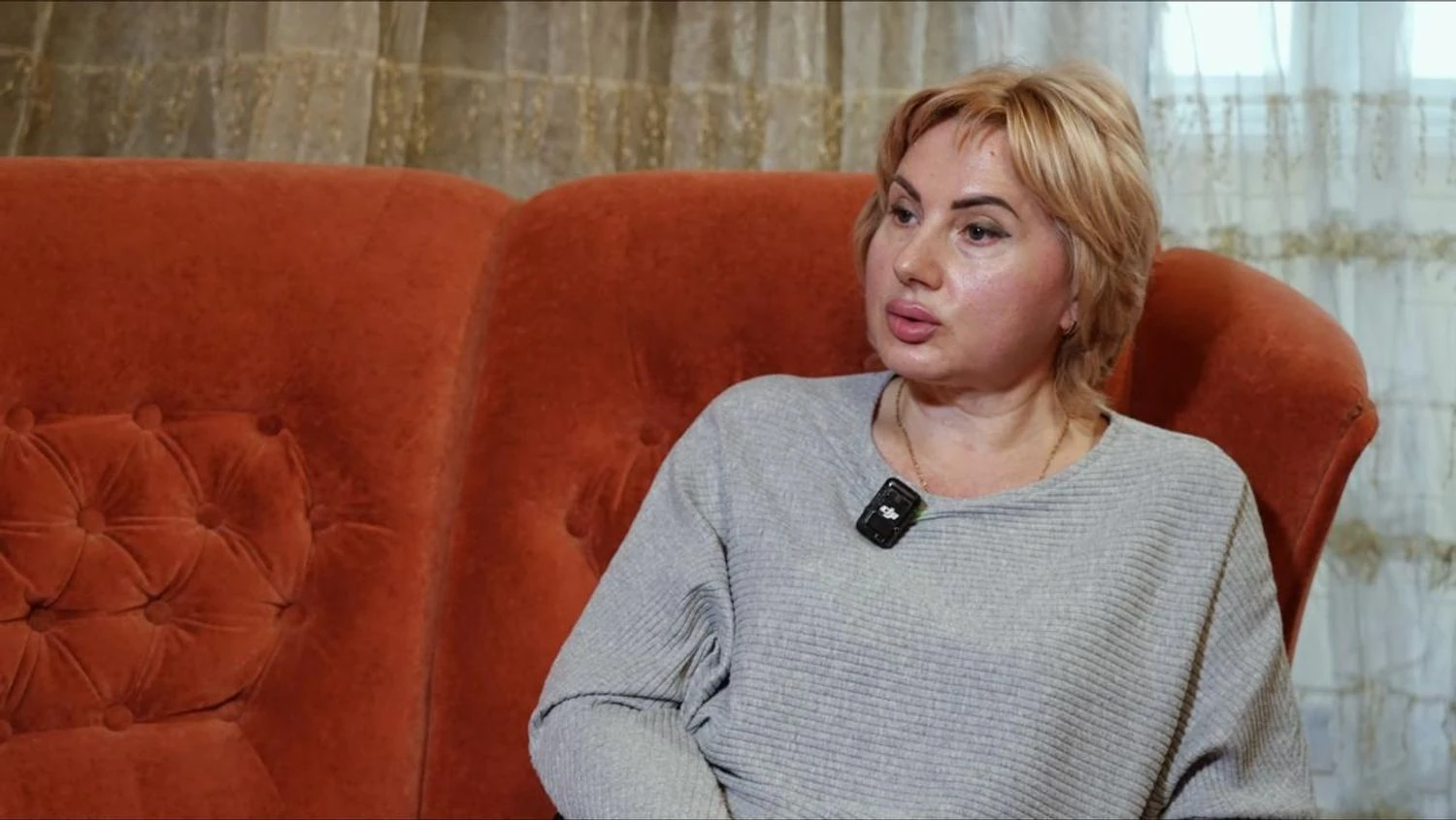
The operation, as the widow recounts, did not go according to plan - instead of a minimally invasive intervention between the ribs, doctors performed a full thoracotomy, meaning they opened her husband's chest. After this, she was assured that everything "went successfully," but soon he began to have complications and was transferred to an "artificial kidney" machine.
At the same time, Svitlana says, constant pressure began from the clinic. She was demanded to pay 80-90 thousand hryvnias per day and huge lists of medications every day.
"Every day I received calls from 'Odrex' with the words: 'money is needed, money is needed.' That is, they were not interested in my husband's fate, they were simply concerned about the issue of money," Svitlana Huk recalls.
At the same time, the widow claims, she was not even informed about her husband's cardiac arrest.
Svitlana suspects that from the moment of clinical death, her husband was kept on machines only to "pump" more money out of the family.
The body lay on the machines, but it was no longer a human body, but something shapeless, huge, a swollen body and a swollen head. It was very cold in the room. He was covered with a sheet, and hot air was pumped under it.
According to her, the head of intensive care, Maksym Pavlovskyi, in response to her question, stated that if she was not satisfied with something, she could "take her husband to any other clinic." At the same time, the widow claims, the medical director spoke exclusively about money and insisted on paying the bills.
The culmination, according to Svitlana, was her visit to the clinic's general director. There, as she recounts, she was directly offered to give the apartment documents to the clinic's lawyers so that they could quickly sell it to pay off the "debt" for treatment, and was threatened with the loss of all property.
"We turned to Harutyunyan, the general director. He said: 'you must pay.' Where to pay from? And he replied: 'if you don't have money, you can give the apartment documents to our lawyers. They will deal with the apartment, quickly sell it to pay off your debt to the clinic.' And then he generally stated that they would deprive us of apartments, cars, houses, dachas. I listened to this simply in quiet shock," Svitlana Huk said.
After her husband's death, Svitlana experienced another blow - "Odrex" sued her for alleged non-payment of medical services totaling 900,000 hryvnias. This is despite the fact that the woman had already paid 42.5 thousand dollars for the treatment. In fact, she was left with a death certificate in one hand and a court summons in the other. Against this background, the woman says, she even had thoughts of ending her life.
She also had separate questions about the medical documents that the clinic provided to the court. The papers stated that her husband had received 8 blood transfusions the day before the operation, although she spent that day with him in the ward and no transfusions were performed.
In addition, according to Svitlana, the "Odrex" clinic submitted a certificate from the pathological anatomy bureau, dated July 26, with a forged signature of the widow, to the court.
"On July 26, I buried my husband. That was the day of the funeral. The page is dated July 26, where my surname, initials are indicated, it says: 'No claims, without autopsy,' and my signature is there. But this is not my handwriting and, accordingly, not my signature. I drew my lawyer's attention to this, he took this point into consideration, and as of today, we are waiting for the appointment of a handwriting examination," Svitlana Huk said.
The woman is convinced: in this story, real medicine ended where money began.
It wasn't enough for them that they took a lot of money, it wasn't enough that a person died. They needed to finish me off too. It's a rather cynical act - to treat a person to death, and then sue me and demand that I pay for my husband's death. Death for money, for a very high price.
A routine operation led to a coma: the story of Volodymyr and Iryna
Volodymyr turned to "Odrex" when he felt his health deteriorating. He was examined, scans were taken, and, according to him, doctors insisted on urgent surgery. He underwent all necessary tests, the man claims, and no COVID-19 or infections were found.
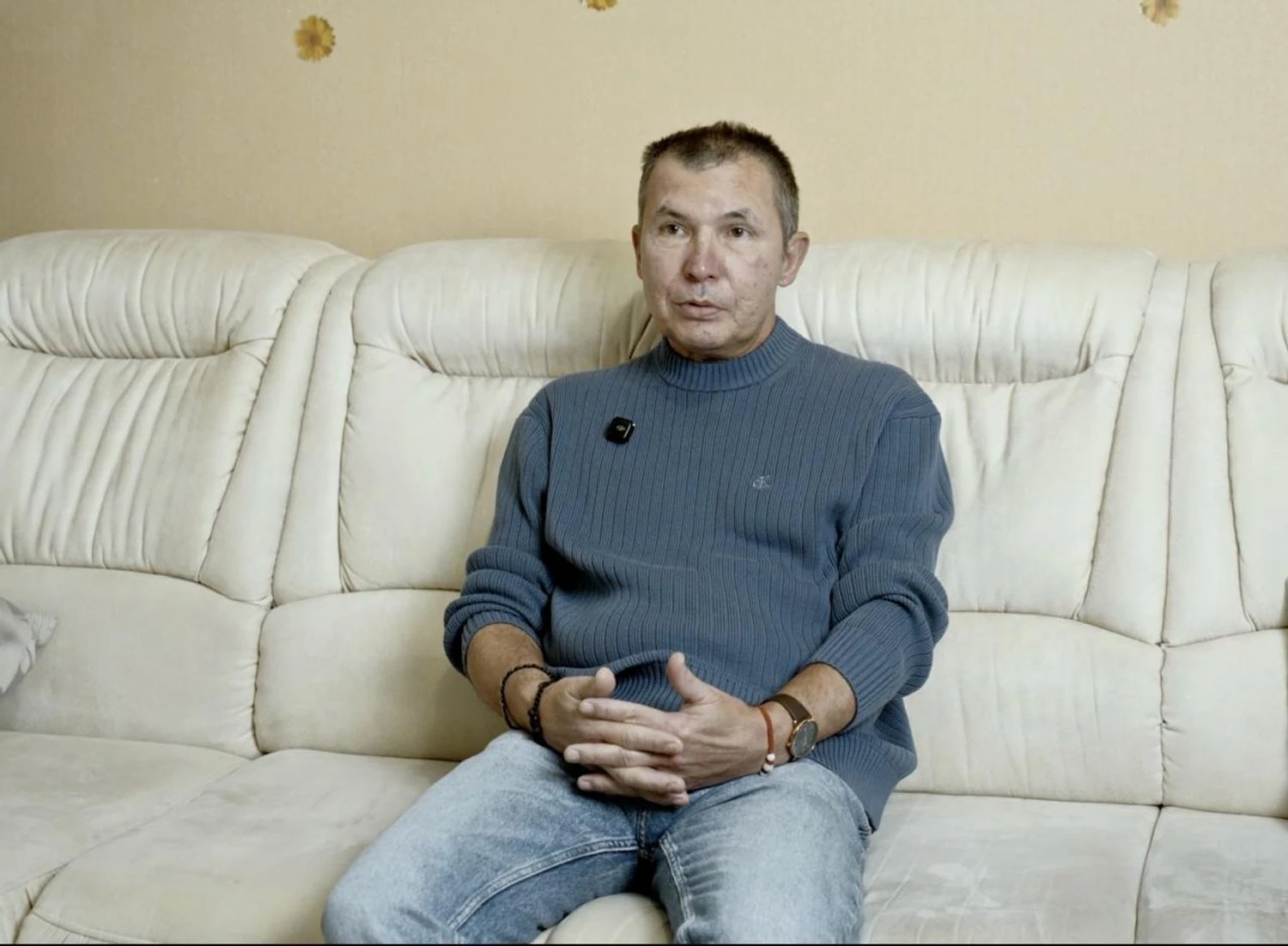
After the operation, on the second day, Volodymyr began to have complications. His wife Iryna says that doctors informed her about 85% lung damage.
"I started asking questions: 'what happened?' In response - 'we can't say, some infection.' What infection? He came here on his own two feet, went in for surgery for a completely different reason. Where did the infection come from? 'You understand, this is intensive care, you can catch anything here.' What does 'catch anything' mean? This is intensive care, after all, not 'New Bazaar'?" - Iryna recalls her dialogue with "Odrex" representatives.
Volodymyr's condition worsened, he had difficulty breathing, and eventually he was put into a medically induced coma. During his time in this state, he says, he lost about 15 kilograms of weight, and his muscles atrophied.
Three weeks later, Iryna says, doctors reported that they had finally found the infection - Serratia Marcescens. At the same time, the clinic refused to explain what kind of infection it was.
As it turned out, this bacterium is not airborne, but can enter the body through instruments or dirty hands of staff.
At the same time, the woman claims, there was no information about this infection in the hospital discharge summary, nor were there clear explanations of what exactly happened. Instead, "Odrex" presented her with new bills every day.
"They make you completely dependent. The person is in a coma, on a machine, I can't just take him and leave. And when I said we didn't have money, I heard: 'Well, then let's turn off the lights,'" Iryna recalls.
"Paying for air": the story of Khrystyna Totkailo and her father
In August 2024, Khrystyna Totkailo learned that her father had cancer. The family lives in Kyiv, so they first turned to Feofaniya Hospital. A medical council, according to Khrystyna, decided that aggressive chemotherapy in her father's case was too dangerous and should not be performed before radical surgical intervention.

Surgeon Ihor Bielotserkovskyi was present at the council. Khrystyna says that he personally offered a treatment option at the Odesa clinic "Odrex," where his wife, oncologist Maryna Bielotserkovska, works. It was there, he said, that her father's larynx and voice could be saved.
This is my wife. She is a qualified doctor. Go. He calls her and asks if she can take such a patient. She replies: "yes, no problem, I can." But before going, you need to pay for a consultation, without consulting. I asked: how is that, I can come and consult on the spot? He says: no, this needs to be done in advance, you need to pay for the air. That's exactly what they told me.
Even then, the woman had doubts, but, according to her, when it comes to the life of a loved one, you cling to every hope.
At "Odrex," according to Khrystyna, they promised to "pull through" her father: they prescribed a five-day course of chemotherapy and planned a second one. The man had a gastrostomy (a feeding system that would require constant care). Khrystyna asked to check and change the dressings, but, as she says, the doctors did not hear her: for five days of treatment, the gastrostomy was not properly examined.
The device was removed only two hours before discharge - when a through-hole had already formed in the gastrostomy area, through which everything that entered the stomach flowed out.
Upon returning to Kyiv, they faced a sharp deterioration in their father's condition. His kidneys began to fail, and sores appeared in his mouth. To reports of this, Khrystyna claims, the doctor replied that "today is a day off, call on Monday."
The woman says she tried to find out what her father was given for his liver, for his kidneys, to which she heard from the doctor: "why are you asking such questions?"
Khrystyna is convinced that in a situation where even Kyiv clinics refused such chemotherapy at this stage, prescribing an aggressive course at "Odrex" was a gross medical error. The family paid more than 250,000 hryvnias, but they could not save their father. He died.
Expensive clinic and death in three weeks: the story of Kateryna Boichuk
Kateryna Boichuk recalls convincing her mother to agree to the operation, believing that leg amputation would give her a chance at life. The family chose "Odrex" as a "clinic with a good reputation." According to her, before the operation, they underwent a full examination, spending 25-30 thousand hryvnias even before the operation. The operation itself cost about 240 thousand hryvnias.
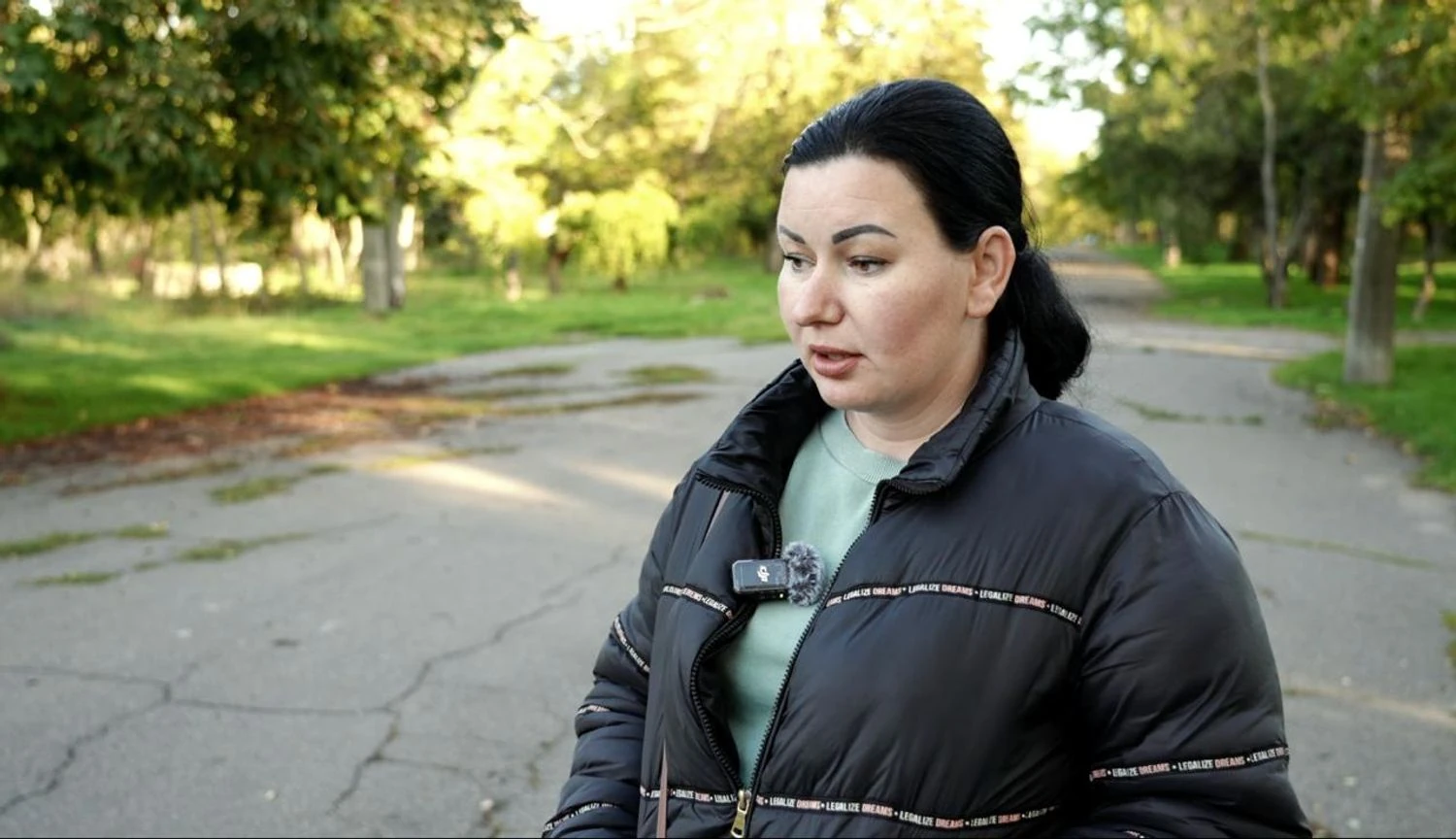
Complications, Kateryna says, began on the second day after the operation. On the third day, her mother was transferred to another department of the clinic.
"I believe that they simply did not understand what was wrong with her, and there were different diagnoses every 2-3 days. They called several times at night, closer to one o'clock. Perhaps because the person is sleepy, a little confused, does not immediately understand the essence of the situation and, of course, answers: 'Yes, yes, of course,'" Kateryna Boichuk said.
According to her, initially her mother was diagnosed with pneumonia, and later septic shock, although an examination conducted the day before the surgical intervention did not reveal any signs of infection or pneumonia.
Kateryna says that her mother suddenly developed a hole in her intestine after the operation, which the doctors also informed her about at night.
"They also call at night and say: 'Here's the situation, a hole in the intestine.' I am a person who does not understand how a person who is sleeping, who is lying in the hospital in intensive care, can just get a hole like that," Kateryna said.
When the family started talking about transferring the patient to a state hospital, the clinic stated that she was "untransportable." At the same time, the cost of her stay, according to Kateryna, reached more than a thousand dollars per day. This forced Kateryna to go into debt, and three weeks later her mother died.
"I did everything for my mother. I sent her to an expensive clinic that many people trust - 'Odrex'. But did the doctors do everything for my mother? Was it a medical error? It turned out that after 3 weeks the person simply died. I trusted these doctors and this hospital. I believed that 'Odrex' is a good enough hospital where smart doctors work who know what they are doing. For some reason, I preferred 'Odrex'. Although now I understand that state hospitals and the doctors who work there are no worse than in 'Odrex'. Perhaps even better. I would not go to 'Odrex' now," Kateryna Boichuk admitted.
A small operation that killed: the story of Olha Melai
Olha Melai's husband was undergoing chemotherapy at Odrex medical center. Due to the need for regular punctures, he was offered to install a special port to facilitate the administration of drugs. On the clinic's website, Olha says, this procedure was advertised as minimally invasive, with minimal risks.
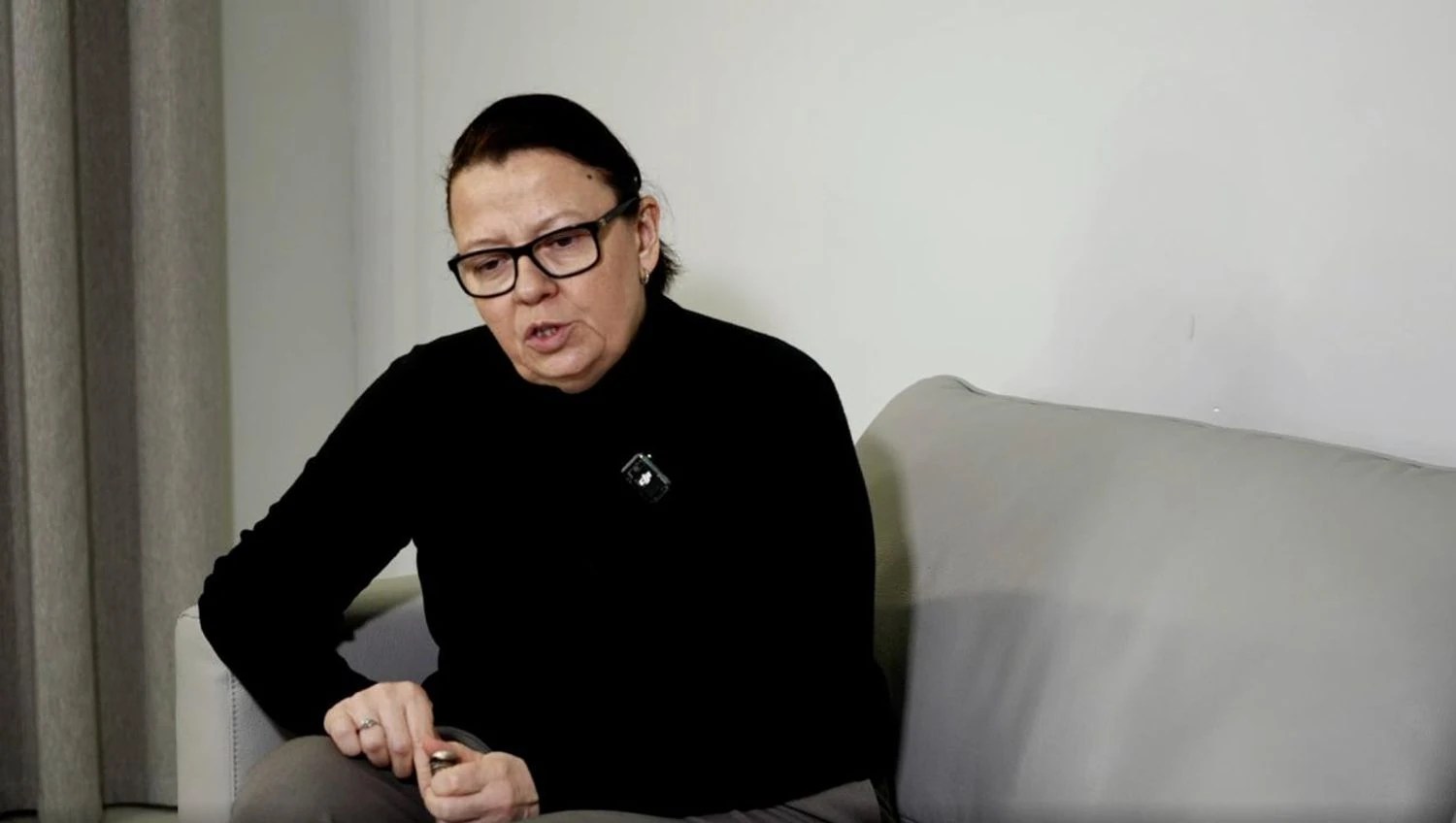
"This system is small. It is sewn under the skin and is used like a familiar port in a vein. We were offered to perform the operation there, at 'Odrex', by the doctors themselves. The operation was presented to us as minimally invasive, under local anesthesia. On the 'Odrex' website there is an advertisement for this procedure - everyone can see it. It is performed almost on an outpatient basis. And no risks. It's a very easy operation. And we agreed to it," Olha recalls.
According to her, hours passed after her husband was taken to the operating room. As a result, the surgeons reported that "the operation was successful," and a "new life" awaited him. But instead of a ward, he was transferred to intensive care and found himself in critical condition. On the very first day, according to Olha, five liters of fluid were pumped out of his chest. At the same time, she is convinced that if the operation had been performed under local anesthesia, her husband could have informed the doctors about his well-being.
"I ask: 'where is my husband?' In intensive care. The on-duty anesthesiologist tells me that the condition is critical. He won't live until morning," the widow says.
Olha suspects that she may not have been informed about her husband's cardiac arrest.
Despite this, the doctors, according to her, continued the third course of chemotherapy after the operation in higher doses than the previous two.
If there was something wrong with his heart, then this course could not have been done. Because they finished off his heart with this chemotherapy. There was a chance for remission. But this small operation, with this small thing, destroyed all the efforts of both the oncologists and my own.
She was outraged by the entries in the documents received from "Odrex" regarding her husband's treatment: there was no mention of the operation itself or its consequences.
"In the discharge summaries, I saw that the doctors wrote that we were admitted for treatment on April 28, for inpatient care. But we stayed with them on April 26, 27, and 28. There is no word in the discharge summary about the operation, about the consequences, about the recommendations after this operation. The only thing in the discharge summary is one line that says that the patient has a port installed. Where it is installed, by whom it is installed - none of this is in the discharge summary," the widow says.
The total amount the family spent on treatment and medications exceeded 2.5 million hryvnias.
The widow says she was ready not to bring the conflict into the public sphere, but she was outraged by the behavior of surgeon Vitaliy Rusakov, one of the defendants in the criminal case regarding the death of another patient at the "Odrex" clinic. The court placed him under house arrest and ordered him to wear an electronic bracelet.
Rusakov, according to Olha Melai, showed off the bracelet on his leg, coffee, and a white piano on social media.
"Unpunished greed"
The heroes of the documentary film talk about different diagnoses and different medical situations, but describe similar patterns: aggressive financial demands, night calls asking for consent to new procedures, lack of adequate explanations from "Odrex" doctors, falsified entries in medical documents, and consequences that end in death or severe complications.
They are all convinced that behind every story of treatment at "Odrex" are not only medical errors, but also a systemic problem where the patient's life becomes secondary to profit.
It is obvious that law enforcement agencies, as well as the Ministry of Health, should react to the stories of these people and assess the actions of the representatives of the "Odrex" clinic. Families who have lost loved ones want justice. In Ukraine, everyone should understand that human life in medicine cannot be a resource for extracting money from loved ones, especially after the death of a patient.
Recall
The Prosecutor General's Office announced on October 25 that the Main Investigative Department of the National Police is investigating the circumstances of a patient's death after treatment at a medical facility in Odesa.
According to media reports, this refers to the death of local businessman-developer Adnan Kivan, who was treated at the "Odrex" clinic from May to October 2024.
The PGO noted that two doctors were notified of suspicion of improper performance of professional duties, which caused the patient's death (Part 1 of Article 140 of the Criminal Code of Ukraine). Later it turned out that these were the head of the surgical department Vitaliy Rusakov and oncologist Maryna Bielotserkovska.
Investigators, based on the conclusions of the examination, believe that the actions of these two doctors led to the patient's death.
"The suspected doctors provided him with medical care. As evidenced by the commission forensic medical examination, during the provision of medical care, proper response to signs of complications was not ensured and necessary measures for its timely treatment were not taken. Experts concluded that medical error, improper performance of their professional duties by doctors due to negligent attitude towards them are in a direct causal link with the patient's death," the PGO statement said.
The investigation believes that during the provision of medical care, the medics made significant mistakes, as a result of which the patient developed sepsis, which, against the background of the oncological process, led to death.
According to UNN sources, surgeon Rusakov did not prescribe antibiotics to the patient after the operation and subsequently ignored obvious symptoms of sepsis. In addition, the doctors performed a number of procedures that were contraindicated for the patient at that time.
The businessman died on October 28, 2024.
The clinic, however, insists that their doctors are highly qualified specialists and act in accordance with protocols.