










Tuberculosis - what symptoms to look for, where to get treatment, and how to vaccinate a child
Kyiv • UNN
In Ukraine, 11,614 cases of tuberculosis have been registered in 9 months. Diagnosis and treatment are free, and the duration of therapy has significantly decreased.

March 24 marks World Tuberculosis Day. Despite modern medical advancements, the disease remains a serious challenge for the healthcare system, especially in Ukraine, where the war has worsened the tuberculosis situation.
UNN investigated how many Ukrainians currently suffer from this disease, how tuberculosis is treated in Ukraine, and where and how effective and free assistance can be obtained.
Tuberculosis in Ukraine: How the War Changed the Incidence Map
Oksana Moloda, a phthisiopulmonologist and expert at the National Immunization Portal, states that due to complicated access to medical care caused by hostilities, people do not seek medical attention in time. Therefore, on the one hand, the number of detected cases has decreased compared to previous years, and on the other hand, the number of advanced cases of the disease has increased.
There is a decrease in the incidence of tuberculosis by 18.2% compared to 2024. In reality, this demonstrates an insufficient level of tuberculosis detection, the expert says.
She provides statistics: in the first 9 months of 2025, 11,614 cases of tuberculosis were registered (including 408 cases among children).
The highest number of new tuberculosis cases were registered in:
- Odesa;
- Kirovohrad;
- Dnipropetrovsk;
- Zhytomyr;
- Zakarpattia regions.
Oksana Moloda explains that this regional distribution is primarily related to internal migration, where Ukrainians from combat zones and frontline territories (where they have long lacked access to medical diagnostics and treatment) move to relatively safe locations.
A separate problem is the health status of Ukrainian military personnel and civilians returning from Russian captivity. They undergo mandatory additional tuberculosis screening, but there is currently no separate large-scale study that would allow for an accurate assessment of the incidence among released prisoners, openly admits Volodymyr Kurpita, Director General of the Public Health Center.
Tuberculosis is a specific infection that progresses to a severe form under the influence of additional risk factors. One such factor is being in prison or captivity. Even in places of detention in Ukraine, the prevalence of tuberculosis is higher than among the general population, and the conditions in which Ukrainian prisoners are held in Russia further worsen the situation.
Upon returning from captivity, released Ukrainians are screened for tuberculosis. Initially, this involves a radiological examination, and if doctors detect changes characteristic of tuberculosis, patients are prescribed additional specialized tests. This approach allows for the detection of the disease after release and the determination of further treatment tactics.
According to the specialist, a separate problem is the Russian side's approach to treatment.
Russia does not use standardized international tuberculosis treatment regimens but applies its own approaches. According to the testimonies of people interviewed after their return, even in cases where a tuberculosis diagnosis was established, treatment might have been provided irregularly or incompletely. In particular, instead of several necessary drugs, a person might have received only one.
Because of this, after the return of Ukrainian prisoners, doctors often encounter forms of drug-resistant tuberculosis. In such cases, patients have to be prescribed more complex and serious treatment regimens than those they might have received in Russia.
Volodymyr Kurpita emphasized that this creates an additional challenge for the Ukrainian healthcare system.
How is tuberculosis transmitted and who is at risk?
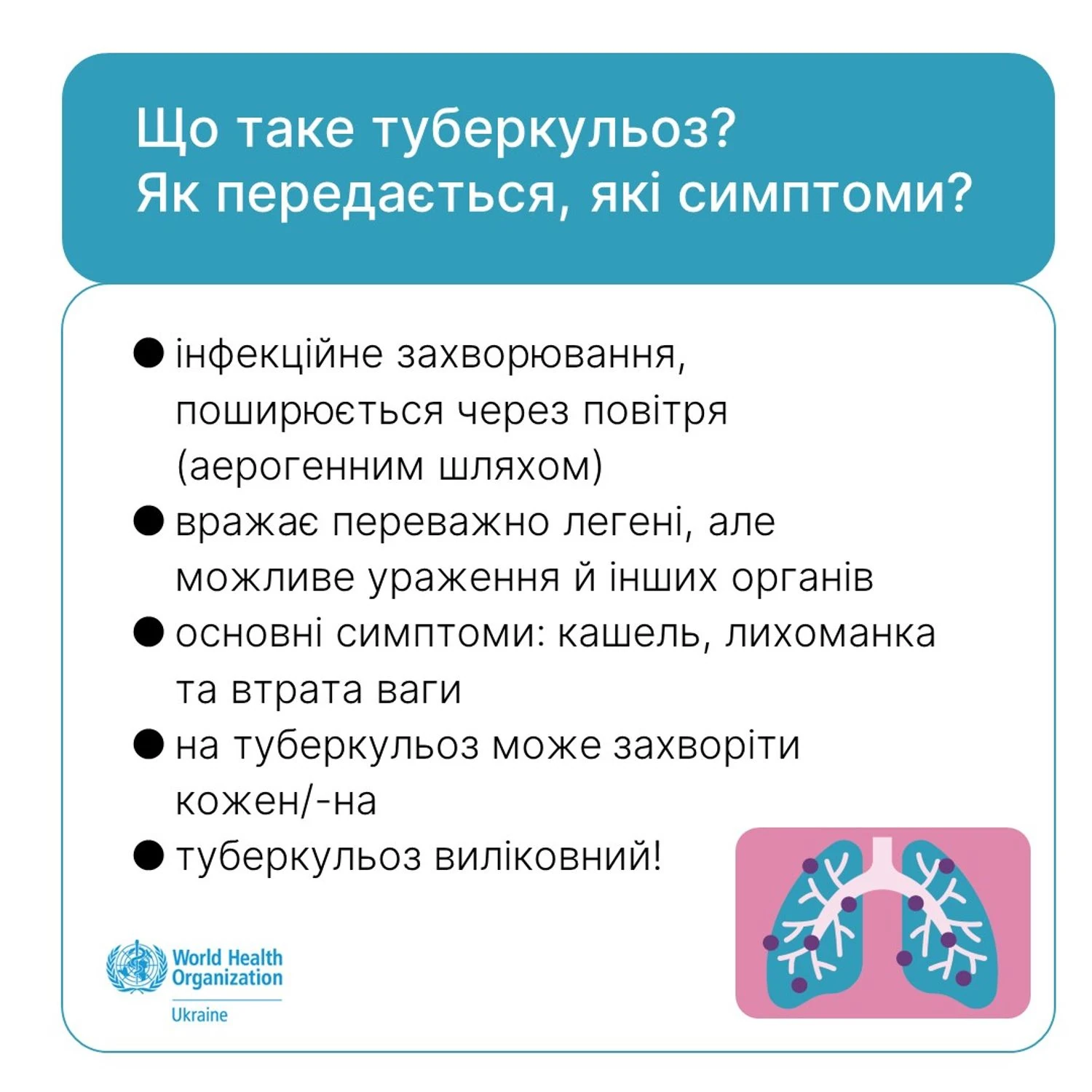
Tuberculosis spreads through the air, not by airborne droplets, as previously thought. It cannot be contracted through:
- kissing;
- handshakes;
- sharing bedding;
- food and drinks;
- dishes.
The only source of infection is a sick person who releases an aerosol containing Mycobacterium tuberculosis into the air while breathing.
Anyone can get sick: the risk of infection is not determined by social status, income level, or gender.
How to suspect tuberculosis and when to see a doctor?
Among the main symptoms that should alarm and prompt a person to consult a family doctor or, if necessary, directly a phthisiologist, doctors name:
- prolonged cough (more than 2 weeks);
- fever;
- weakness;
- night sweats;
- weight loss;
- shortness of breath;
- chest pain.
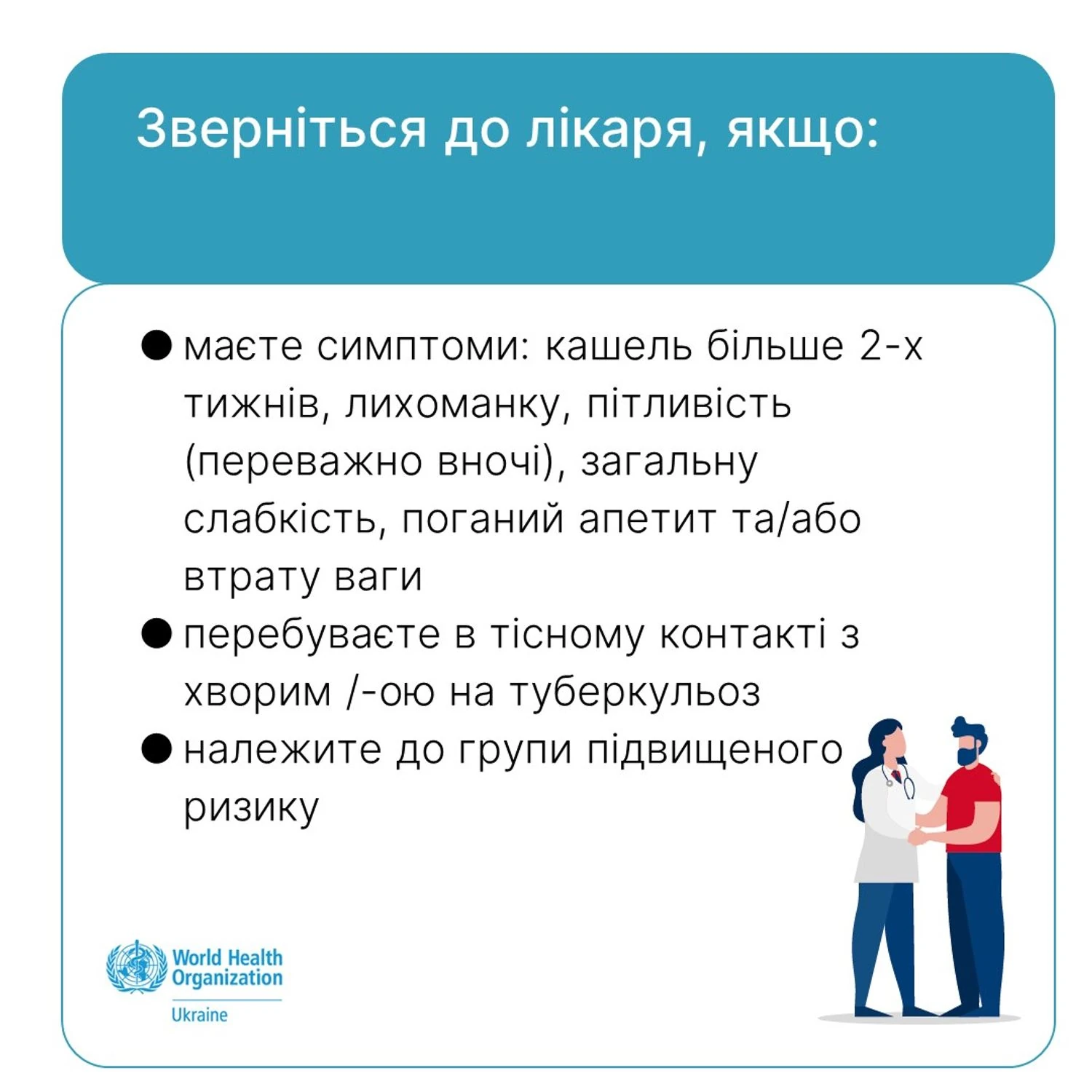
Note that tuberculosis diagnostics in Ukraine are free of charge.
However, delaying seeking medical help can lead to:
- lung damage and chronic cough;
- hemoptysis;
- spread of infection to other organs;
- toxic reactions;
- weakened immunity and risk of death without
treatment.
How tuberculosis is diagnosed and treated in Ukraine
To confirm the diagnosis, the family doctor prescribes examinations - radiological, laboratory, microbiological.
Among modern diagnostic methods:
- fluorography and radiography;
- sputum microscopy (allows detection of bacteria);
- bacteriological culture (confirms the presence of
the pathogen and determines antibiotic resistance);
- tuberculin and immune tests;
- modern molecular tests (PCR and
molecular genetic tests that allow detection of bacterial DNA).
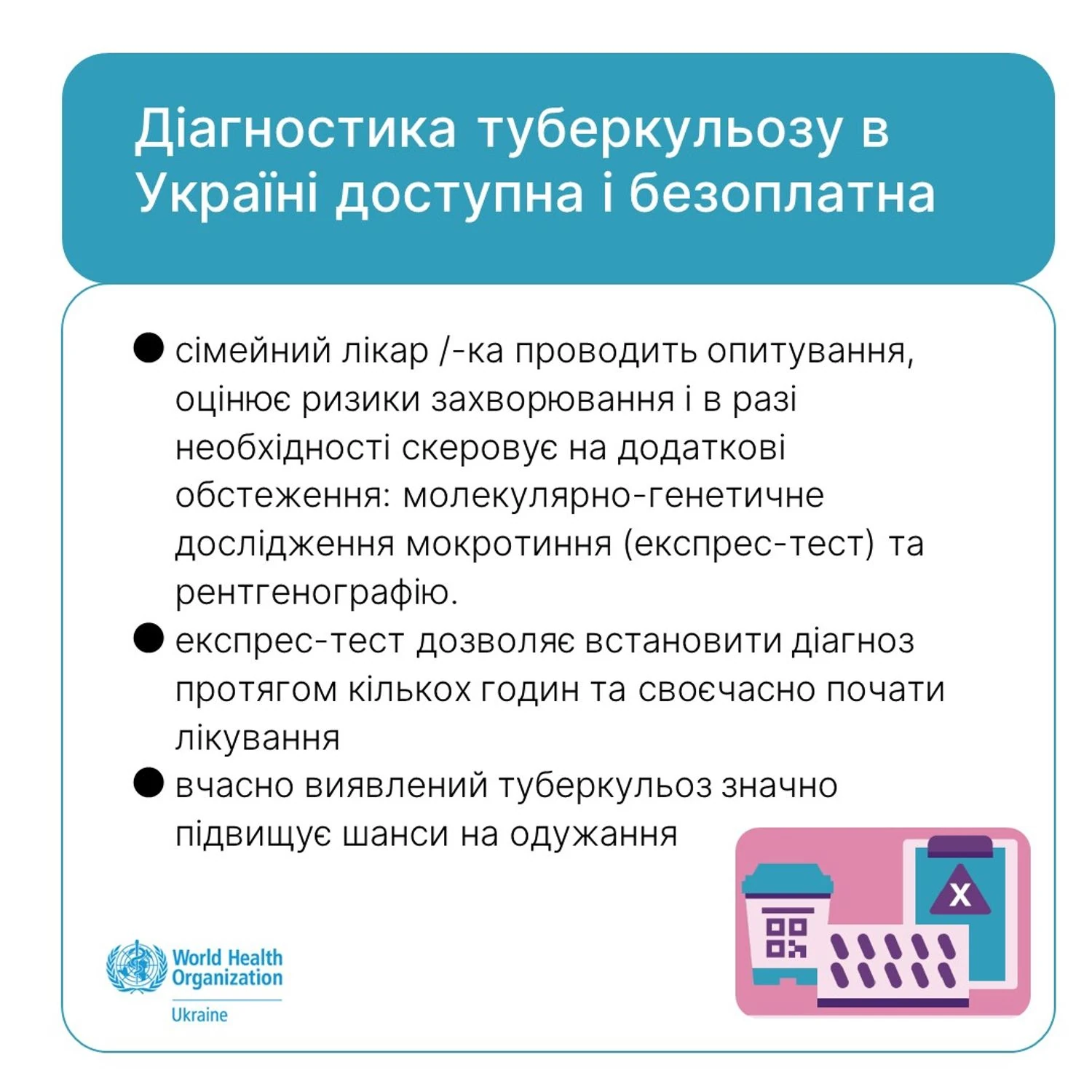
Assistance to tuberculosis patients in Ukraine is provided under the package "Diagnosis and treatment of adults and children with tuberculosis in inpatient and outpatient settings." Services can be obtained at 25 specialized anti-tuberculosis institutions and 962 primary healthcare facilities that have relevant agreements with the National Health Service of Ukraine (NHSU).
The NHSU pays medical institutions UAH 49,620 for treating one patient in a specialized institution and UAH 835 per month for patient support at the primary healthcare level.
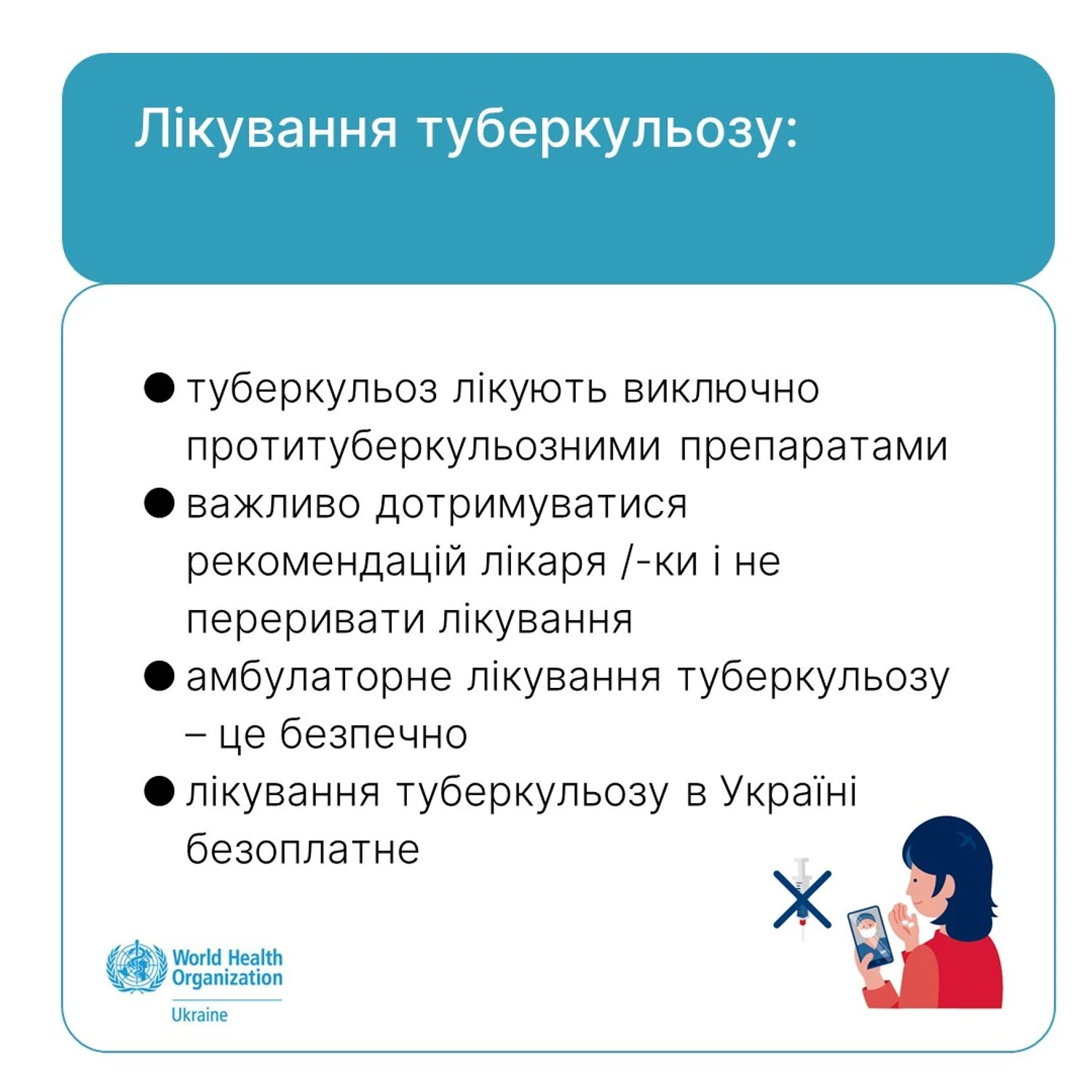
Separately, medical institutions provide free medical drugs for treating the disease. They are purchased centrally and issued to patients for the entire course of treatment.
Thanks to innovative drugs, the duration of treatment for drug-sensitive tuberculosis has already been reduced to 4-6 months. And the treatment of drug-resistant forms of the disease currently lasts mainly 6-9 months. Preventive treatment for tuberculosis can now be completed in just 1-3 months, and protection against the disease lasts for more than 10 years.
Tuberculosis prevention
Medical and social prevention of tuberculosis in modern conditions includes:
- BCG vaccination of newborns;
- regular examinations of people at risk;
- treatment of latent tuberculosis infection;
- improving living standards;
- combating harmful habits (in particular, smoking
tobacco products);
- improving working and living conditions;
- promoting a healthy lifestyle among
the population.
Child vaccination against tuberculosis in Ukraine: what you need to know
In Ukraine, the BCG vaccine against tuberculosis for newborns remains free, and its supply to the regions is sufficient. At the same time, individual cases where children did not receive vaccinations in maternity hospitals may have been related not to a nationwide shortage, but to problems at the level of specific institutions or improper formation of requests for the drug.
Oleksandr Zaika, head of the national immunization program at the Ministry of Health of Ukraine, emphasizes that BCG is available for children born in maternity hospitals and perinatal centers, regardless of the ownership form of the institution. The vaccine is supplied to the regions through disease control and prevention centers and then distributed among medical institutions according to submitted requests. That is why the availability of the drug in a particular maternity hospital largely depends on the organization of this process on the ground.
In some cases, difficulties may have arisen because the medical institution did not submit the application on time or did not receive the vaccine for other reasons.
Another factor mentioned is the peculiarity of the BCG vaccine itself, which is supplied in vials of 20 doses. In small maternity hospitals, such a quantity is not always used immediately, but at the state level, it is allowed to open a vial even for vaccinating one or several children. This decision is intended to expand access to vaccination.
Also, Ukraine has introduced a mechanism for supporting a child who was not vaccinated in the maternity hospital. In such a case, disease control and prevention centers and doctors must ensure that the child can receive the vaccination later, including at a primary healthcare facility.
The expert also drew attention to changes in the vaccination schedule. While previously the tuberculosis vaccine was recommended to be administered on the third to fifth day after birth, it is now advised to do so within the first day. This approach is explained by the fact that with uncomplicated births, the mother and child are often discharged within a few days, and because of this, some children do not manage to get vaccinated in the maternity hospital.
In addition, the period during which a child can receive BCG without a diagnostic test has been extended to seven months instead of two. This should simplify access to vaccination for children who were not vaccinated immediately after birth. Experts emphasize that BCG primarily protects babies from severe forms of tuberculosis, so it is important to get vaccinated at an early age.
Currently, not only state but also private maternity hospitals can order the state vaccine. To do this, the institution must submit an application to the disease control and prevention centers and report on the use of the drug. At the regional level, in turn, tools for internal redistribution of vaccines between institutions are already in place if one of them has a surplus of the drug and another has a need.
Updated Calendar of Preventive Vaccinations came into force in Ukraine1/1/26, 6:02 PM • 6917 views