










How the struggle changed Ukraine: full-scale war through the eyes of defenders
Kyiv • UNN
Three defenders of Ukraine told about their journey from civilian life to service during 1000 days of war. A former journalist, sports commentator, and master of sports in boxing share their experience and vision for the country's future.

February 24, 2022, was remembered for explosions, chaos, and uncertainty. But the political leadership remained in Kyiv, international allies stepped up aid, and every Ukrainian became part of a large resistance movement.
Chronicle of invincibility: key events
- February 2022: Massive shelling and attempts to capture Kyiv. The defense of Hostomel, Irpin, and Bucha became the first significant victories;
- April 2022: Liberation of Kyiv, Chernihiv, Sumy regions and the first evidence of war crimes in Bucha;
- May 2022: Occupation of Mariupol;
- Autumn 2022: Counteroffensive in Kharkiv region, liberation of Izium and Balakliia. The long-awaited withdrawal of the occupiers from Kherson;
- 2023: Continued struggle in Donbas. Increased international military aid, Ukraine receiving modern weapons, including Patriot systems and Leopard tanks;
- 2024: Intensification of diplomatic efforts in the international arena and development of national resistance.
Behind these dry facts are thousands of stories. Among them are the stories of those who took up arms, rescued civilians, remained under occupation, or built a new life after fleeing.
Defense of Kyiv region: an inside story
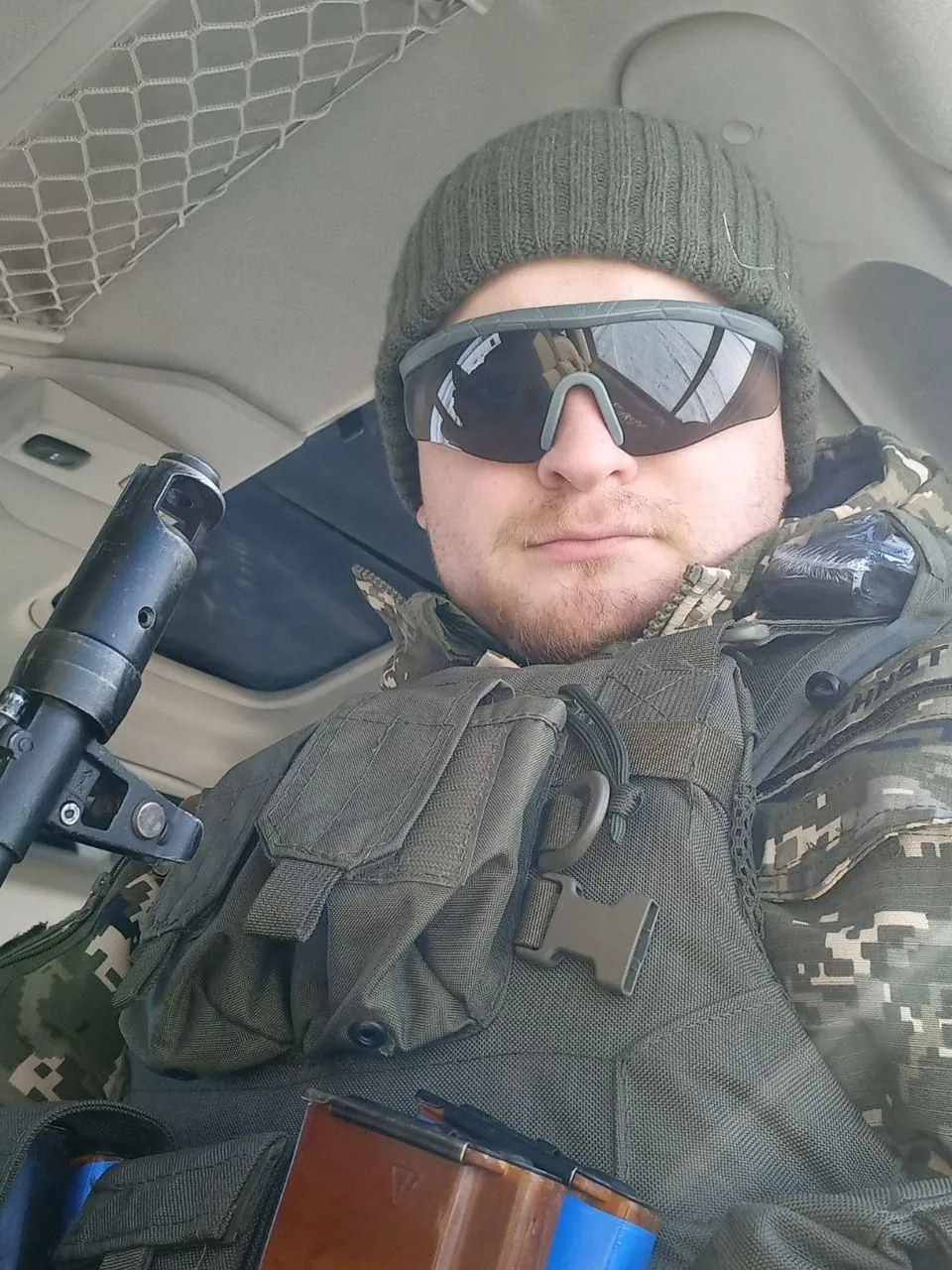
I understood that there would be a war and I was preparing. At 02:00 on February 24, I posted the news that the last Ukrainian airport had closed. I slept for an hour and got up to make news from the UN Security Council briefing. I switched to an urgent broadcast of Putin, posted the news at 04:48 about the declaration of war on Ukraine, and heard rockets hit Hostomel. The next morning I was already digging trenches at the exit from Kyiv, where a tank breakthrough of the 'katsaps' was expected.
Currently, he is a staff officer of one of the territorial defense brigades of the Kyiv region and serves in Donetsk region.
"What struck me in the first days was how the 'Grads' drove along the power lines with their headlights off and fired 10 meters from our trenches. Then a few days later, a Russian missile destroyed the gas station that was nearby," the serviceman added, describing the events of 2022 in the Kyiv region.
- How did you manage to cope with emotional pressure and fear in those critical moments? Or did you not feel it at that moment?
When I experienced my first shelling, and we were being 'covered' by three mortars for about an hour and a half, I sat in the dugout and laughed at Herbert Frank, who wrote the cult book "Dune" for some. The phrase "fear is a little death" made me laugh. Specifically, it was funny to me because this phrase was uttered by someone who had never been under artillery fire.
- What, in your opinion, was key to stopping the enemy near Kyiv?
The key to the defense of Kyiv was the destruction of the landing force in Hostomel, the cut-off communications of the group advancing on Brovary, and the advance of the 95th brigade from Zhytomyr region. The battles for Moshchun, from which I was within mortar range, were important, but it was the cutting off and semi-encirclement of the Russian group that played a key role.
Maksym's attitude towards the authorities is sharply negative. He recalled how some representatives of the authorities, for example, People's Deputy Olha Vasylevska-Smahliuk, wrote in the first days of the invasion that evacuation was not necessary.
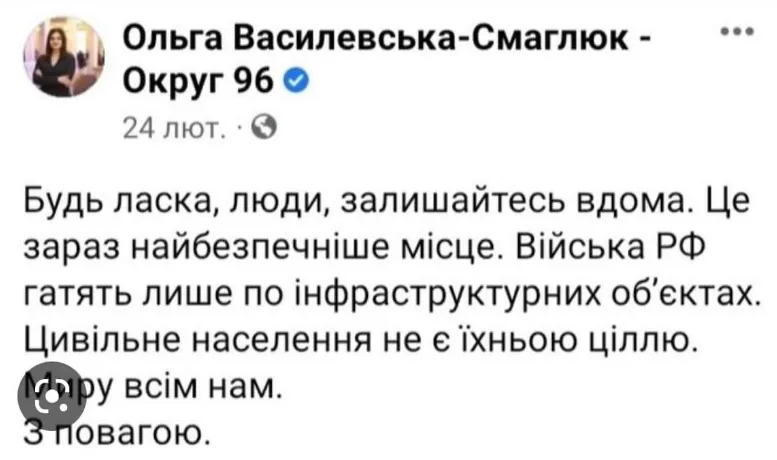
"She's not even in the top twenty on my 'Arya Stark' list," the officer said.
Clarification! After the publication of the material, People's Deputy Olha Vasylevska-Smahliuk contacted the editorial office of IA UNN with a request to clarify her position.
"On February 24, 2022, President Volodymyr Zelenskyy, head of the 'Servant of the People' party Olena Shuliak, Kyiv Mayor Vitaliy Klitschko, and many other individuals appealed to Ukrainians with statements about the need for people to stay at home. The information I published was based on the position of the security bloc. I myself was at my workplace at the time of writing," the People's Deputy stated in a comment.
She added that within a day, when it became clear that enemy troops were moving towards Kyiv through the Ivankiv and Borodianka communities, she appealed to the then head of the Kyiv Regional Administration, Oleksiy Kuleba, about the need for urgent evacuation of the population from Borodianka. But, according to her, she was refused.
Subsequently, as Vasylevska-Smahliuk claims, she herself contributed to the evacuation of people. At the same time, in correspondence with the editorial office, the People's Deputy, reacting to the comment of the soldier published by UNN, stated that "an anonymous military man integrated a custom order against me."
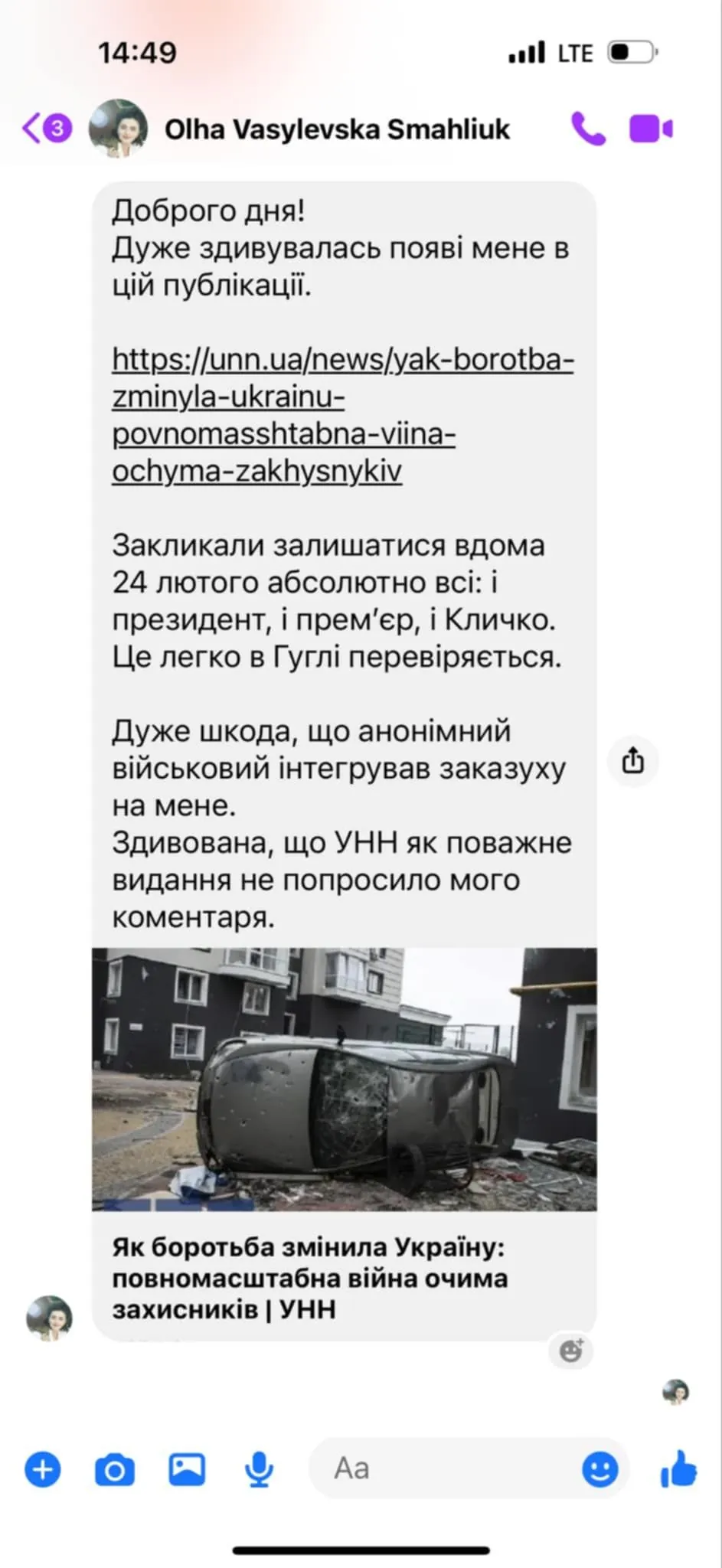
On this occasion, UNN would like to clarify that although the serviceman asked not to disclose his surname, he kindly provided his photo at the request of the editorial office to illustrate the text. Also, the author of the material personally knows this person and has no reason to doubt his identity. In addition, the answers of the servicemen presented in the material reflect their personal and public positions.
- How do you see the future of Ukraine after our victory?
The future of Ukraine is the cleansing from the power of pro-Russian elites and all these lackeys of Portnov-Lyovochkin, bandits who occupied law enforcement agencies and the judicial system. The future can be different, but the main thing is that a civil war does not start, then everything will go to hell."
- What should be changed in the army?
Reform and transition from a brigade-battalion to a divisional system. So that, for example, not 3,000 people hold a 20 km section, but 15,000 people hold 60 km and are managed from one place.
- Have you noticed a difference at the front during the entire war?
The Russians are currently in the same difficult situation, because they have started using equipment from Khrushchev's time. But they have more people.
According to the serviceman, he does not believe in the end of the war within 5 years.
- What is the most difficult thing in service now?
A stormtrooper officer has a lot of routine work that is not needed at all. Many duplicate documents that paralyze the effective and coordinated work of staff bodies. Ineffective higher command is the consolidated opinion of staff officers in battalions.
- What would you like to say to civilian Ukrainians?
To civilians, I can say - if you want to live in Ukraine - join the army. Ukraine does not need baristas and managers, Ukraine needs soldiers. In the army, you don't feel like a free person, and when you come to Kyiv, you don't understand why some can relax, while others think about protection and survival. Everyone must realize that there are not only rights but also duties in wartime.
From sports journalism to zero positions: the story of a volunteer
Oleh Yashchuk, a sports journalist, decided to become a volunteer in the first days of the war. He spoke about his experience of service, difficulties at the front, and the changes brought by the war.
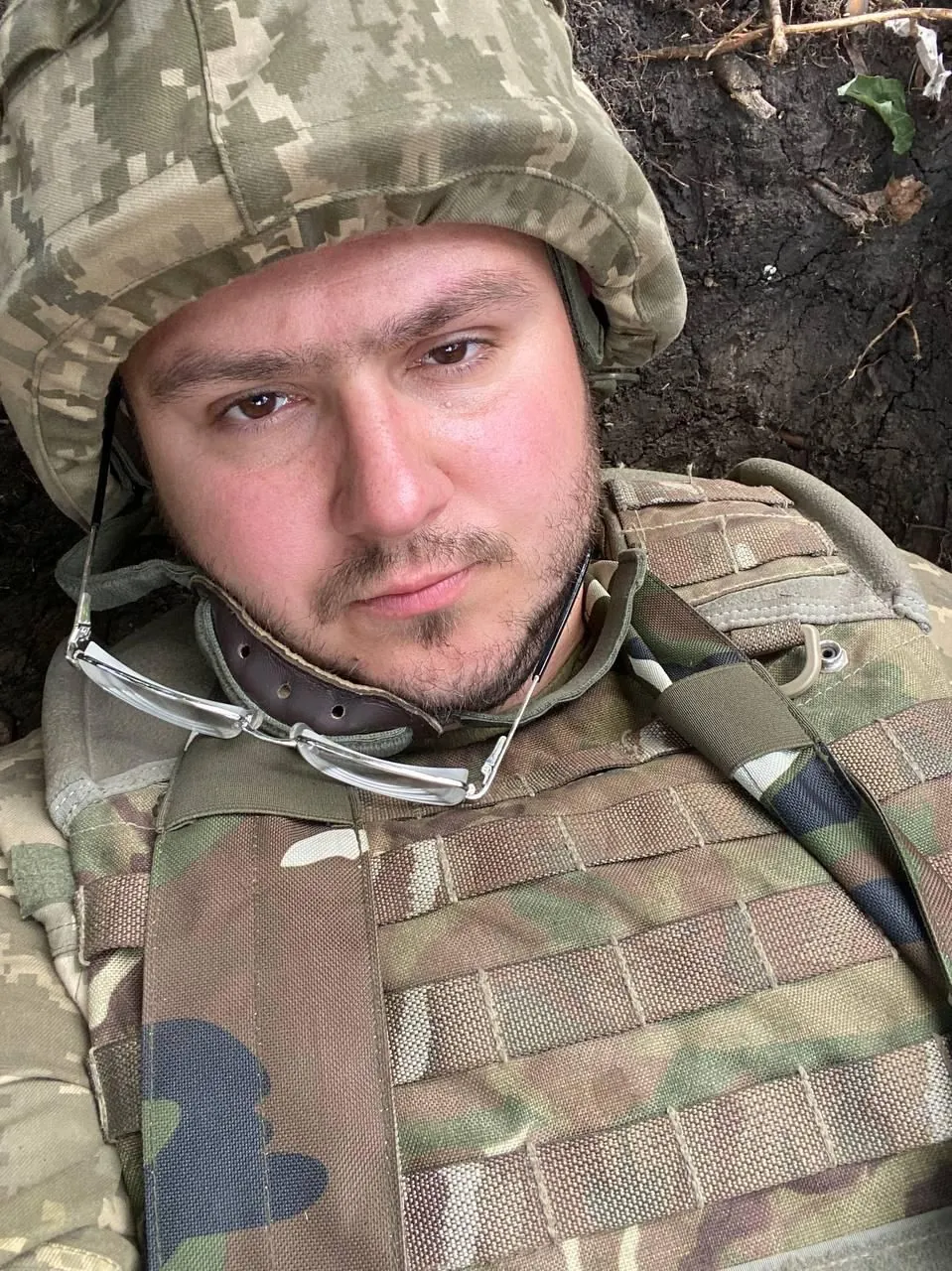
- When did you join the service and why did you decide to do so?
On February 28, 2022, I was supposed to fly to Cyprus. I had a planned television project and infrastructure tasks with my friends. It was already clear then that war was inevitable; everyone I worked with discussed it.
I realized that if I returned, it would only be when there was a lull or another phase of the war. But my tickets burned, I was in Chernivtsi at that moment, everything was flying, alarms, I can't listen to all this, I need to help the state and do something. I read a friend's post on Facebook from Uzhhorod: "Will you be ashamed to look at yourself in the mirror later? That you all hid here? Fleeing abroad". At the same time, I read posts by Sasha Makhov, a journalist and colleague, which strongly influenced me. The power of Facebook and Instagram is great. I read it, got angry, and realized that I needed to help. I thought I would go in any role.
On March 2, I went to the military enlistment office with my friends. With me were Valerchyk, my friend from university, who is now severely shell-shocked, and Oleksandr, who is now learning to walk and talk again, he got a bullet in the head. On March 3, I was already in the unit of the 10th "Edelweiss" brigade in Kolomyia. Then we were sent to the Kyiv region, where fierce battles were taking place. In May 2022, we were transferred to Donbas — Lysychansk, Sievierodonetsk, Bakhmut, Soledar, and Bakhmut district.
- Did you volunteer or sign a contract?
I volunteered. Few people signed contracts then. I had no experience. Now everyone has training, then not everyone had training grounds. It was a matter of luck. At first, I worked in the press service, then I was involved in the evacuation of the population, as well as moral and psychological support (MPS). In June 2022, I was transferred to the infantry because there was a shortage of people. There was a shortage of people and they were recruited from the staff. And then I entered a different world.
On May 22, 2022, I celebrated my "second" birthday — that's when we came under rocket fire. In June-July, it was even worse: I was at "zero," almost all the guys next to me died, and they couldn't pick me up. There were no radios. Everything was like a fog. I was missing in action — almost everyone had already buried me, no one believed that I would get out of there, but somehow I miraculously did..
After treatment, I returned to "zero" again, worked as a signalman, and then became an infantryman again. I held all positions, but infantry is the hardest.
- What has changed in you that you yourself notice?
I learned to appreciate every moment and second. I thank God and fate for being here, and I try to convey to people what is happening.
Currently, I am studying, taking military courses, trainings, and master classes, communicating with people who have survived captivity. For example, I spoke with Victoria from Sievierodonetsk, who was in Russian captivity and prisons for 24 months. She was beaten and raped by 5-10 men every day. By communicating with such people, I try to pull myself together and help them.
- The most terrible story from Lysychansk?
Near Lysychansk. There were so many battles during the day there as there weren't in the ATO for a year. During the day there were 8 battles lasting 2 hours each: small arms, mortars, tanks, and they dropped "gifts" on our heads from helicopters.
- Has the situation at the front changed now?
Already in July 2022, we said that the situation was difficult, that people were urgently needed, mobilization, and equipment had to be found, because we could respond with mortars three times a day, and they (the occupiers - ed.) could bomb 8 times for 2 hours.
- So, after 1000 days, the situation remains unchanged?
Unfortunately, the state did not take sufficient steps, and we lost positions. Everything rested on people who worked for ten. Previously, we were replaced weekly, but now the guys are at "zero" for months, awaiting their death.
- How do you feel about civilians who are not on the front line?
At first, we were very nervous about it and had a negative attitude, but now we don't care. Everyone chooses their own path. Evaders should at least work for victory, if they are not fighting.
Serving and fighting are different things. In a brigade of 7,000 people, not everyone shoots. There are drivers, cooks, logistics, journalists, IT specialists. War requires all professions. But if you are in the army, you must be ready to do everything.
- How do you see the future of Ukraine?
We must fight to the end, although it is extremely difficult. The Russian army is more numerous and better equipped, and this war could drag on or even escalate into a world war. We must be prepared for a long struggle.
- Is there an important lesson Ukraine has learned in these 1000 days?
There are many lessons. The most important thing is that we are a united country, and our people are incredibly resilient. But I am against populism. Real work is done by those who act, not by those who only write in Telegram channels and spread "nonsense."
From master of sports to call sign "Tyson"
Iryna is only 21 years old, but she changed her life for the sake of fighting for the country. The girl managed to get the title of master of sports in boxing. But after an injury that led to the cessation of her career, she changed direction and became a coach. Sports was a priority, but an inner voice pushed her to another path. Eventually, she joined the army and is currently serving as a combat medic in an assault brigade. For her boxing past, she received the call sign "Tyson."
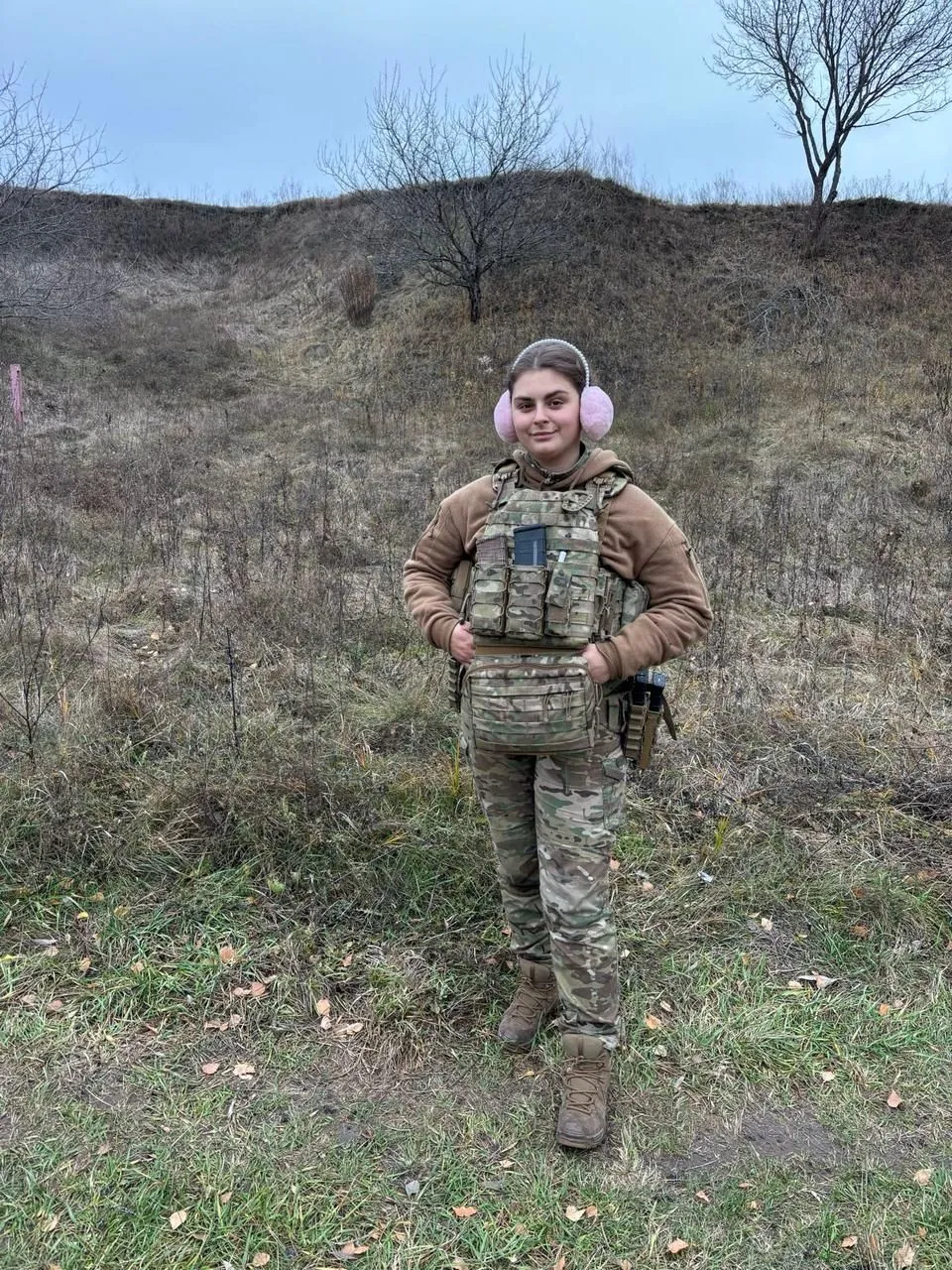
- Why did you choose the army?
My civilian life was wonderful, I loved teaching children. But I felt that there was a bigger challenge that I had to accept.
Initially, an injury prevented the girl from joining the service, but after surgery and recovery, Iryna joined the military.
"My main motive is revenge for my friends, for the best people of our country, for medics and combat comrades," the servicewoman said.
- How did your relatives and friends react to your decision to join the army?
My relatives were against it. My mother couldn't come to terms with my decision, although she still supports me. My father was shocked when I called him after the military medical commission and told him I was joining the army.
Iryna underwent training at Centuria, where she acquired the necessary skills.
"The training was non-stop, always in armor. Shooting, digging, physical exertion. Even very resilient people found it difficult. But I felt that this was my calling," she says.
War, according to her, is technological and constantly changing, and only by being there can one understand all the realities.
"A pleasant memory was when we were with 'adjacents' (adjacent units - ed.). And they asked me if I was cold, and my 7th layer was left under KABs in one of the forests, so I was cold. They gave me a sleeping bag, passed me socks, and gave me tea. This warmth and such people are not forgotten," the medic recalls.
However, there were also difficult moments.
"When we were leaving the first mission, the shelling was so heavy that I thought I couldn't die before evacuation, I was sitting under a tree and mines were flying towards me. It's morally very difficult. We had two 300s. And in such moments you need to be focused and not panic," "Tyson" said.
Iryna does not hide the fact that war causes emotional exhaustion.
"Sometimes it's hard to control my emotions. As a woman, I have to be stronger than the guys, because if I start showing weakness, it will affect them," she added.
- How do you see your role in post-war Ukraine?
I see myself working with children, training future warriors, developing the army. This is one of our big problems - we were not prepared for war.
- Have you faced difficulties due to your gender in service?
You are often perceived as weaker, constantly asked why you are here. And even if one of the guys faces difficulties, more will be demanded of you. Therefore, you need to work on your authority.
- What would you like to change to improve the situation in the army?
I would change the approach to selection and training. Mobilization also raises many questions when people who are no longer able to serve are taken. We still have old Soviet practices, many people in high positions who should have retired long ago.
- Do you believe that we are moving towards victory?
I would like to believe in victory, although the reality is different for now. A peaceful life for everyone - that's what I would like. But I know it won't be easy. However, we must go to the end.
Results and losses
In total, since the beginning of the war, thousands of missiles have been launched at the territory of Ukraine, causing great destruction, especially in the energy sector and civilian objects. In the first years of the war alone, more than 2,000 medical facilities were destroyed, and thousands of Ukrainians became victims of the Russian invasion. But Ukraine continues to fight for its independence and territorial integrity.