









The Ministry of Health reported on the approval stage of the new prosthetics method
Kyiv • UNN
Ukraine is considering an innovative method of osteointegrated prosthetics. Within 2-3 weeks, an order will be signed so that those who need such prosthetics can receive it.

In 2024, a working group was established to study the application of an innovative method of osseointegrated prosthetics. Methodological guidelines for its application have now been developed. Within 2-3 weeks, the order will be signed and control over its implementation will be established so that those who need such prosthetics can receive them. This was announced by the Minister of Health of Ukraine Viktor Liashko during the "Question Hour to the Government" in parliament, UNN reports.
Details
When asked about the stage of approval protocol for osseointegrated prosthetics, Liashko replied: "In 2024, a working group was created to consider the innovative method of osseointegrative prosthetics to understand whether it can be applied and in what cases."
According to him, the working group developed a draft regulatory act, which is called methodological guidelines, where indications and recommendations for the use of this prosthetic method are clearly outlined, exclusively by the decision of a council, which includes several traumatologists, to avoid any manipulation of this new method.
Now we are going through the final touches of approval and coordination with other expert groups, and I think that within 2-3 weeks the order will be signed, and we will establish control over its implementation so that those who need such prosthetics can receive them, but those who... what are the contraindications, so that it is not recommended by certain doctors-surgeons, traumatologists who practice this method as one of the main methods of prosthetics, because it is a new technology, and every new technology must undergo a detailed study and then be applied
Ministry of Health on osseointegrated prosthetics: why this method is not suitable for everyone
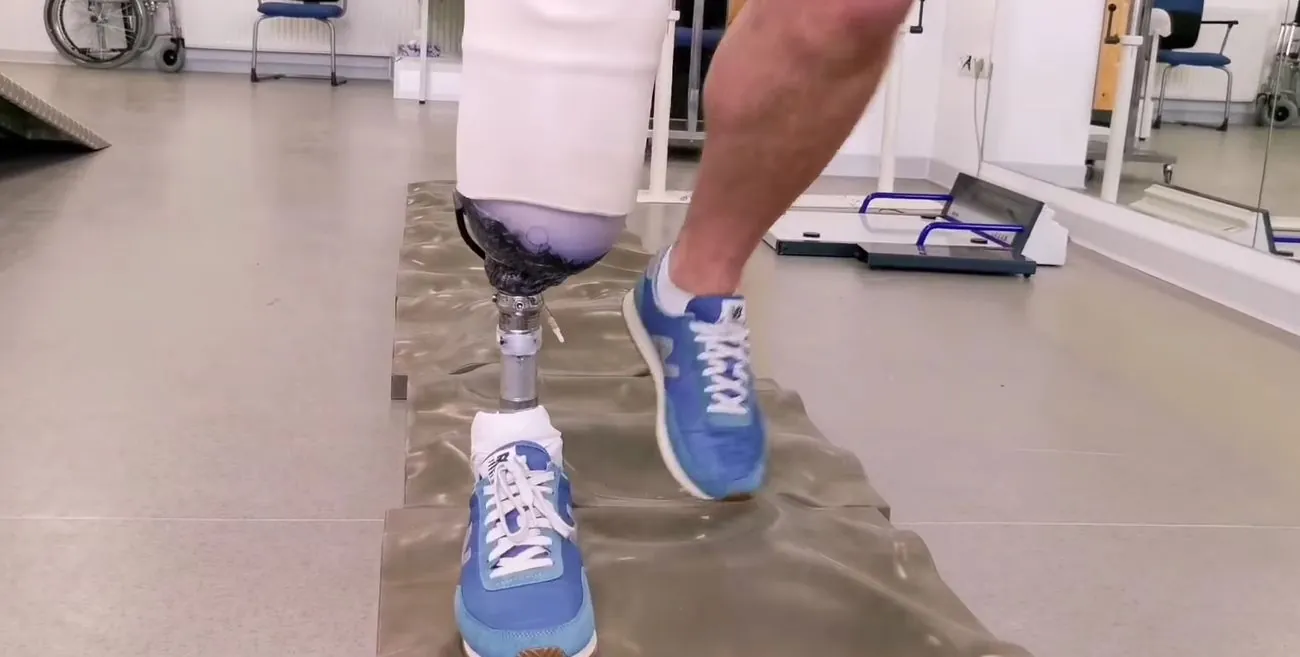
After lower limb amputation and preparation for prosthetics, an individual prosthesis is usually made for the person. Its purpose is to help the patient regain mobility and independence. Such a product contains a receiving socket and is held in place by an appropriate fastening system. In contrast, osseointegration involves the direct connection of living bone with a biocompatible metal implant.
This is a relatively new method of limb prosthetics, which is currently more widely used in Sweden, the Netherlands, Germany, Australia, and the USA. The entire process of osseointegrated prosthetics requires a multidisciplinary, comprehensive approach to working with the patient. Usually, in the listed countries, such a procedure is indicated for people with a long history of negative experience wearing traditional prostheses. And only if they have no contraindications. Osseointegration for these patients is not a whim, but a forced alternative solution.
Who is not suitable for osseointegration
The first osseointegration was performed by Swedish professor Per-Ingvar Brånemark in 1990. At that time, the patient was a person with a double amputation of the lower limbs at the thigh level. Today, the field has progressed. Therefore, there are several different methods of osseointegrated prosthetics in the world. All of them differ in the way the implant is embedded in the bone.
One of the most common is the Osseointegrated Prosthesis for the Rehabilitation of Amputees (OPRA) system. It involves inserting a fixture (a metal rod with an external threaded part) into the femoral bone during the first surgical intervention. The screw's shape increases the contact area between the implant and the bone for a better osseointegration process and greater stability.
New rules for replacement of prostheses: what has changed for veterans02.11.24, 13:51 • 18763 views
Over time, the implant gradually integrates and undergoes natural changes. The time interval between the two stages of the operation is approximately 6 months. During the second stage, a connector is attached to the distal end of the device. The surgeon also works with soft tissues during this procedure to reduce the risk of infection.
skeleton is still growing;
- osteoporosis;
- when the patient has less than 2 mm of cortical bone around the implant;
- atypical skeletal anatomy that may affect OPRA effectiveness;
- age over 65 or under 22 years;
- body weight more than 220 pounds (100 kg), including the prosthesis;
- pregnancy;
- when there is a risk that the patient will not be able to follow care and rehabilitation instructions;
- severe peripheral vascular disease;
- diabetes with complications;
- skin problems on the amputated limb;
- neuropathy or neuropathic disease and severe phantom pain;
- active infection or dormant bacteria.
- Starting next year, Ukraine will introduce an electronic queue for receiving endoprostheses - Ministry of Health
Patients with such prostheses have better physical control over their limb compared to those who use a traditional prosthesis with a receiving socket
The direct connection between the prosthesis and the patient's own bone provides excellent stability, strength, and energy transfer (while the muscle strength from the stump is reduced where it connects to the prosthesis). In particular, in patients who have undergone osseointegration, vibrations from touching the implant (for example, when hitting the ground while walking) can be transmitted to the bone.
This helps patients walk more smoothly, feel more stable, and effectively load the prosthesis. Also, an osseointegrated limb prosthesis eliminates common problems associated with receiving sockets, including:
pinching;
- sweating;
- poor fit or need for frequent replacement;
- poor ability to control the prosthesis;
- irritation;
- ulcers, etc.
- One of the biggest advantages of osseointegrated arm implants is their compatibility with bionic prostheses that have an external power source. This allows the muscles in the stump to interact with the arm prosthesis. Thus, patients can actively move the prosthetic elbow, wrist, and hand.