










How Fire Point helps exhaust the Russian war machine
Kyiv • UNN
From 20 drones per month to 260 per day. Fire Point CEO and CTO Iryna Terekh shared how the Ukrainian company managed to scale production and localize most components within Ukraine. Today, the weapons it produces are used to strike critical military, logistical, and industrial targets in the Russian Federation.

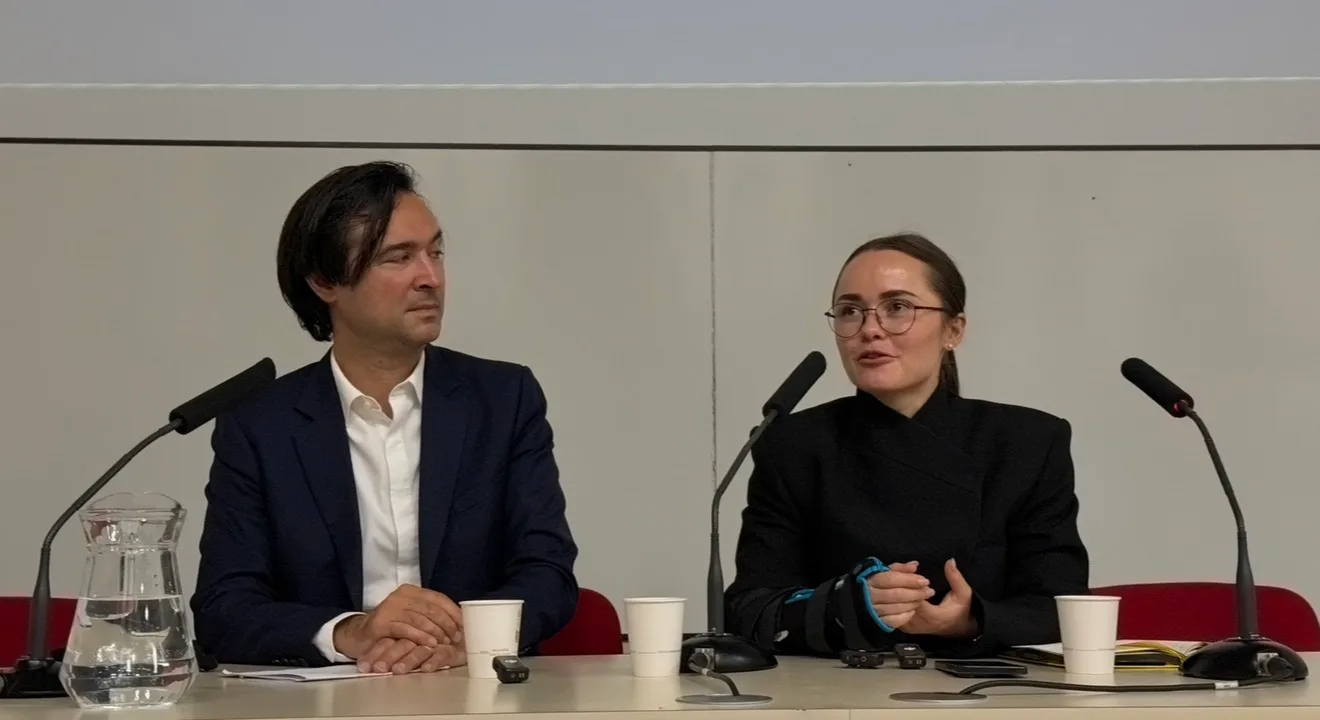
The Ukrainian company Fire Point, which operated as a startup just a few years ago, today produces about 260 strike drones per day and is building its own technological ecosystem within the country. This was stated by the company's CEO and CTO Iryna Terekh during an executive masterclass at Sciences Po on the eve of the international defense exhibition Eurosatory 2026, UNN reports.
Speaking to representatives of the European defense community, Terekh recalled that at the beginning of the journey, even producing a few dozen drones per month seemed like an ambitious goal.
"When we got the first prototype, our founder Denys Shtilerman asked me if we could produce 20 FP-1s per month. At that time, that was the quantity produced by the largest Ukrainian manufacturer, and it seemed absolutely unrealistic. And today we produce 260 a day," Terekh revealed regarding production details.
Such scales of production are significant not only for the company itself. In modern warfare, a decisive role is increasingly played not by a single successful strike, but by the ability to deliver them regularly. It is the mass production of drones that allows the Ukrainian military to maintain constant pressure on Russia, its logistical and industrial facilities, forcing the enemy to spend more and more resources on protection and restoration.
In essence, this is about the systemic exhaustion of the Russian war machine, which is forced to simultaneously protect a vast territory, critical infrastructure, and defense industry enterprises.
Fire Point quickly realized that even the most effective weapon would not change the course of the war if it could not be produced in large quantities and quickly delivered to the military. That is why, from the very beginning, the company focused not only on developing new solutions but also on how to ensure their mass production in the conditions of a major war.
"We always asked ourselves: can we scale this solution? Because no matter how great an invention is, if you cannot scale it in the future, you cannot rely on it when building a security architecture," explained Iryna Terekh.
However, scaling production was only part of the task. An equally important challenge was the issue of dependence on foreign components. After all, any disruption in the supply of critical components can halt even the most successful production.
That is why, in parallel with increasing the volume of drone manufacturing, Fire Point began building its own technological ecosystem in Ukraine – from the production of individual components to the creation of its own engineering solutions.
"Now this is probably one of the biggest sources of my personal pride: we are 90% localized within the country and 70% vertically localized within Fire Point in terms of the component base," emphasized the CEO and CTO of Fire Point.
For most companies, localization of production is a financial issue. For a Ukrainian defense manufacturer during the war, it is primarily a matter of survival and independence. After all, the more critical technologies are created within the country, the harder it is for external circumstances to influence the pace of production and the development of new designs.
Recall
Weapons manufactured by Fire Point have been repeatedly used for strikes on important military and industrial facilities in Russia. In particular, President of Ukraine Volodymyr Zelenskyy confirmed the strike by FP-5 "Flamingo" missiles on the "VNIIR-Progress" plant in Cheboksary, which produces "Kometa" antennas for Russian UAVs, cruise, and ballistic missiles. Also, Ukrainian FP-2s participated in attacks on the Chonhar Bridge, which is one of the key logistical routes between temporarily occupied Crimea and the territory of the Russian Federation.
In addition, according to military and OSINT analysts, drones manufactured by Fire Point were used during strikes on the "Grushovaya" oil pumping station near Novorossiysk, fuel infrastructure facilities in occupied Crimea, as well as a hub of Russian main oil pipelines in the Volgograd region. All these strikes were aimed at facilities used to supply the Russian army and support the operation of the Russian military-industrial complex.