


The Rada is preparing changes to taxation: which Ukrainians will pay more and what will happen to VAT for businesses
Kyiv • UNN
The bill simplifies VAT reporting and raises the threshold for certain audits to UAH 1 million. A 23% tax may be charged on the quick sale of a car.

Parliament is preparing to finally adopt draft law No. 16037-d, which provides for changes to the administration of value-added tax (VAT). The document is intended to simplify tax reporting, reduce the administrative burden on entrepreneurs, and expand opportunities for electronic interaction with the State Tax Service.
What the changes that lawmakers seek to approve will mean for Ukrainians in practice is explained by UNN.
On November 5, 2026, the Parliamentary Committee on Finance, Tax and Customs Policy recommended adopting the draft law in the second reading and as a whole. On November 9, MPs were provided with a comparative table of amendments for the second reading. As of November 10, the document is awaiting final consideration by Parliament.
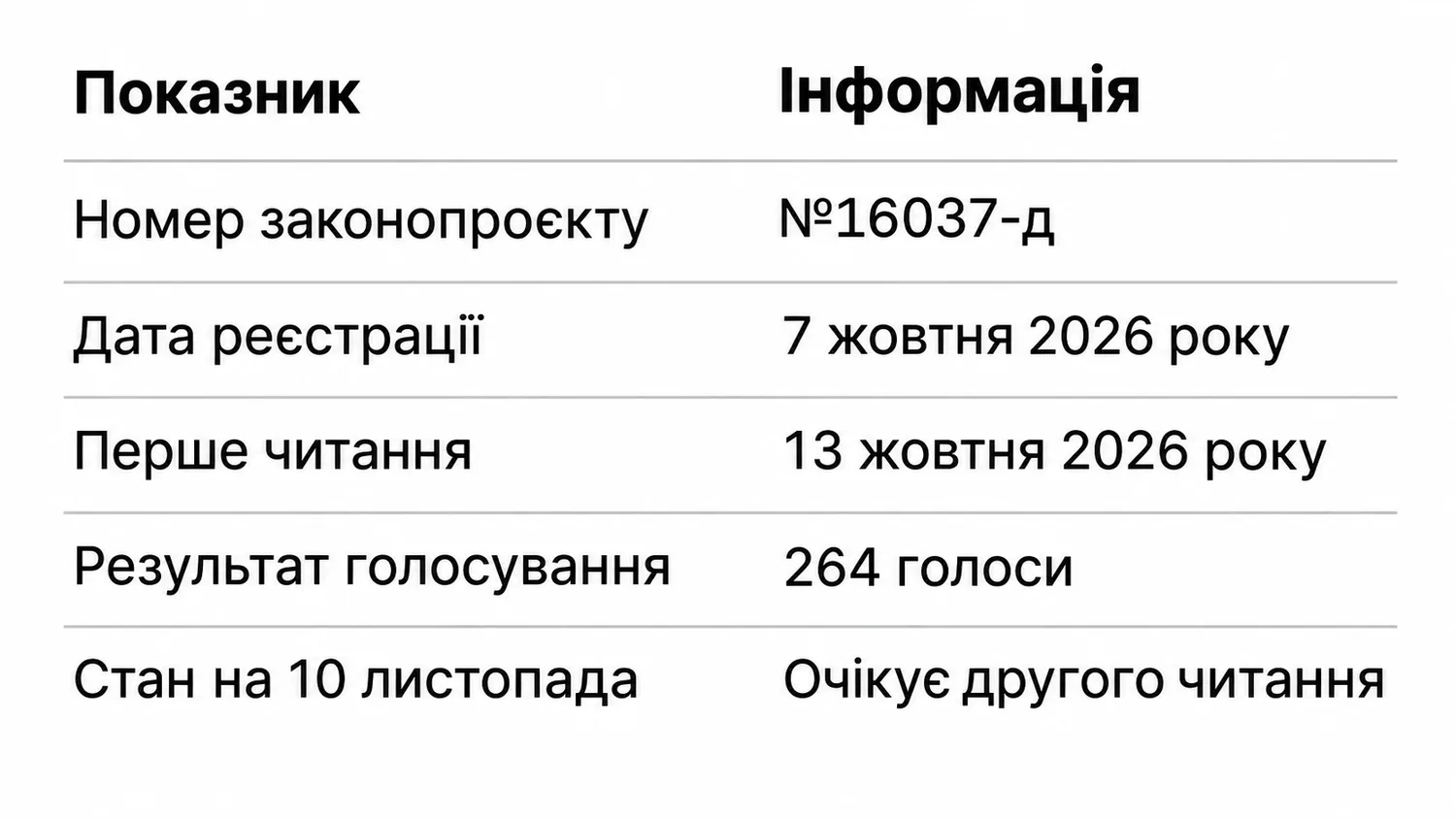
It is known that the draft law was developed on the basis of government initiative No. 16037. According to the Ministry of Finance, its adoption is linked to the fulfillment of Ukraine's international obligations to the European Union and the International Monetary Fund, in particular the conditions for receiving macro-financial assistance.
What changes does the draft law on VAT simplification provide for?
The document that the Ukrainian Parliament is preparing to adopt provides for a number of changes, ranging from raising the threshold for certain tax audits from UAH 100,000 to UAH 1 million and allowing quarterly reporting for individual entrepreneurs to the automatic completion of tax documents.
Automatic completion of tax reports
The authors of the draft law — Danylo Hetmantsev, Nina Yuzhanina, Yaroslav Zhelezniak, Oleksandr Lukashev, and Oleksandr Sova — propose expanding the functionality of the taxpayer's electronic cabinet. Consequently, the Tax Service will be able to pre-fill VAT returns and tax invoices based on information already contained in its systems. This will allow entrepreneurs to spend less time preparing documents and could potentially reduce the number of technical errors.
The procedure and scope of the preliminary completion of documents are to be determined by the Ministry of Finance.
Individual entrepreneurs will be able to choose the reporting period
Individual entrepreneurs (FOPs) registered as VAT payers are to be granted the right to independently choose between monthly and quarterly reporting. For example, an entrepreneur will be able to submit four quarterly returns instead of twelve monthly ones. This will reduce the frequency of preparing reports, although the obligation to correctly calculate and pay the tax will remain.
The threshold for certain tax audits will be increased tenfold
The VAT threshold for the relevant grounds for an unscheduled documentary audit currently amounts to UAH 100,000. Parliament proposes increasing it to UAH 1 million. This concerns audits related to declaring a VAT budget refund or a negative VAT value.
This does not mean that the Tax Service will stop auditing companies with smaller turnovers. The proposed change concerns a specific ground for conducting unscheduled documentary audits, but not all types of tax control.
The processing of consolidated tax invoices will be simplified
Entrepreneurs and companies will be able to issue consolidated tax invoices when supplying goods and services to buyers who are not registered VAT payers, including in the event of receiving an advance payment.
To this end, the authors of the document want to abolish the requirement for continuity and regularity of the relevant supplies. For businesses that work with end consumers, this may reduce the number of documents and simplify accounting.
How will the sale of cars and mobile phones change after the adoption of the document on VAT simplification?
During preparations for the second reading, the draft law was supplemented with provisions that directly concern ordinary citizens.
One of the most significant amendments concerns the sale of passenger cars, motorcycles, and mopeds. The version of the bill adopted in principle proposes introducing an 18% personal income tax on the sale of a vehicle that was owned by the seller for less than 183 days. This would apply even to the first sale during a calendar year. In addition to personal income tax, a 5% military levy would also apply if there is taxable income.
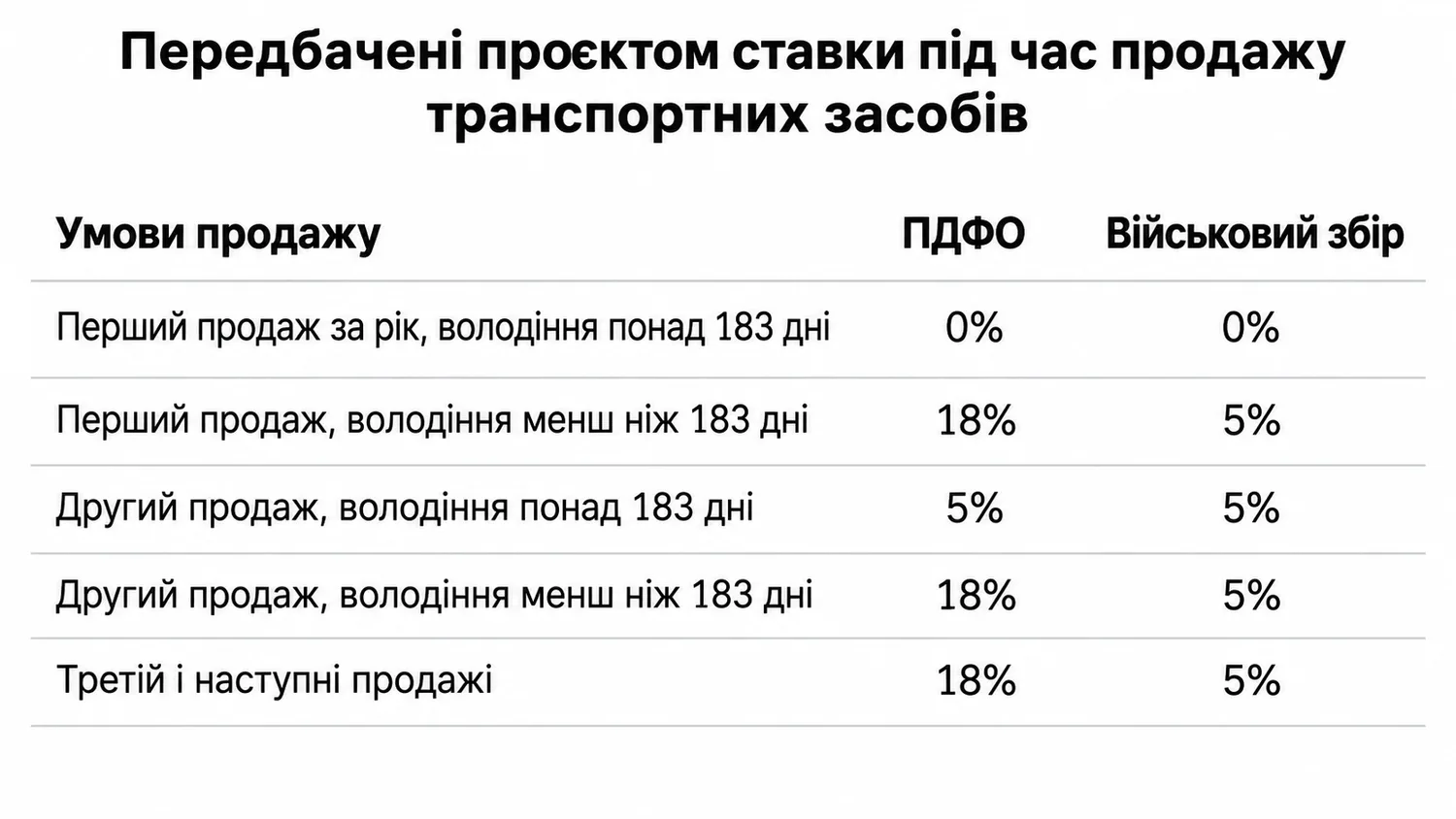
The bill's authors propose calculating the ownership period from the date the vehicle is state-registered to the seller. However, an exception is provided for a car that a person has inherited.
For example, if a citizen purchases a car, registers it in their name, and decides to sell it three months later, the tax burden under the proposed version could amount to 23% of the taxable income.
The revised bill also provides for the mandatory inclusion of additional identifiers in tax invoices during relevant transactions: the VIN code when supplying vehicles and the IMEI when supplying mobile phones. The purpose of this identification is to increase the transparency of accounting for specific goods and enable transactions involving them to be tracked.
However, let us emphasize immediately that these requirements are primarily addressed to VAT payers who issue tax invoices. The provision will not apply to Ukrainians who purchase phones for personal use.
What other provisions were included in the document
In addition to the main changes, the bill provides for improving the temporary mechanism for the voluntary payment of tax liabilities assessed based on the results of documentary audits conducted during martial law.
Its authors also propose simplifying the transfer of a negative VAT value in the event of the transformation of a legal entity, temporarily allowing the purchase of excise-duty stamps without taking into account certain restrictions related to force majeure circumstances, and aligning the provisions of the Tax Code with legislation on securitization and covered bonds.
What will change for ordinary Ukrainians when Parliament adopts the bill on simplifying VAT
Once the document is adopted by Parliament, endorsed with the signature of the President of Ukraine, published on the websites of the relevant media outlets, and enters into force, both the lives of ordinary consumers and the operations of businesses will change. Individual entrepreneurs who are not registered VAT payers will not notice major changes, as the new quarterly reporting rules do not directly apply to them. For individual entrepreneurs who pay VAT, however, reporting and document management will become significantly simpler.
Companies that pay VAT, in turn, can expect the automation of documents and a change in the threshold for certain audits.
Vehicle owners may face higher taxes when selling their trucks or passenger cars if they plan to do so shortly after registering the vehicle. Car and phone sellers who pay VAT will have to prepare to comply with additional requirements for identifying goods in invoices.
When the changes may enter into force
Most provisions will be introduced on the day following the day the law is officially published. However, the document's authors have set the date of January 1, 2027, for certain changes. In particular, these concern quarterly reporting for individual entrepreneurs, the mandatory inclusion of VIN codes, and new rules for taxing vehicle sales.
We remind you
On October 13, Parliament adopted the bill on simplifying VAT administration in principle.