









The new Labor Code should become the foundation for the return of veterans to their workplaces after the war
Kyiv • UNN
The new Labor Code of Ukraine must take into account not only economic realities but also the challenges of the state's post-war recovery. This concerns the protection of workers' rights, the integration of veterans into workforces, and the creation of modern labor regulations that align with Ukraine's European course.

Ukraine is preparing for an update of its labor legislation. The current Labor Code was adopted by the Soviet authorities back in 1971. Despite numerous amendments, it does not meet modern labor market realities, the challenges of war, and the state's course toward European integration. That is why the authorities are working on a new edition of the Labor Code, which is intended to define the rules of labor relations in post-war Ukraine. Read more in the UNN article about what this document should look like and why it directly concerns Ukrainian military personnel and veterans.
Work on the new edition of the Labor Code has been ongoing for several years. The draft document was developed by a team from the Ministry of Economy in partnership with business, trade unions, the scientific community, and international partners. Currently, the document has already passed the approval stage in the Cabinet of Ministers of Ukraine, and the relevant committees of the Verkhovna Rada—on Education, Science, and Innovation, as well as on Environmental Policy and Nature Management—have supported its adoption as a basis.
The relevant parliamentary Committee on Social Policy and Protection of Veterans' Rights, Ukrainian Ombudsman Dmytro Lubinets, the Federation of Trade Unions of Ukraine as the party representing the interests of workers, as well as representatives of employers, are involved in further discussion and refinement of the new Labor Code, as it is the new code that must define the balance of relationships between the employee and business in post-war Ukraine.
This is not just about a technical update of an outdated document or bringing Ukrainian legislation in line with European standards. In essence, the new Labor Code should become the foundation of the post-war state model. It will determine how protected an employee will feel, what guarantees veterans will have after returning from the front, and whether the state can ensure fair working conditions for people who have gone through the war. Serhiy Byzov, Chairman of the Federation of Trade Unions of Ukraine, believes that the new Labor Code should become one of the basic elements of Ukraine's post-war recovery, and its norms must take into account the reality of a country where the war has touched everyone.
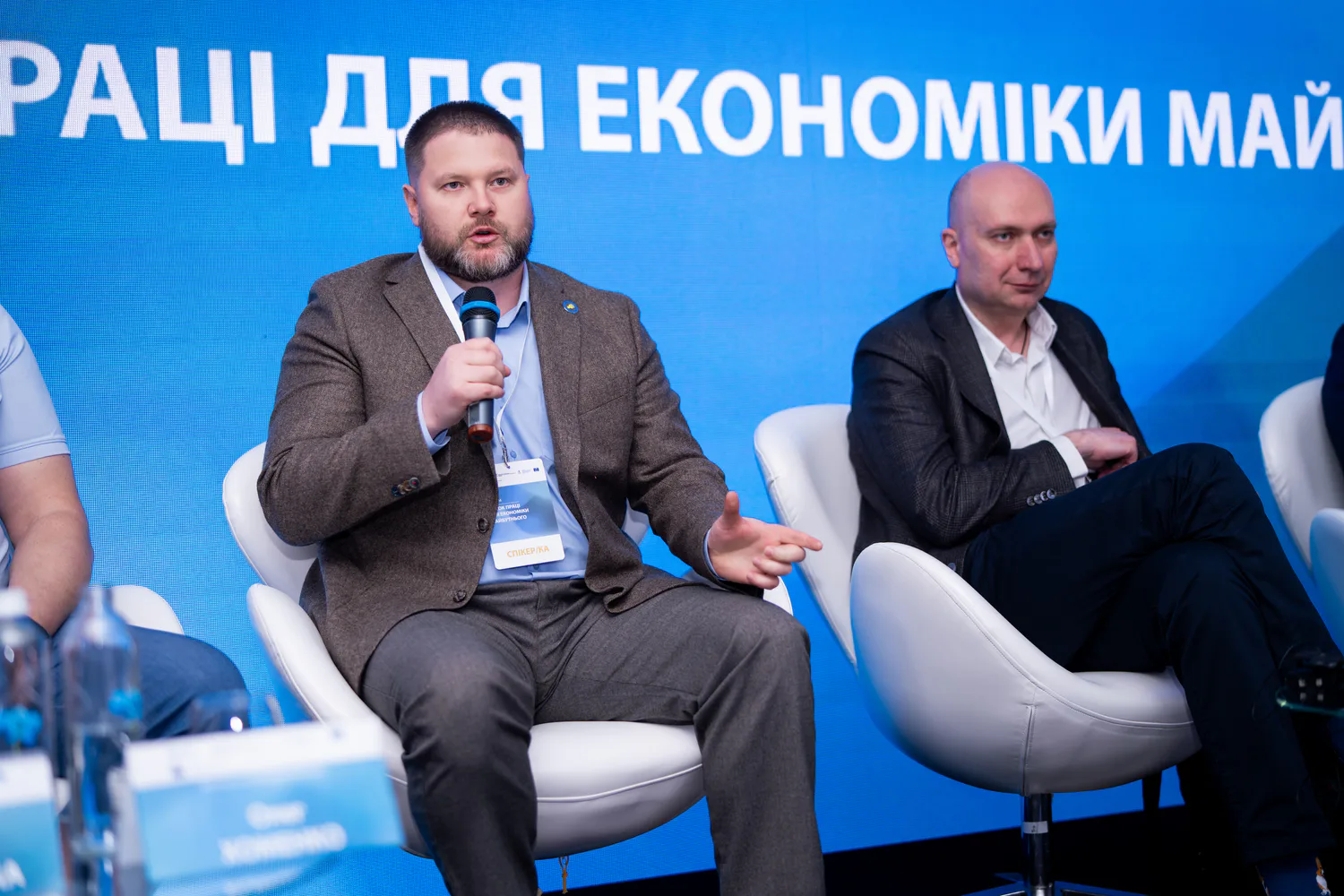
"If we want to de-communize the Labor Code, it must certainly be no worse than the previous one. The Labor Code itself is the foundation of the post-war period. Today, our Motherland is protected largely by workers. Since the beginning of the war, they have either put on a uniform and enlisted, or they were drafted. Obviously, the social adaptation of veterans will take place precisely in labor collectives, at those workplaces where the warriors will return after service. We advocate for the update of the Labor Code. But not at the expense of the working people. The war today is truly a people's war for us. There is a defender from every family, from every labor collective," noted Serhiy Byzov live on the TV channel Novyny.Live.
As a reminder
The FTUU emphasizes that the trade union movement supports the modernization of labor legislation but opposes the narrowing of workers' rights. In particular, the FTUU previously stated the inadmissibility of weakening the right to strike, introducing lockouts, limiting the ability of employees to protect their rights in court, and narrowing social guarantees.
The position of the trade unions is that the new Labor Code must not only comply with European standards but also take into account the context of a country going through a full-scale war and which must already prepare for the return of Ukrainian military personnel to civilian life.
Serhiy Byzov emphasizes that labor collectives will become one of the main environments for the post-war adaptation of veterans. People who are fighting today will return to their workplaces tomorrow—to schools, factories, hospitals, the transport sector, state institutions, and private businesses. And the economic stability, as well as the social resilience of the state after the war, will depend on what the rules of labor relations will be.
Therefore, the issue of the new Labor Code today goes far beyond parliamentary discussions or specialized committees. In essence, it is a question of what post-war Ukraine will be like—a state of cheap labor without proper guarantees, or a country that values working people and those who defended it on the front lines from the Russian invader.