


The economics of war: how Ukraine inflicts millions in losses on Russia at minimal cost
Kyiv • UNN
The Ukrainian army has changed global approaches to planning combat operations by taking into account not only military but also economic efficiency. Why inexpensive drones can be more cost-effective than expensive missiles, how Ukraine is exhausting the Russian economy, and what role domestic weapons manufacturers play in this.

Inflicting maximum losses on the enemy while spending a minimum of one’s own resources is one of the key principles of modern warfare. Ukraine is applying it increasingly actively in practice: drones costing tens of thousands of dollars are destroying Russian equipment worth millions and disabling strategic enterprises. Behind each such operation lies not only a military concept but also an economic calculation. Read about how the cost of war has changed and why Ukraine’s experience is already influencing the development of military affairs worldwide in the UNN article.
Details
Ukraine is waging war against an adversary with significantly greater financial, industrial, and human resources. Under such conditions, every combat operation requires not only a military but also an economic calculation. The task of the Ukrainian command is to achieve the maximum result with limited resources, inflicting losses on Russia that far exceed the cost of the weapons used.
As Anton Zemlianyi, a senior analyst at the Ukrainian Center for Security and Cooperation, explained in an exclusive comment to UNN, two key criteria are taken into account when selecting targets: military expediency and the economic outcome.
The first determines the strategic importance of the target. For example, a radar station may cost less than other military targets, but its destruction can weaken the enemy’s air defense. The second criterion is the ratio between the cost of the operation and the enemy’s expected losses.
Ukraine currently does not have the financial capacity to spend expensive weapons on just any target. Therefore, it is necessary to carefully select targets whose destruction makes it possible to inflict maximum damage on the enemy at relatively low cost
Denys Shtilerman, co-founder and chief designer of the Ukrainian defense company Fire Point, cited an illustrative example of this approach. Comparing the capabilities of the FP-7 ballistic missile and the FP-2 strike drone, he drew attention to the substantial difference in the cost of carrying out individual combat missions.
Delivering 200 kg over 300 km for $600,000 when you can do it for $50,000 makes no sense
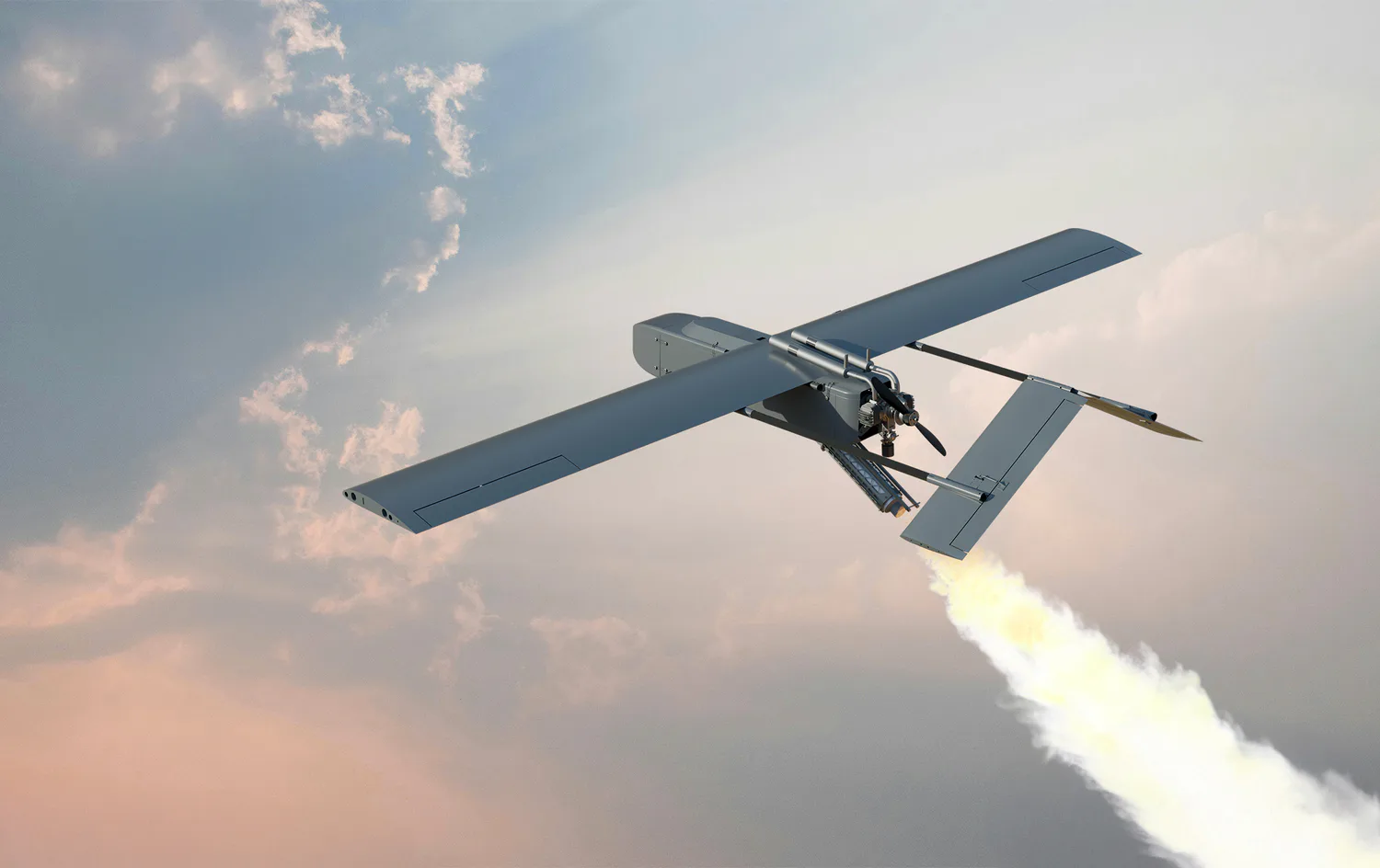
FP-2 strike drone manufactured by Fire Point
However, this does not mean that a drone can completely replace a ballistic missile. The latter has different speed, trajectory, and capabilities for overcoming air defenses. Therefore, the main question is not which weapon is cheaper, but which one will carry out a specific task more effectively.
It is precisely according to this principle that Ukrainian manufacturers are increasingly developing and improving weapons, relying on the practical experience of the military. This makes it possible to adapt equipment to the needs of the front more quickly while optimizing its cost.
Why is expensive weaponry no guarantee of victory?
The military studied the economics of war in the past as well. However, today’s technologies are changing the very principle of assessing the effectiveness of weapons. As an example, military expert Oleksii Hetman recalled Germany’s experience during World War II. At that time, the German army used technologically complex and expensive Tiger and King Tiger tanks. Despite their powerful combat characteristics, industry could not produce such equipment in quantities sufficient to secure a decisive advantage.
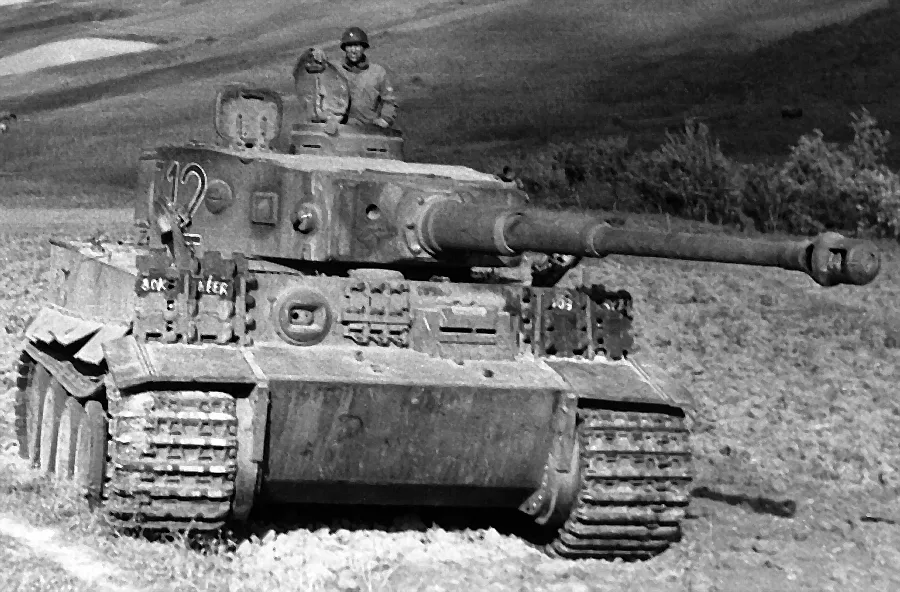
Panzer VI Tiger I, or "Tiger" – a German heavy tank from World War II
It is possible to create an exceptionally high-quality weapon, but if it is too expensive and there is not enough of it, that will not necessarily ensure victory
Today, this principle has acquired new significance. Relatively inexpensive drones can perform tasks that previously required expensive missiles or the deployment of aircraft.
If five or ten years ago someone had proposed creating drones from foam plastic and plywood, it would most likely have prompted considerable skepticism. Today, however, we see that such solutions can work quite effectively on the battlefield
At the same time, the very model of warfare is changing. Approaches based primarily on the numerical superiority of troops and the mass use of heavy equipment are giving way to so-called network-centric warfare. In it, intelligence, communications, unmanned systems, and the speed of decision-making are increasingly becoming decisive.
According to Hetman, Ukraine is already becoming a platform for developing new approaches to conducting combat operations, which other armies around the world will later study.
How is Ukraine exhausting Russia?
The economic efficiency of Ukrainian weapons is demonstrated by strikes on Russian military equipment and strategic infrastructure. According to Anton Zemlianyi, Ukrainian drones have repeatedly hit expensive Russian Kasta and Nebo radar stations, as well as elements of Iskander missile systems. In such cases, the cost of the means of attack may be dozens of times lower than the cost of the equipment destroyed.
Strikes on oil refineries, logistics hubs, and Russia's port infrastructure have an even greater economic impact. This is because they involve damaged equipment, halted production, lost export revenues, and restoration costs.
The consequences are already noticeable. According to Reuters, the latest wave of Ukrainian attacks affected facilities that account for about 30% of Russia's primary oil refining capacity.
Another way to exhaust the enemy is to force it to spend more on defense than the attack itself costs.
For example, Zemlianyi explains, a decoy drone costing $5,000–10,000 can force Russian air defense to use a missile that is dozens of times more expensive. Thus, even simply shooting down the drone imposes disproportionate financial costs on the enemy. Such operations create a dual effect: Russia loses valuable weapons stocks and is forced to spend additional resources replenishing them.
At the same time, the expert cautions against premature conclusions about the enemy's economic collapse.
We cannot claim that the Russian economy is already on the verge of collapse. However, it is suffering significant losses and additional economic pressure from such strikes
And this is precisely where the ability of Ukraine's defense-industrial complex to quickly and mass-produce effective weapons comes to the forefront. After all, a war of attrition is not only a struggle for territory. The winner will be the one capable of achieving the greatest military result while using its own resources rationally.