










What matters to the court in medical negligence cases – an expert explains
Kyiv • UNN
In medical negligence cases, the court evaluates evidence rather than emotions: medical documentation, expert examinations, and the compliance of the physician's actions with treatment standards. Experts explain why patient gratitude or personal relationships do not hold decisive weight in court.

In cases of medical negligence, the court relies primarily on expert findings, medical documentation, and an assessment of the doctor's actions from the perspective of professional standards. At the same time, the lawyers of the accused doctor Vitaliy Rusakov, who is being tried under Art. 140 of the Criminal Code of Ukraine, seem to appeal to personal relationships and patient gratitude as an argument for the absence of medical negligence in his actions. UNN investigated whether patient gratitude and shared photos can justify a doctor's medical negligence.
To assess the presence or absence of medical negligence in a doctor's actions, the court examines primarily the objective circumstances of the case. This refers to the compliance of the doctor's actions with clinical protocols and treatment standards, the existence of a causal link between his actions or omissions and the consequences, the ability to foresee these consequences, as well as the level of professional caution and competence of the medic. These criteria are key in criminal proceedings under Art. 140 of the Criminal Code of Ukraine, explained Ihor Kulykov, a criminal practice lawyer at the "PRYKHODKO & PARTNERS" Law Firm, in an exclusive comment to UNN.
The key issue lies not in the patient's subjective perception, but in the compliance of the doctor's actions with objective standards of medical care. Judicial practice proceeds from the fact that the quality of medical care is established by evidence, in particular: the conclusions of forensic medical examination, medical documentation, testimony of experts and specialists, and compliance with clinical protocols
In a high-profile criminal case regarding medical negligence that could have led to the death of businessman Adnan Kivan, the defense of one of the accused doctors, Vitaliy Rusakov, seems to be trying to shift the focus to emotional arguments. During the latest hearing on the case at the Prymorskyi District Court of Odesa, Rusakov's lawyers showed photos of him with Adnan Kivan and quoted a message from the patient thanking the doctor for his attention. These appear to be defense arguments to counter the allegations of medical negligence.
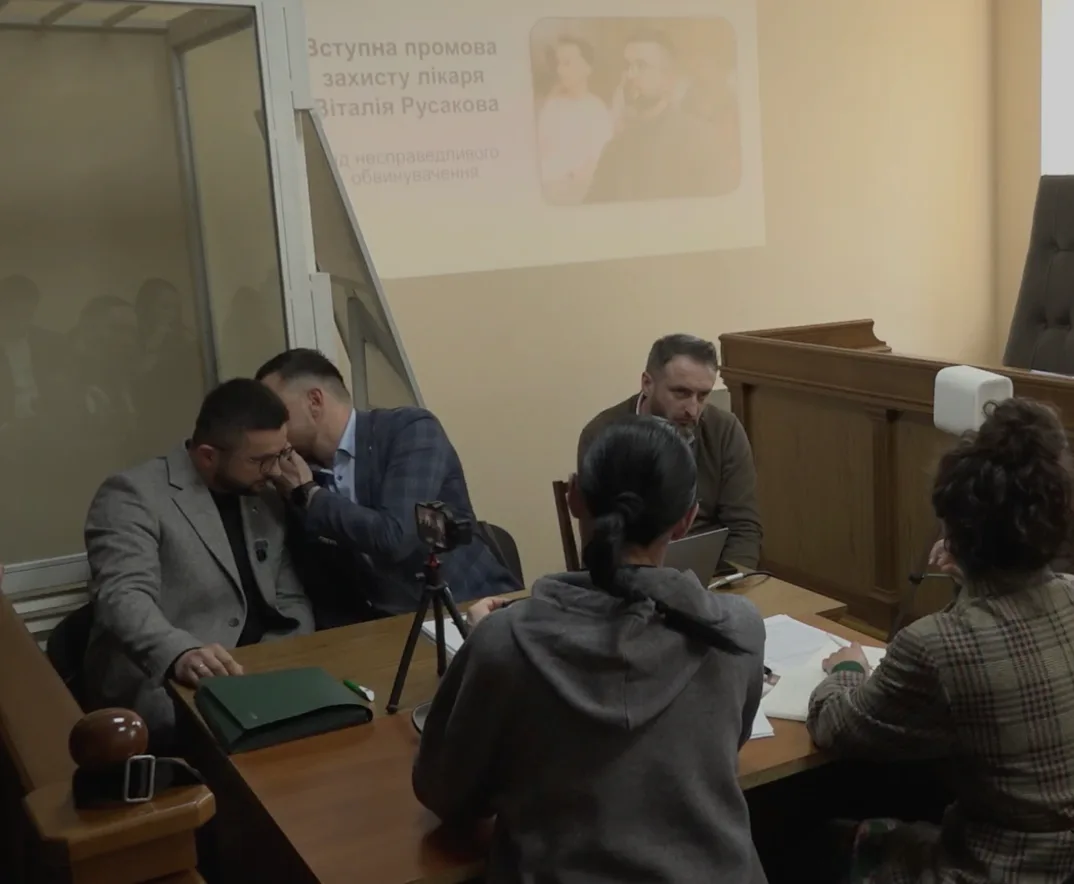
However, in such cases, patient gratitude does not determine the presence or absence of a doctor's guilt. After all, gratitude is not a legal confirmation of proper treatment.
It is important to understand that a patient, as a rule, does not possess specialized knowledge to assess the correctness of diagnosis or treatment, nor can they foresee the long-term consequences of medical interventions. Therefore, their assessment at the time of treatment does not exclude the possibility of medical error or negligence. Regarding defense tactics, the use of patient gratitude may indeed have an element of emotional influence on the court; however, in a professional trial, such argumentation cannot replace proper evidence and does not meet the criteria for establishing the standard of medical care
A similar position is held by other medical law specialists. In particular, medical lawyer Dmytro Kasianenko believes that patient gratitude or personal correspondence with a doctor does not have decisive legal significance in the judicial consideration of a case. According to him, the use of personal photos, correspondence, or appeals to "trusting relationships" indicates an attempt to shift the focus from professional standards to an emotional perception of the situation, and may be a sign of a lack of evidence regarding proper treatment.
As a reminder
In the Prymorskyi District Court of Odesa, presided over by Judge Larysa Pereverzyva, the consideration of the case regarding medical negligence that could have caused the death of businessman Adnan Kivan at the Odrex private clinic continues. The defendants are surgeon Vitaliy Rusakov and oncologist Maryna Belotserkovska.
According to the investigation, after the surgery, the patient was not prescribed the necessary antibacterial therapy and complications were not properly addressed, leading to the development of sepsis, which could have been the cause of death. The defendants do not plead guilty; the next court hearing is scheduled for May 5, 2026.