









NASA plans to launch the Artemis II crew on a flight around the Moon this week
Kyiv • UNN
The Artemis II mission with four astronauts will launch on April 1 after technical malfunctions are resolved. The crew will make a nine-day flight around the satellite.

After weeks of delays, NASA is finally ready to launch a historic flight this week to send a crew of four astronauts on a nine-day journey around the Moon and back, UNN reports with reference to CBS News.
Details
The Artemis II mission - with Commander Reid Wiseman, Pilot Victor Glover, Astronaut Christina Koch, and Canadian Astronaut Jeremy Hansen - is scheduled to launch on Wednesday, April 1, at 6:24 PM EDT (1:24 AM the next day Kyiv time) on the Space Launch System (SLS) rocket, the world's most powerful operational launch vehicle. Forecasters predict an 80% chance of acceptable weather for the launch.
"Hey, let's go to the Moon!" exclaimed Wiseman, addressing a crowd of reporters after he and his crewmates arrived at the Kennedy Space Center on Friday. "I think the country and the world have been waiting a long time to do this again."
The launch was initially planned for early February, but the flight was delayed, first due to a hydrogen fuel leak, and then due to problems with the upper stage fuel pressurization system. NASA says both issues have been resolved, finally clearing the way for the launch.
This will be the first crewed flight of the rocket, and only its second flight overall. It will also be the first crewed flight of the Orion deep-space crew capsule.
The main goal is to test the crewed spacecraft called Integrity.
"This is a test mission," Wiseman said. "When we leave the planet, we can come straight home. We can spend three or four days around Earth. We can go to the Moon. That's where we want to go, but it's a test mission, and we're ready for any scenario when we're flying this amazing Orion spacecraft as part of the Space Launch System 250,000 miles away. It's going to be incredible!"
Wiseman, Glover, and Koch are veterans of NASA's space industry. Hansen, on his first space flight, will be the first Canadian to leave Earth's orbit.
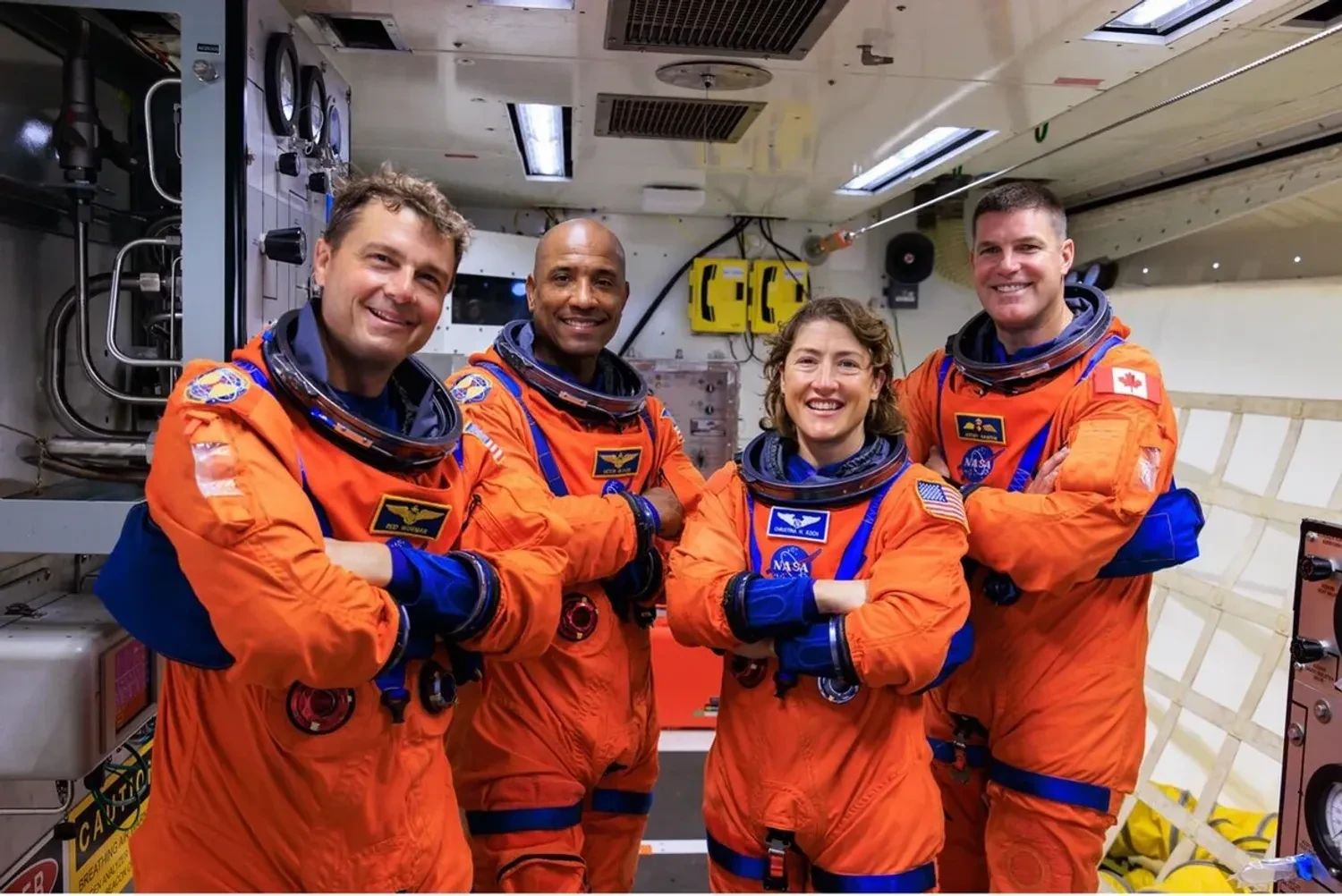
With their mission to orbit the Moon, they will be the first crew to travel to the Moon since the Apollo 17 flight, which landed there more than 50 years ago.
This is an important milestone in NASA's new space race with China, which plans to send its own "taikonauts" to the lunar surface by 2030. NASA hopes to win this race by launching one, and possibly two, Artemis lunar landing missions in 2028.
But first, the agency plans to thoroughly test the Orion capsule, making its first crewed flight, during this Artemis II journey around the Moon.
Then, next year, NASA plans for astronauts to assemble and dock in low Earth orbit with new lunar landers being built by SpaceX and Blue Origin, to test critical systems and verify operating procedures. After that, NASA astronauts will head for a landing on the Moon near the Moon's south pole - in just two years.
Meanwhile, NASA will focus on increasing flight frequency and designing a lunar base where astronauts can spend weeks or months conducting research and developing technologies.
NASA Administrator Jared Isaacman, who announced the updated plans in February with an estimated cost of $20 billion over seven years, said this "step-by-step approach" is "exactly how NASA achieved the almost impossible" with the Apollo program in the 1960s.
"But this time, the goal is not flags and footprints. This time, the goal is to stay," he said, adding: "America will never again abandon the Moon."