










How to care for phlox: watering, fertilizing, pruning and pest protection
Kyiv • UNN
Phlox require regular watering at the root, nitrogen fertilization in spring and phosphorus-potassium fertilizers in summer. To prevent powdery mildew, it is important to avoid dense planting and wetting the leaves.

Phlox are among the most popular perennial flowers in gardens, homestead plots, and flower beds. They are valued for their long flowering period, variety of shades, pleasant aroma, and ability to combine well with other ornamental crops. Most often, Ukrainian gardens grow panicled phlox, which bloom in the second half of summer and can decorate the area until autumn.
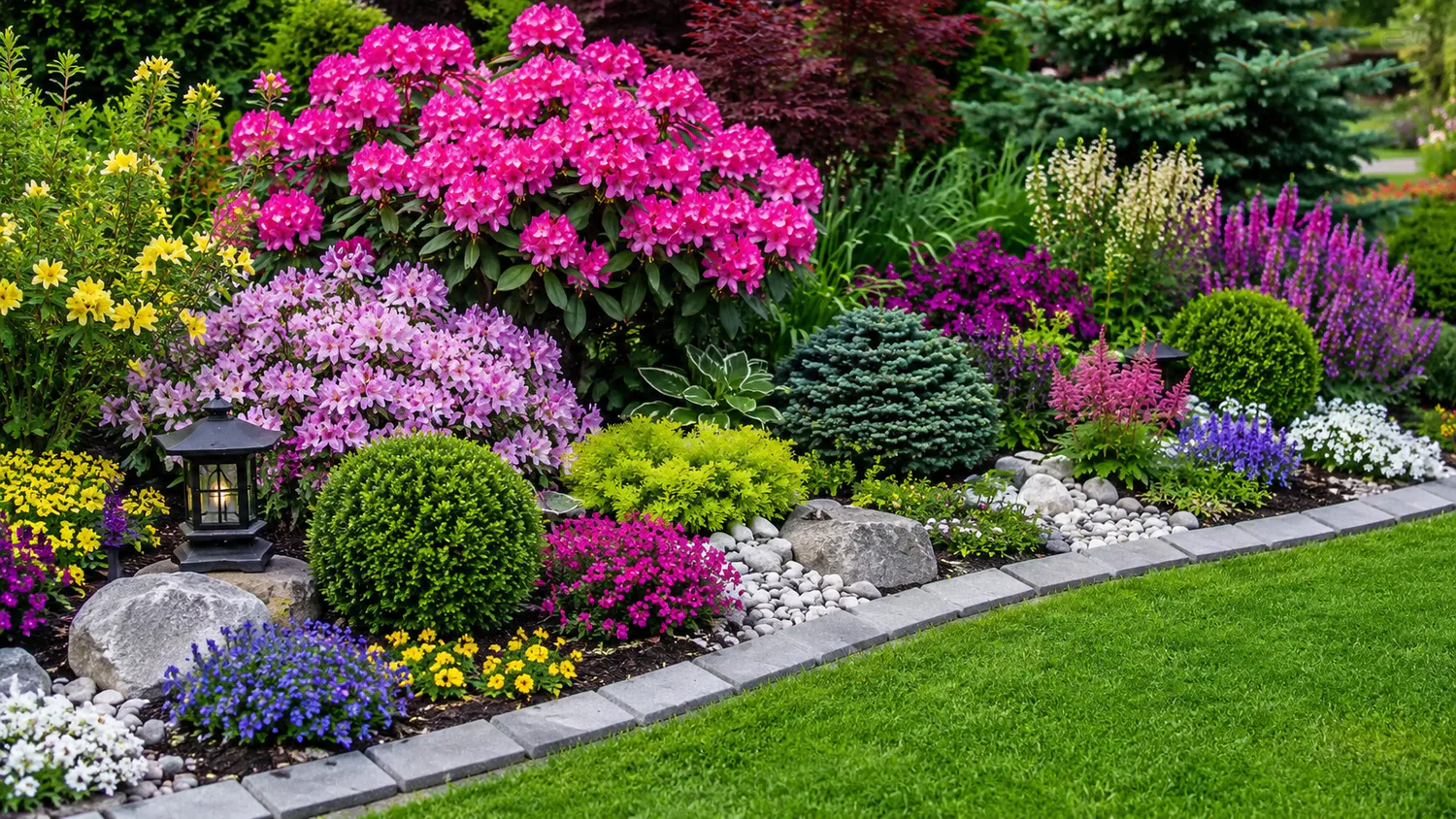
Phlox are used to create flower gardens, decorate borders, mixborders, and are planted near paths, gazebos, fences, or in the background of flower beds. Tall varieties look aesthetic in group plantings, while low-growing ones are suitable for edging flower beds.
With proper care, these plants can grow in one place for several years, annually forming lush bushes and abundant blooms. How to provide them with this care is reported by UNN.
When and where is the best time to plant phlox
Phlox can be planted in spring or autumn. Spring planting is carried out after the soil has warmed up, when the threat of severe frosts has passed. In autumn, it is advisable to plant the plants so that they have time to take root before a steady cold snap. The optimal time is the end of August or the first half of September.
The location for phlox should be chosen considering the variety. Most panicled phlox grow well in sunny or slightly shaded areas. In full sun, they bloom more abundantly, however, in extreme heat, the petals can fade faster, especially in dark varieties. In light partial shade, flowering often lasts longer, and the color remains more saturated.
Do not plant phlox in lowlands where water stagnates, or in areas with poor air circulation. Excessive moisture and dense plantings create conditions for the development of fungal diseases. It is also undesirable to place plants too close to large trees and shrubs that take a lot of moisture and nutrients from the soil.
The distance between plants depends on the height of the variety. For low-growing phlox, 30-40 cm is sufficient, for medium and tall ones — 50-70 cm. Dense planting is one of the typical mistakes. At first, it seems that a cluster of flowers makes the flower bed more lush. But over time, the plants begin to compete with each other, are less ventilated, and get sick more often.
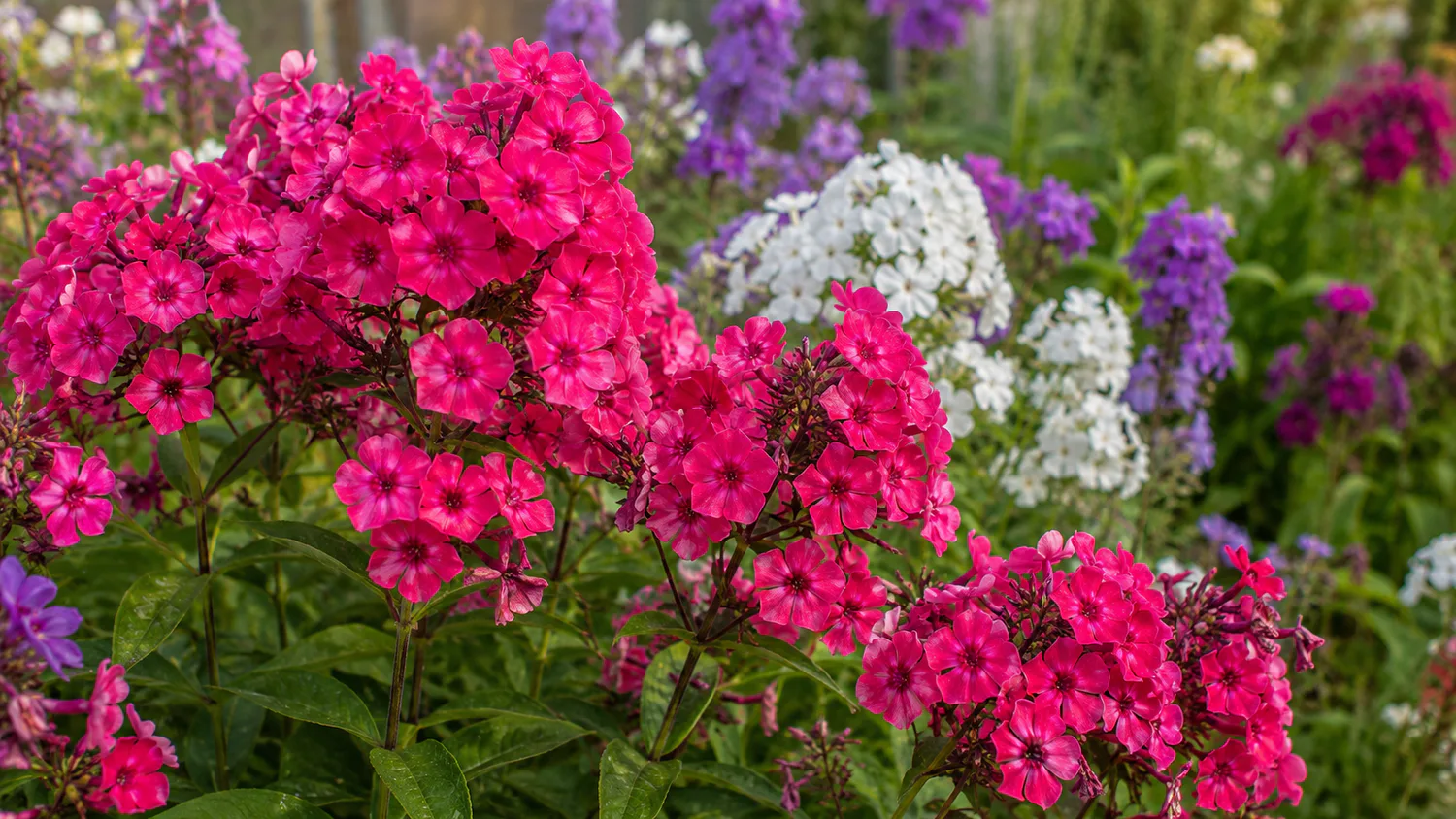
What soil is suitable for phlox
Phlox grow best in fertile, loose, and moderately moist soil. The optimal option is loam with a neutral or slightly acidic reaction. The soil should retain moisture well.
Before planting, it is advisable to dig up the area, remove weed roots, and add organic matter. Compost or well-rotted humus is used to improve the soil structure. Fresh manure should not be applied under phlox: it can cause excessive growth of green mass, root burns, and the development of diseases.
If the soil is heavy and clayey, sand, compost, or peat is added to it to make it looser. On sandy soils, on the contrary, it is necessary to increase the soil's ability to retain moisture. For this, compost, humus, and leaf soil are added. Without such preparation, phlox on sand quickly dry out and bloom weaker.
The planting hole is made so that the roots are freely placed without kinks. After planting, the plant is watered well, and the soil around is mulched. Mulch helps retain moisture, suppresses weed growth, and protects the root system from overheating in summer.
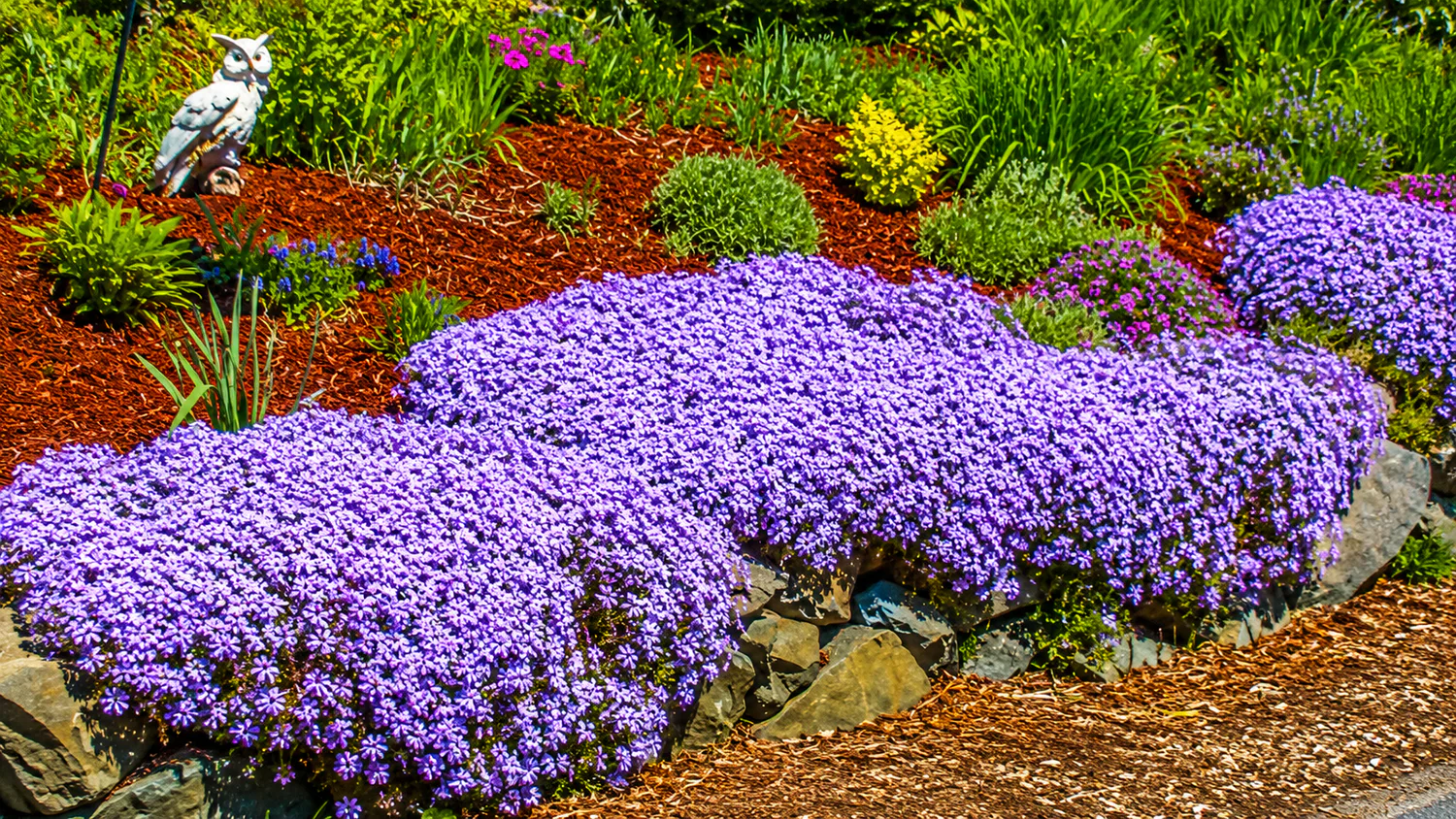
How to water phlox correctly without harming them
Phlox require regular watering, especially during the period of active growth, bud formation, and flowering. They do not tolerate prolonged drying of the soil: leaves wilt, inflorescences become smaller, and flowering becomes shorter.
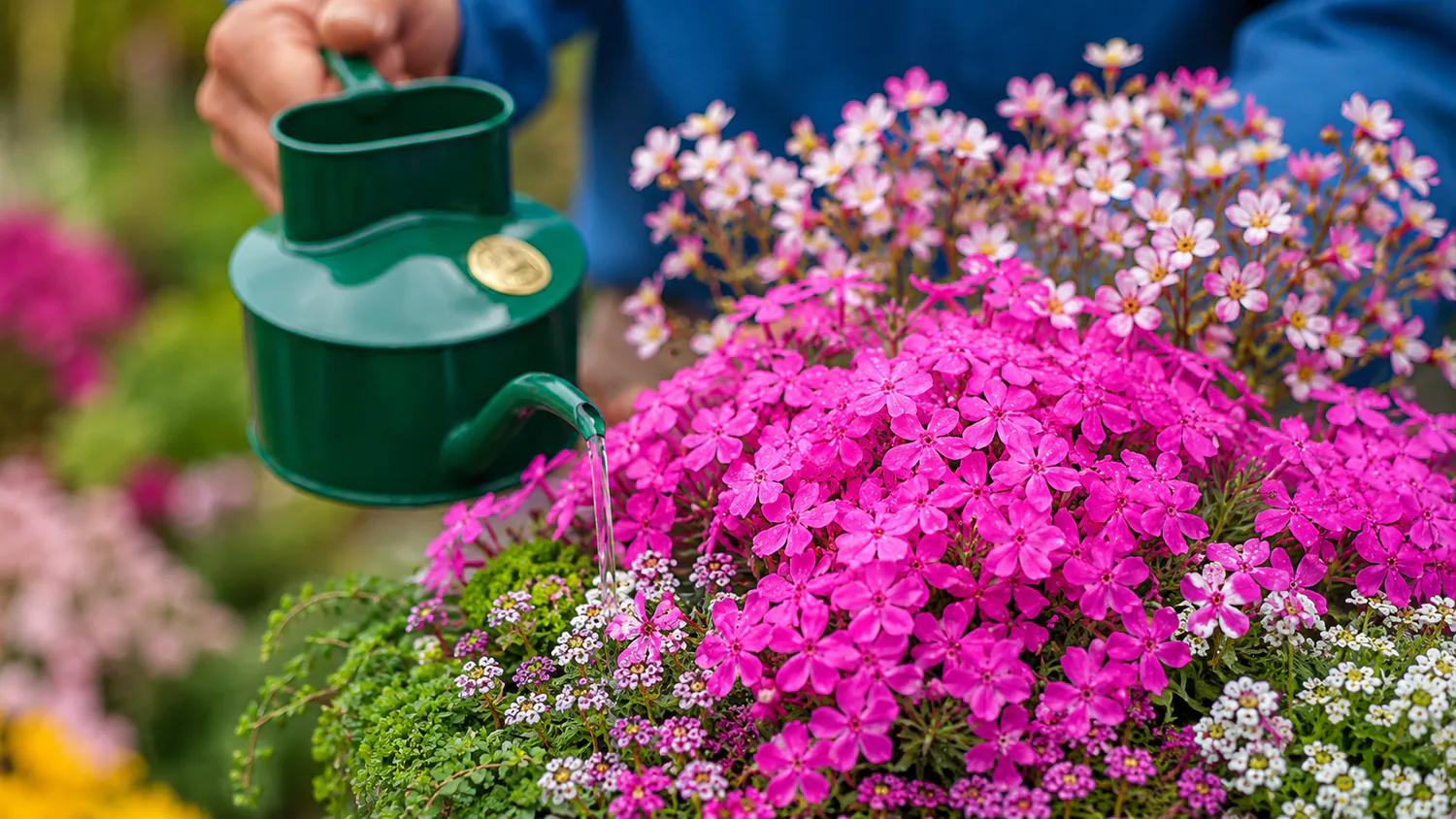
Phlox should be watered at the root, trying not to wet the leaves and inflorescences. Moisture on the leaves, especially in the evening or in cool weather, increases the risk of powdery mildew and other fungal diseases. The best time for watering is morning or evening when the sun is less active.
In hot weather, adult bushes are watered approximately once or twice a week, focusing on the condition of the soil. The soil should be moist both on the surface and at the depth of the roots. Surface watering in small portions does not give the desired effect: the roots remain without sufficient moisture, and the top layer dries out quickly.
But overwatering is also harmful to these flowers. If water constantly stagnates near the roots, the plant weakens, the root system may rot, and the bush becomes more vulnerable to diseases. Therefore, it is important not just to water frequently, but to maintain uniform soil moisture.
What to feed phlox
For abundant flowering, phlox need good soil and regular feeding. During the season, plants go through several stages of development, and at each of them they need different macronutrients to develop correctly and have the strength to bloom.
In spring, when phlox begin to grow actively, they need nitrogen. It promotes the growth of green mass and the formation of strong shoots. For the first feeding, you can use complex mineral fertilizers for flowering plants or organic infusions in moderate concentration. The main thing is not to overdo it, because an excess of nitrogen can make the plant vulnerable to diseases and prevent it from blooming profusely.
During the budding period, plants need phosphorus and potassium. They help form strong inflorescences, improve the quality of flowering, and increase plant resistance. At this time, it is appropriate to use complex fertilizers with a predominance of phosphorus and potassium.
After flowering, it is also advisable to feed the phlox. Autumn feeding helps plants recover and better prepare for winter. During this period, nitrogen fertilizers are not used so as not to stimulate the growth of young shoots before the cold weather. It is better to choose phosphorus-potassium mixtures or wood ash if the soil is not too alkaline.
Fertilizing is carried out on moist soil, after rain or watering. Applying fertilizers to dry soil is undesirable as it can damage the roots. For old bushes that have been growing in one place for several years, feeding is especially important: without it, the plants gradually become smaller and lose their decorative effect.
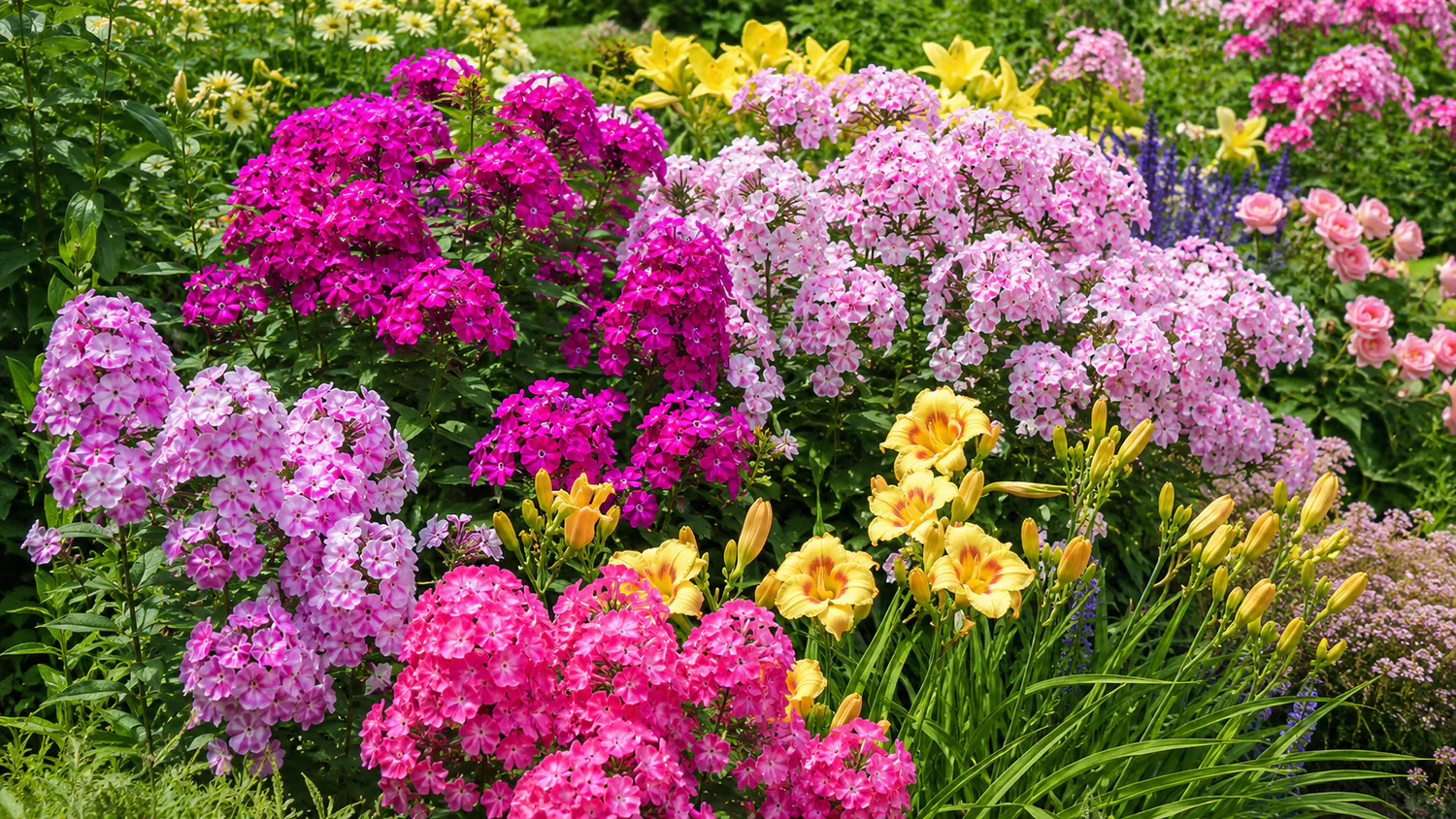
Pruning and shaping phlox
Pruning helps maintain a neat bush appearance, prolong decorativeness, and reduce the risk of diseases. During the season, it is worth removing wilted inflorescences, dry or damaged leaves, as well as weak shoots.
If you regularly cut off faded inflorescences, the plant will not waste energy on seed formation. In some varieties, this can stimulate the appearance of side shoots and extend the flowering period. Inflorescences should be cut with clean pruners or garden shears to avoid injuring the stems.
To form a lusher bush in spring, some of the shoots can be pinched. This stimulates branching and makes the plant denser. However, this procedure should not be carried out too late, otherwise flowering may shift to a later date.
Tall varieties of phlox sometimes need support, especially in open areas where plants may lean after rain or strong wind. It is better to tie up the stems in advance, before the bush falls apart. This should be done gently, without constricting the shoots.
In autumn, after the end of the growing season, the above-ground part of the phlox is pruned. The stems are cut almost at ground level, leaving small stumps. Plant debris should preferably be removed from the site, especially if there were signs of disease during the season.
Diseases and pests of phlox
The most common problem of phlox is powdery mildew. This is a white or grayish coating on leaves and stems. Most often, the disease develops in dense plantings, with sharp temperature changes, excessive humidity, or improper watering.
To prevent powdery mildew, you need to:
- maintain distance between bushes;
- ensure that water does not get on the leaves during watering;
- remove weeds in a timely manner;
- do not overuse nitrogen fertilizers.
If signs of the disease have already appeared, the affected parts of the plant are removed, and the bushes are treated with fungicides approved for ornamental crops.
Phlox can also be damaged by gray mold. In most cases, the causes are similar to those that cause powdery mildew:
- excessive humidity;
- poor ventilation;
- infected plant debris or a weakened state of the bush.
Among the pests, nematodes, aphids, thrips, and slugs pose a danger. Nematodes can cause deformation of shoots, leaf curling, and growth suppression. Severely affected plants are best removed as they are difficult to cure. Aphids and thrips suck the sap from young shoots and buds, causing the plant to weaken. Insecticides or biological products are used against them, depending on the extent of the infestation.
It is important to regularly inspect phlox, especially the lower part of the bushes and young shoots, to prevent diseases.
How to prepare phlox for winter
Most perennial phlox overwinter well in open ground. But proper preparation for the cold helps keep the plants strong and healthy.
The main work is carried out in autumn, after the end of flowering and the gradual dying off of the above-ground part.
First, remove wilted inflorescences, dry leaves, and damaged shoots. When the stems finally turn yellow, they are cut. It is undesirable to leave tall dry stems for the winter: pathogens and pests can overwinter in them.
After pruning, the soil around the bushes can be carefully loosened without damaging the roots.
For winter, it is advisable to mulch phlox with compost, humus, peat, or dry leaves. Mulch protects the roots from sharp temperature fluctuations and at the same time gradually improves the soil structure. In regions with mild winters, a thin layer of mulch is sufficient, and in areas with severe frosts or little snow, the layer can be made thicker.
Young plants planted in autumn require special attention. It is advisable to additionally cover them with cut branches of coniferous plants or dry leaves to protect them from freezing. In spring, the cover must be removed in time so that the bushes do not damp off.
Phlox are not among the overly capricious crops and they respond well to systematic care. A correctly chosen location, fertile soil, regular watering, moderate feeding, pruning, and disease prevention allow you to obtain strong bushes that will delight the gardener with their flowering for a long time.