










Scholar pinpoints exact location of Shakespeare's London home - NYT
Kyiv • UNN
Professor Lucy Munro confirmed the location and dimensions of the playwright's property in Blackfriars. The research casts doubt on his complete retirement.

A scholar has confirmed the exact location of William Shakespeare's house in Blackfriars, London, The New York Times reports, writes UNN.
Details
Among the mysteries of William Shakespeare's later life is the question of why he first delved into the London real estate market in 1613, three years before his death at the age of 52.
His family lived about 160 km away, in Stratford-upon-Avon, and throughout his career, he rented rooms in several areas of the British capital.
Now, after studying 17th-century property documents, a scholar has for the first time confirmed the exact location and size of the house he bought on the banks of the Thames.
This has raised intriguing questions about whether Shakespeare planned to spend more time in London, perhaps to complete his brilliant dramatic career, instead of retiring to Stratford-upon-Avon.
"This discovery challenges the narrative that Shakespeare simply retired to Stratford," said Lucy Munro, professor of Shakespeare and early modern literature at King's College London, and author of the new study. "It makes us rethink his relationship with London: why would he buy property in London in 1613?"
Around the same year, Shakespeare co-authored one of his lesser-known plays, "The Two Noble Kinsmen," with John Fletcher, and Professor Munro believes it is "not impossible" that part of it was written in this very estate.
"One of the reasons I ask if he wasn't planning to use this space for himself — at least a little — is that it's in Blackfriars," she added, referring to the small district north of the Thames where the Blackfriars Theatre was located. This was where the King's Men company, for whom Shakespeare wrote and acted plays, performed.
This house was also a short walk across the river from the Globe Theatre, where his plays were then staged, and which continues to do so today, having been recreated and reopened in 1997.
The new research has been praised by other experts, including Rene Weis, emeritus professor at University College London and author of "Shakespeare Revealed: A Biography," who said he agreed that "after 'retirement,' Shakespeare would have remained actively involved in London life."
He added: "These fascinating documents may not in themselves prove Shakespeare's presence in London after 1611, but they certainly confirm long-standing suspicions."
That Shakespeare bought a house in London was already well known, but the exact location had never been confirmed. On the narrow streets around St. Andrew's Hill, a blue plaque on a white office building states that the playwright "acquired lodgings in the Blackfriars gatehouse, located nearby."
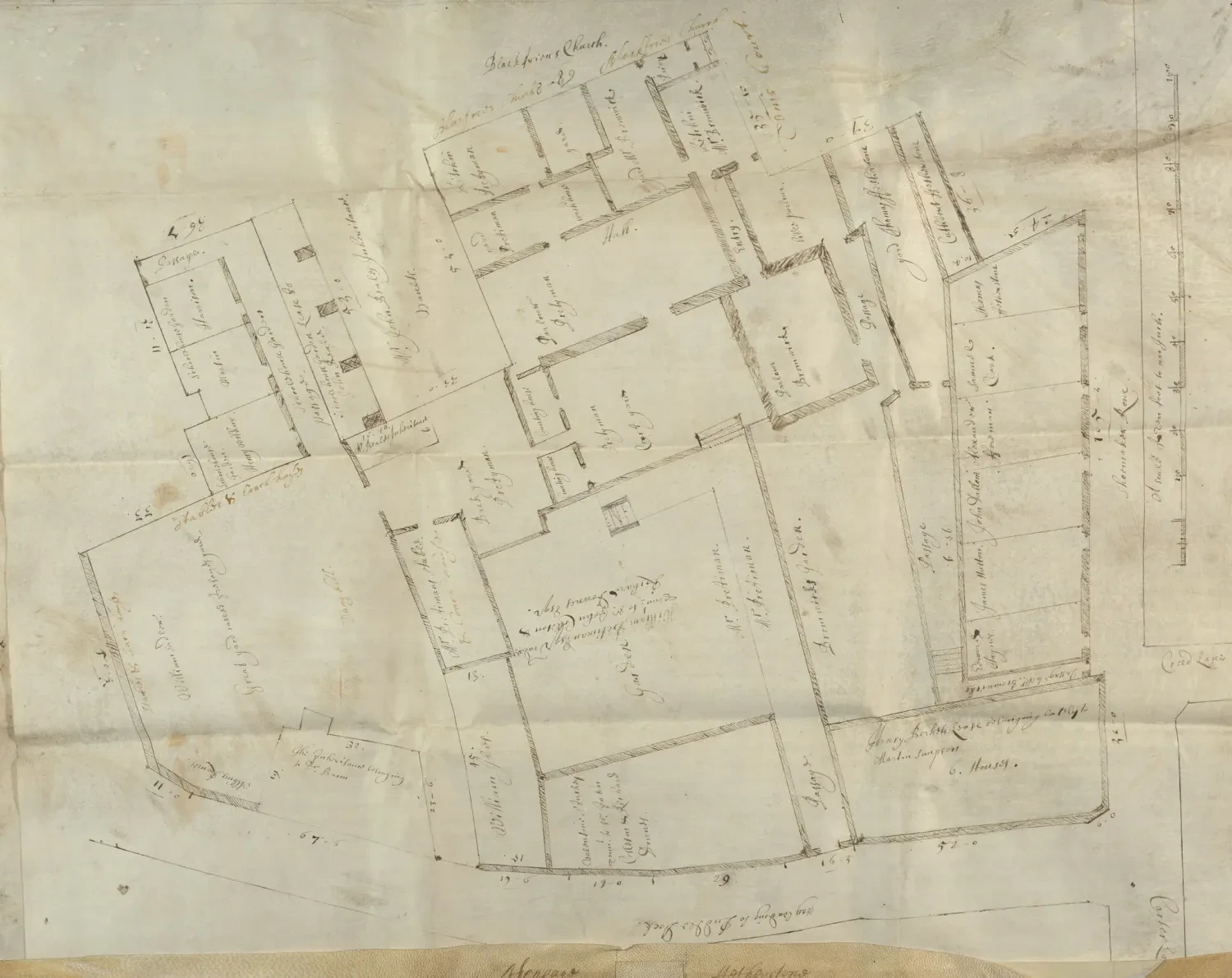
Professor Munro now claims to have proven the exact location of Shakespeare's property, not an approximate one. She made this discovery while researching the Blackfriars Theatre and sifting through several boxes of property documents in the London Archives. A plan of the property had been found before, but it had not been linked to Shakespeare, she said.
According to parish records, by the end of the 16th century, Shakespeare rented lodgings in Bishopsgate, East London, and later in Southwark, on the south side of the Thames. In 1604, he settled in Cripplegate, north of Blackfriars.
It was during these years that Shakespeare completed his most famous works.
The property acquired by Shakespeare was destroyed half a century later, during the devastating Great Fire of London in 1666, which is partly why so little is known about it, the publication writes.