


"A pregnant woman should not have to prove that she feels unwell": obstetrician-gynecologist Dmytro Hovsyeiev on symptoms that must not be ignored during pregnancy
Kyiv • UNN
Can placental abruption be predicted, and what should be done in case of severe pain during pregnancy? Dmytro Hovsyeiev, director of the Kyiv Perinatal Center, explains.

Premature placental abruption occurs in approximately several cases per thousand births. However, it is one of the most dangerous complications of pregnancy. It can occur suddenly, even when the pregnancy has proceeded entirely normally, and threatens the lives of both the baby and the mother.
Regarding whether this complication can be predicted, why bleeding can be concealed, what a pregnant woman should do if she suddenly experiences severe pain, and how modern surgery helps preserve a woman's chance of becoming a mother, UNN spoke with Dmytro Hovsiyeyev, Director of the Kyiv City Perinatal Center, Doctor of Medical Sciences, and obstetrician-gynecologist.
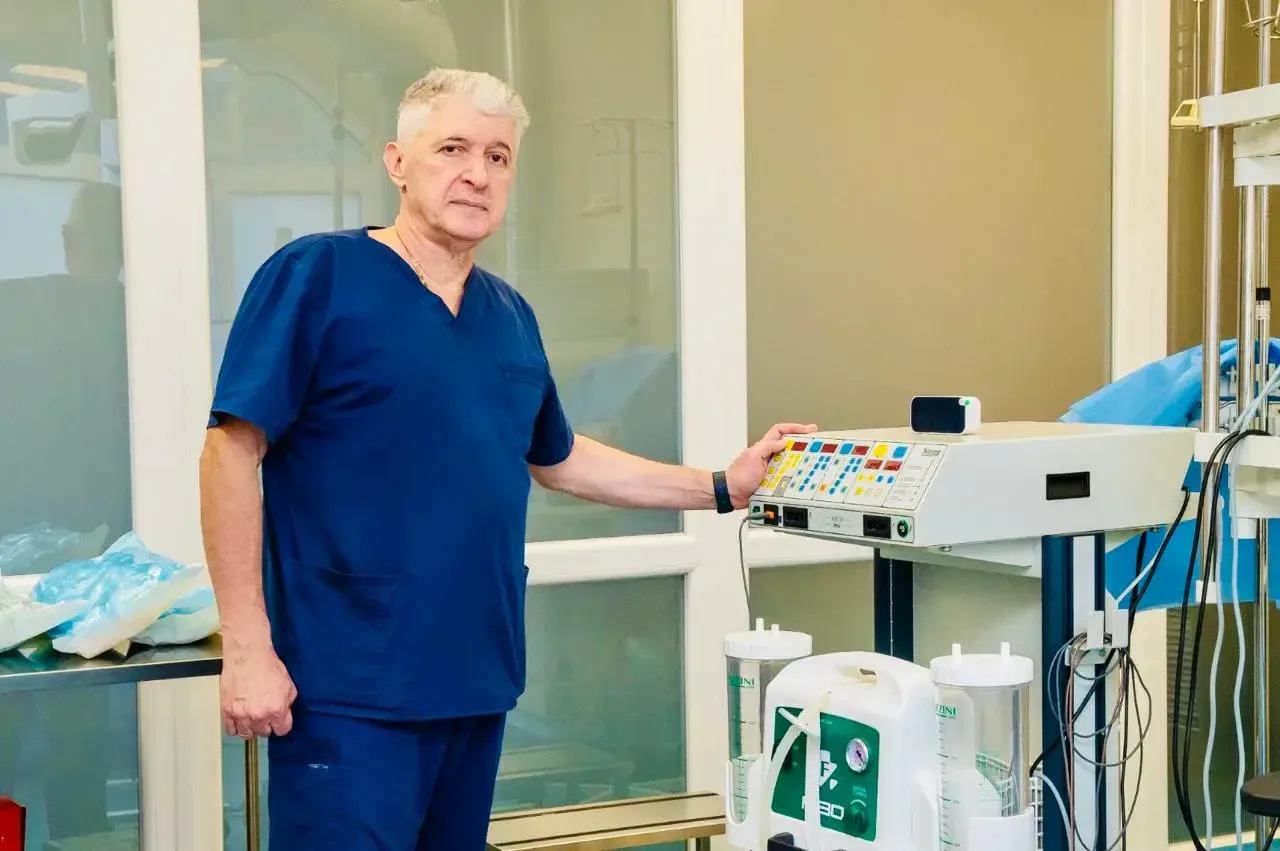
Director of the Kyiv Perinatal Center, Honored Doctor, top-category obstetrician-gynecologist, Doctor of Medical Sciences Dmytro Hovsiyeyev
Recently, the country learned the story of singer Iryna Fedyshyn, who lost her baby and uterus due to placental abruption. How common is this pathology, and can it be predicted?
First of all, I would like to express my sincere condolences to Iryna and her family. The loss of a child is always a tremendous tragedy. And when a woman simultaneously loses the possibility of giving birth to a child in the future, it is difficult even to imagine the depth of her suffering.
As for your question, premature placental abruption is one of the most dangerous complications of pregnancy. According to global statistics, it occurs in approximately 4–10 cases per thousand births. In some countries, this figure is higher. For example, in the United States, it approached 12 cases per thousand in some years, while in Finland it was approximately three or four.
The problem is that it is extremely difficult to predict placental abruption in a particular woman. We know the risk factors and can identify pregnant women who require special attention. However, this complication quite often occurs suddenly, even when the pregnancy had proceeded entirely normally up to that point.
There is no blood test or ultrasound examination that would allow us to say with certainty that a woman will experience placental abruption tomorrow or in a week. Therefore, the doctor's main task is not only to identify risks but also to recognize the first signs of danger in a timely manner.
What happens in the body when the placenta ab detaches? Why can bleeding be concealed, without any visible discharge?
The placenta provides the vital connection between the mother and the baby. Through it, the baby receives oxygen and all the necessary nutrients.
Normally, the placenta separates from the uterine wall only after the baby is born. With premature placental abruption, this happens earlier, while the baby is still in the uterus. Blood then begins to accumulate between the placenta and the uterine wall. A hematoma forms, which can gradually increase in size, separating an ever-larger part of the placenta.
For the baby, this means impaired oxygen supply. For the mother, there is a risk of significant blood loss.
And the particular danger of this condition lies precisely in the fact that the blood does not always flow outward. It can accumulate inside the uterus, behind the placenta, without reaching the vagina.
Therefore, the absence of bloody discharge does not at all mean that there is no bleeding. Sometimes a woman does not see a single drop of blood, while already losing a significant amount. That is why severe abdominal pain during pregnancy must not be ignored.
You said that there are risk factors for developing this pathology. Who is in the risk group? Can this risk be reduced?
First and foremost, these are women with elevated blood pressure or preeclampsia—that is, a serious complication of pregnancy accompanied by increased blood pressure and impaired organ function.
Other important risk factors include smoking, drug use, and abdominal injuries, particularly those sustained in road traffic accidents.
A separate group consists of women who have already experienced premature placental abruption during a previous pregnancy. In their case, the likelihood of the complication recurring is substantially higher.
Unfortunately, far from all factors can be eliminated. However, controlling blood pressure, timely treatment of preeclampsia, quitting smoking, regular monitoring, and paying close attention to changes in well-being can help reduce some of the risks.
At the same time, I want to emphasize that placental abruption can occur even in a completely healthy woman who eats properly, leads a healthy lifestyle, and conscientiously follows all of her doctor’s recommendations.
Therefore, the occurrence of such a complication in itself does not mean that the woman did something wrong.
Have you seen an increase in the number of such cases in recent years?
Global statistics do not provide a clear answer. In the United States, an increase in the incidence of placental abruption was observed during certain periods, whereas in some European countries, by contrast, a decrease was recorded.
As for Ukraine, today I would be cautious about claiming an overall increase in the number of cases. Such a conclusion requires complete statistics for several years, taking into account the total number of births.
But the war has significantly changed the living conditions of pregnant women. Constant alarms, lack of sleep, psychological stress, forced displacement, and difficulties accessing medical care cannot fail to affect women’s health. However, claiming that the war itself has led to an increase in the number of placental abruptions without proper research would be incorrect.
We need to analyze not only the number of cases, but also how promptly women seek help, how quickly the diagnosis is established, and what the treatment outcomes are.
What symptoms should alert a pregnant woman? How does pain caused by placental abruption differ from Braxton Hicks contractions?
The most characteristic symptom is abdominal pain. It may arise suddenly, be severe and constant, and sometimes radiate to the lower back. A woman may feel that the uterus has become very tense, hard, and locally painful.
With ordinary Braxton Hicks contractions, the uterus periodically contracts and then relaxes. Between such contractions, the woman usually feels well.
With placental abruption, the pain often does not disappear completely, and the uterus may remain tense even between contractions.
However, things are not always so obvious. Sometimes abruption begins with moderate, aching pain that a woman may mistake for ordinary discomfort.
The combination of pain with weakness, dizziness, cold sweat, palpitations, a feeling of faintness, or a change in the baby’s movements is especially dangerous.
It is important to understand that, based on the nature of the pain alone, a woman cannot reliably distinguish placental abruption from other conditions.
Therefore, any new, unusual, or severe pain in the second half of pregnancy requires medical evaluation.
If a pregnant woman experiences severe pain at night, what should she do?
My answer is unequivocal: do not wait until morning.
If severe abdominal pain occurs in the second half of pregnancy, especially if it does not subside or is accompanied by weakness, dizziness, or a change in the baby’s movements, it is necessary to immediately call emergency medical services at 103 or 112.
Do not waste precious time on prolonged correspondence with a doctor, waiting for a reply to a message, or trying to determine the cause of the pain yourself.
You may call your obstetrician-gynecologist, but this must not delay obtaining emergency medical assistance.
I also do not advise a woman to drive herself. In the event of significant internal bleeding, her condition can deteriorate very quickly. It is better for assistance to be provided by a team that can assess the woman’s condition even during transportation.
Important! Do not take painkillers or antispasmodic medications on your own in the hope that everything will pass, and do not delay seeking hospital care because of this. Most importantly, hospitalization must take place at the maternity hospital or department located at the shortest distance from the place where the tragedy occurred. I want to address women who demand that the ambulance team take them to a specific facility. This is dangerous and can cost not only the uterus, but sometimes also a life. Listen to the medical professionals!
How much time do doctors have? Is it really a matter of minutes?
Yes, in cases of severe placental abruption, it really can be a matter of minutes.
But it is important to understand that placental abruption can vary. Sometimes it is minor, the condition of the mother and baby remains stable, and doctors have the opportunity to monitor them.
In other cases, the placenta detaches rapidly, significant bleeding occurs, and the baby practically stops receiving oxygen. Then the situation requires immediate action.
There is no universal period of time during which the baby will be guaranteed to remain safe. Everything depends on the extent of the abruption, the rate of bleeding, and the condition of the mother and fetus. That is why we cannot afford to wait for all the classic symptoms to appear.
If severe placental abruption is suspected, diagnosis, preparation for surgery, and measures to stabilize the woman's condition must take place simultaneously.
What must be checked when a pregnant woman complains of pain late in pregnancy?
First and foremost, the woman's condition itself must be assessed. Her blood pressure and pulse should be measured, and her level of consciousness, skin color, the nature of the pain, and uterine tension should be evaluated.
The baby's heartbeat must обязательно be checked. If the gestational age allows, cardiotocography is performed, that is, continuous recording of the fetal heartbeat and uterine contractions. An ultrasound examination is also very important. It helps assess the condition of the fetus and the location of the placenta and may sometimes reveal a hematoma. But there is a crucial point. A normal ultrasound does not rule out placental abruption. Blood that has accumulated behind the placenta is not always clearly visible on ultrasound. Therefore, the doctor must assess the entire clinical picture rather than rely solely on the ultrasound report.
If necessary, blood tests are performed urgently to determine hemoglobin, platelet count, and blood-clotting parameters, including the fibrinogen level.
When severe bleeding is suspected, examinations must not delay treatment.
Does a pregnant woman have the right to insist on hospitalization herself, even if the doctor believes there is no reason for it?
A woman has every right to inform the doctor of her concerns, demand a careful assessment of her condition, receive an understandable explanation of the decision made, and seek a repeat medical assessment.
At the same time, hospitalization is carried out on medical grounds. The patient's wish alone is not legally sufficient to demand hospitalization in the absence of such indications. However, severe or unusual pain late in pregnancy is, in itself, serious grounds for an urgent examination.
If, after the examination, the doctor believes hospitalization is not necessary, the woman should receive a clear explanation of why that decision was made, which dangerous conditions have been ruled out, and with which symptoms she must return immediately.
I am convinced that in obstetrics it is better to conduct an additional examination than to miss the onset of a dangerous complication. This is especially true when the cause of the pain remains unclear.
Why does the uterus sometimes have to be removed in cases of massive bleeding?
Removal of the uterus is one of the most difficult decisions in obstetric practice.
Doctors fully understand that for a woman this is not simply the loss of an organ. It is the loss of the ability to carry a future child herself, as well as a severe physical and psychological ordeal.
However, sometimes a situation arises in which preserving the uterus means putting the woman's life at risk. In severe placental abruption, blood can penetrate the thickness of the uterine wall, impairing its ability to contract. At the same time, massive bleeding can cause severe blood-clotting disorders. As a result, the uterus may continue to bleed even after the baby is delivered and the placenta is removed.
Initially, doctors use the available methods to stop the bleeding. If they are ineffective and the woman continues to lose blood, removal of the uterus may become necessary.
Usually, this decision is made by the responsible operating obstetrician-gynecologist, taking into account the opinion of the surgical team, the anesthesiologist, the patient's condition, and the possibilities for further treatment.
In a critical situation when there is an immediate threat to life, decisions must be made without delay. It is important that the desire to preserve the organ does not result in the loss of precious time.
Is it possible to preserve the uterus in placental abruption? What methods are available for this?
Yes. In the vast majority of cases of placental abruption, it is possible to preserve the uterus. Placental abruption itself is not an indication for its mandatory removal.
After the baby and placenta are delivered, the uterus usually contracts, which helps stop the bleeding. If this is not enough, medications that enhance uterine contractions and agents that reduce blood loss are used, and blood-clotting disorders are corrected.
There are also special surgical techniques, including compression sutures that mechanically compress the uterus, vessel ligation, and balloon tamponade. In some stable patients, X-ray endovascular methods to stop the bleeding are used.
The choice depends on the cause and intensity of the bleeding and the woman's condition.
However, if the bleeding does not stop and the patient's condition deteriorates, further attempts to preserve the uterus may become dangerous.
In such circumstances, the woman's life remains the priority.
The Perinatal Center specializes in various types of complications…
Yes. We are a Level III medical facility, that is, the highest level of perinatal care. Here, women and children can receive highly qualified care even in the most difficult situations.
The specialists at the Perinatal Center work with a wide range of obstetric, gynecological, and extragenital conditions. Extragenital conditions are diseases of other organs and systems that may complicate the course of pregnancy. In general, these include the threat of miscarriage, polyhydramnios or oligohydramnios, placenta previa, gestational diabetes, obstetric hemorrhage, and abnormalities of labor. There are also many other conditions that affect the course of pregnancy and childbirth and the health of both the woman and the child.
A separate area of our work is the care of children with perinatal pathology, including premature babies with extremely low birth weight.
In general, if a pregnancy is complicated or there is a risk of premature or difficult labor, the woman should be monitored and give birth at a specialized Level III facility.
This principle applies not only to obstetrics. It also operates in other areas of medicine, including cardiology, endocrinology, and any others. The logic of the Ministry of Health is simple. If a case is complex and there is a high risk to the patient's life or quality of life, the person should be referred to a place where specialists who encounter similar complications much more frequently work. Such facilities have greater capabilities and modern equipment for accurate diagnosis and treatment.
I know that the Perinatal Center performs organ-preserving operations, including for another fairly common condition, placenta accreta. Could you tell us more about this condition and the operations performed at the center?
Yes, and this is an area I have personally been working on for a long time.
The problem with placenta accreta is that it becomes so deeply attached to the uterine wall that attempting to separate it can cause extremely severe bleeding. Previously, in many such cases, the only reliable way to save the woman's life was to remove the uterus.
Today, we are trying to change the very approach to such operations. Our task is not only to stop the bleeding and save the woman's life but also, whenever possible, to preserve the uterus and the chance of future motherhood.
I am developing my own method of organ-preserving surgical treatment for placenta accreta. Its main idea is to restrict the blood supply to the dangerous area of the uterus as much as possible before its removal begins.
For this purpose, the method involves using a special temporary circumferential suture that acts as a kind of tourniquet. Put simply, we try to temporarily reduce the blood flow to the area of placenta accreta so that the surgeon can remove the affected tissues under more controlled conditions.
After this, the integrity of the uterus is restored, and the temporary restriction of blood supply is eliminated.
The fundamental feature of my approach lies precisely in the sequence of actions. First, we try to create conditions for reducing the bleeding, and only then perform the most dangerous stage of the operation.
I consider this technique a promising area of organ-preserving surgery that requires further clinical study and safety assessment.
Of course, it is not always possible to preserve the uterus. There are situations when the extent of placental invasion, the intensity of the bleeding, or the woman's condition leaves surgeons no choice but to remove it.
But I am convinced that we must constantly seek new possibilities. For a woman, preserving the uterus means much more than simply successfully completing an operation. It is an opportunity to become a mother again in the future.
Can a woman become pregnant and carry a baby to term after organ-preserving surgery? What complications are possible?
Yes, such a possibility exists. If the uterus has been preserved, its cavity has been restored, and there are no other causes of infertility, a woman may become pregnant and give birth. Successful pregnancies after various organ-preserving operations for placenta accreta have been described in international practice.
However, it is important to understand that such a pregnancy is considered high risk.
First and foremost, there is a risk of recurrent abnormal placental attachment. According to international studies, recurrent placental invasion after organ-preserving treatment was observed in approximately 12–21% of subsequent pregnancies, although the rates varied considerably depending on the study.
Impaired placental development, bleeding, problems in the area of the postoperative scar, and, in some cases, even uterine rupture are also possible.
Therefore, such a pregnancy must be planned together with a doctor. It is advisable to assess the condition of the uterus before conception and, once pregnancy occurs, determine the site of placental attachment as early as possible.
Delivery should take place at a facility capable of providing highly specialized obstetric, surgical, and intensive care.
At the same time, I would not want women to perceive organ-preserving surgery as a guarantee of future motherhood. We preserve the possibility, but each subsequent case requires an individual assessment.
Can pregnant women from other regions contact the Perinatal Center of Kyiv if they are at risk of developing this condition?
Yes, women from other regions of Ukraine may contact our Perinatal Center for consultation and to determine the further management plan for their pregnancy.
This applies especially to pregnant women with placenta previa, suspected placental invasion, uterine scars after previous surgeries, and other factors indicating high obstetric risk.
We want such women to reach specialized facilities not when massive bleeding has already occurred, but in advance, when there is time to conduct examinations, assess the risks, and plan the delivery.
In complex cases, joint work is required from obstetrician-gynecologists, ultrasound specialists, anesthesiologists, surgeons, neonatologists, and the blood service.
At the same time, the procedure for planned hospitalization is determined by medical indications, the facility's capabilities, and the applicable rules for referring patients.
If, however, there is acute pain, bleeding, or a sudden deterioration in condition, a woman should not travel a long distance to Kyiv on her own. In such a situation, she must immediately seek emergency medical assistance where she is.
For me, it is fundamentally important that complex obstetric cases be detected during pregnancy, rather than becoming an unexpected emergency in the delivery room.
And in conclusion, I would like to say one thing. Modern medicine has far greater opportunities to save the lives of mothers and children than it did even ten or twenty years ago. But no technology can replace attentive consideration of a woman's complaints, timely diagnosis, and properly organized care.
A pregnant woman should not have to prove that she is truly unwell. Our duty as doctors is to listen to her, assess the danger, and do everything necessary to save two lives.