










Odrex doctor on trial for medical negligence calls for decriminalization of medical errors
Kyiv • UNN
An Odrex doctor accused of medical negligence has published a video blog about the decriminalization of medical errors. Parallel to the trial regarding the death of his patient, he speaks about the "persecution of medics" and convinces the audience that medical errors should not be subject to criminal punishment.

Vitaliy Rusakov, a doctor at the Odesa clinic Odrex who is on trial under Part 1 of Article 140 of the Criminal Code of Ukraine in the case involving the death of patient Adnan Kivan, has published a new video blog dedicated to the decriminalization of medical errors. In the video, he attempts to compare the Ukrainian and American justice systems and claims that medics in Ukraine are allegedly persecuted even without evidence of guilt. Whether this is an educational discussion or a banal attempt to shape a "necessary" public attitude toward his own criminal case was analyzed by UNN.
In his vlog, Rusakov states that the Ukrainian law enforcement system allegedly "maims the lives of doctors," and that any complaint from a patient's relatives automatically turns a medic into a suspect in criminal proceedings.
"In Ukraine, you don't even have to make a mistake for your life to turn into hell. If you did everything perfectly, according to protocol, but the patient did not survive, his relatives (...) can simply put a hit out on you,"
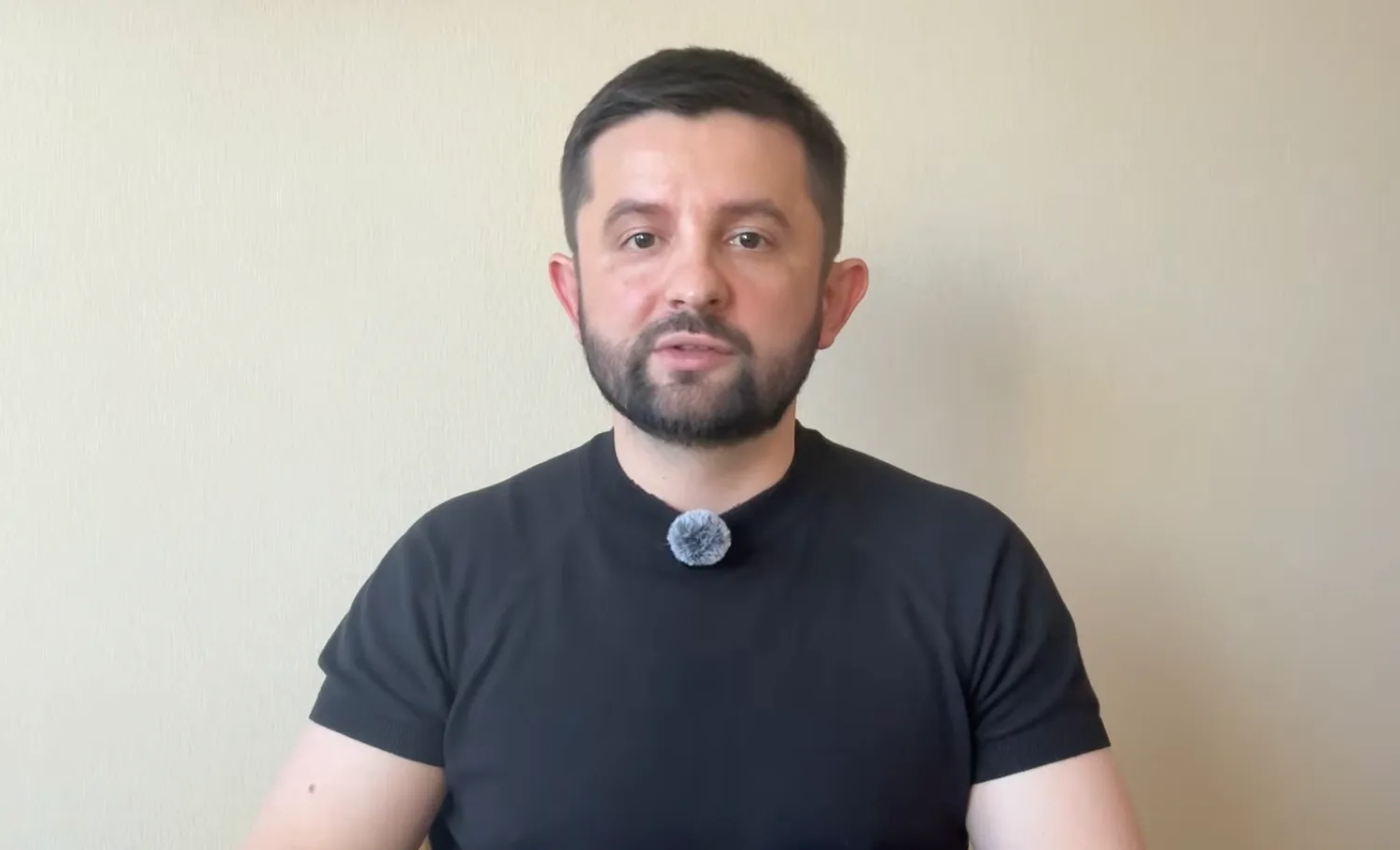
The most interesting thing is that these words come not from a lawyer, a scientist, or an independent expert in the field of medical law, but from a person who is himself in the dock in a criminal case regarding the improper performance of professional duties by a medical worker.
Formally, the video is dedicated to the American experience and the idea of decriminalizing medical errors in Ukraine. The accused Odrex doctor talks about the professional liability insurance system, civil lawsuits, and compensation mechanisms in the US. In itself, this subject is a legitimate topic for public discussion.
However, in Rusakov's performance, the topic takes on a completely different context. The format of the video—a so-called "educational vlog"—allows the Odrex doctor to avoid direct statements about his own case. He seems to be speaking in general terms. But the audience familiar with the context of his criminal proceedings reads between the lines.
Almost the entire video is built around the thesis that doctors become victims of groundless persecution. Thus, an abstract conversation about legislation gradually turns into the formation of an image of a "doctor-victim" who is unfairly persecuted by the system.
Rusakov devotes a separate block of the video to the assertion that influential or wealthy relatives of a deceased patient are capable of organizing a campaign against a medic. He speaks of allegedly "bought expertises," "contracted media," and the "psychological destruction" of the doctor. These are quite serious accusations against the law enforcement system, expert institutions, and the media. However, Rusakov provides no evidence of the existence of such a conspiracy in his video.
Instead, such rhetoric from the accused doctor has another goal—it pre-emptively creates an explanation for any development of events unfavorable to the defendant. If the court finds the doctor not guilty, it will be proof of unfair persecution. If the court establishes guilt, one can always refer to a "contracted job," "influential relatives," or "pressure from the system." This is why such statements look more like an element of public defense than an impartial expert discussion.
However, Rusakov's final thesis looks the most absurd. According to him: "A doctor's error is a financial responsibility, not a criminal one." In fact, the doctor proposes a model in which even the severe consequences of medical negligence should be handled through a mechanism of monetary compensation.
Such a position raises legitimate questions. After all, if a patient dies as a result of a gross violation of treatment standards or neglect of duties by a medic—is financial compensation enough? This is exactly the logic promoted by a person who currently holds the status of a defendant in criminal proceedings regarding the death of a patient.
It seems that in his video blogs, Rusakov is increasingly trying on the role of a legal commentator, although he has neither a legal education nor the status of an independent expert in the field of medical law. At the same time, his explanations of how the Ukrainian legal system works may appear overly simplified and sometimes manipulative.
In reality, Ukrainian legislation clearly distinguishes complications from professional negligence. And the mere fact of a patient's death is not an automatic ground for the criminal liability of the medic who was responsible for their treatment. For this, it is necessary to prove a violation of treatment standards, establish a causal link between the doctor's actions and the consequences for the patient, and obtain relevant conclusions from specialized expertises. Therefore, the claim that a doctor can be prosecuted virtually only because of the dissatisfaction of a patient's relatives simplifies the actual procedure and may mislead the audience regarding how investigations into cases of possible medical negligence actually work.
As a reminder
Odrex clinic doctor Vitaliy Rusakov and the already dismissed Maryna Belotserkovska are defendants in criminal proceedings under Part 1 of Article 140 of the Criminal Code of Ukraine—improper performance of professional duties by a medical worker.
According to the investigation, after surgery at the Odrex clinic, the medics may have failed to prescribe the necessary antibacterial therapy to patient Adnan Kivan and failed to respond properly to postoperative complications. The investigation believes this could have led to the development of sepsis and the patient's death.
At the same time, in recent months, the consideration of the case has been repeatedly postponed due to procedural steps by the defense. In particular, the doctors' lawyers initiated a change of jurisdiction for the proceedings, which meant the consideration effectively had to start over in a different court. During the first preliminary hearing at the Kyivskyi District Court of Odesa, the defendants' lawyers failed to appear in court, resulting in the hearing being adjourned.
Lawyers and forensic experts do not rule out that such procedural actions may delay the consideration of the case and deliberately bring it closer to the expiration of the statute of limitations, so that the Odrex doctors can avoid responsibility despite all available evidence. The final assessment of the actions of the defendants and their lawyers must be provided by the court.
Meanwhile, Rusakov is engaged in active public activity, regularly commenting on the progress of the case in his own interpretation. Earlier, UNN already noted that such activity may be an attempt at public PR regarding the death of his patient.