










Breach of medical confidentiality: Odrex doctor, on trial for medical negligence, revealed details of his deceased patient's treatment
Kyiv • UNN
Vitaliy Rusakov, a doctor at the Odrex clinic who is on trial for medical negligence in the case of Adnan Kivan's death, publicly disclosed details of the patient's treatment in his video blog. Lawyers believe that such actions may indicate a breach of medical confidentiality and the constitutional right to privacy.

Vitaliy Rusakov, a doctor at the Odrex clinic accused in the case of businessman Adnan Kivan's death, decided to share his own interpretation of events through a YouTube vlog. It turned out to be not only emotional but also potentially illegal – in the video, he publicly disclosed details of the patient's treatment and information related to the course of the illness. Read why this could be a violation of medical confidentiality and the law in the UNN material.
Vitaliy Rusakov, a doctor at the private clinic Odrex, accused in criminal proceedings under Part 1 of Article 140 of the Criminal Code of Ukraine, published a video blog in which he presented his version of events in the case of alleged medical negligence that may have led to the death of businessman Adnan Kivan.
However, instead of a balanced position from a participant in the judicial process, viewers received a rather emotional monologue with medical details that are inherently confidential. It appears that the doctor independently disclosed information outside of court that, in a normal legal reality, should not be publicly discussed at all.
Unfortunately, after the sixth course of chemotherapy for an oncological disease, a complication occurred, which is the cause of death for over 50% of such cancer patients. It is confirmed by all studies in the clinic and fully corresponds to data, evidence-based medicine. I sincerely hoped that his exhausted and tired body would cling to life one more time.
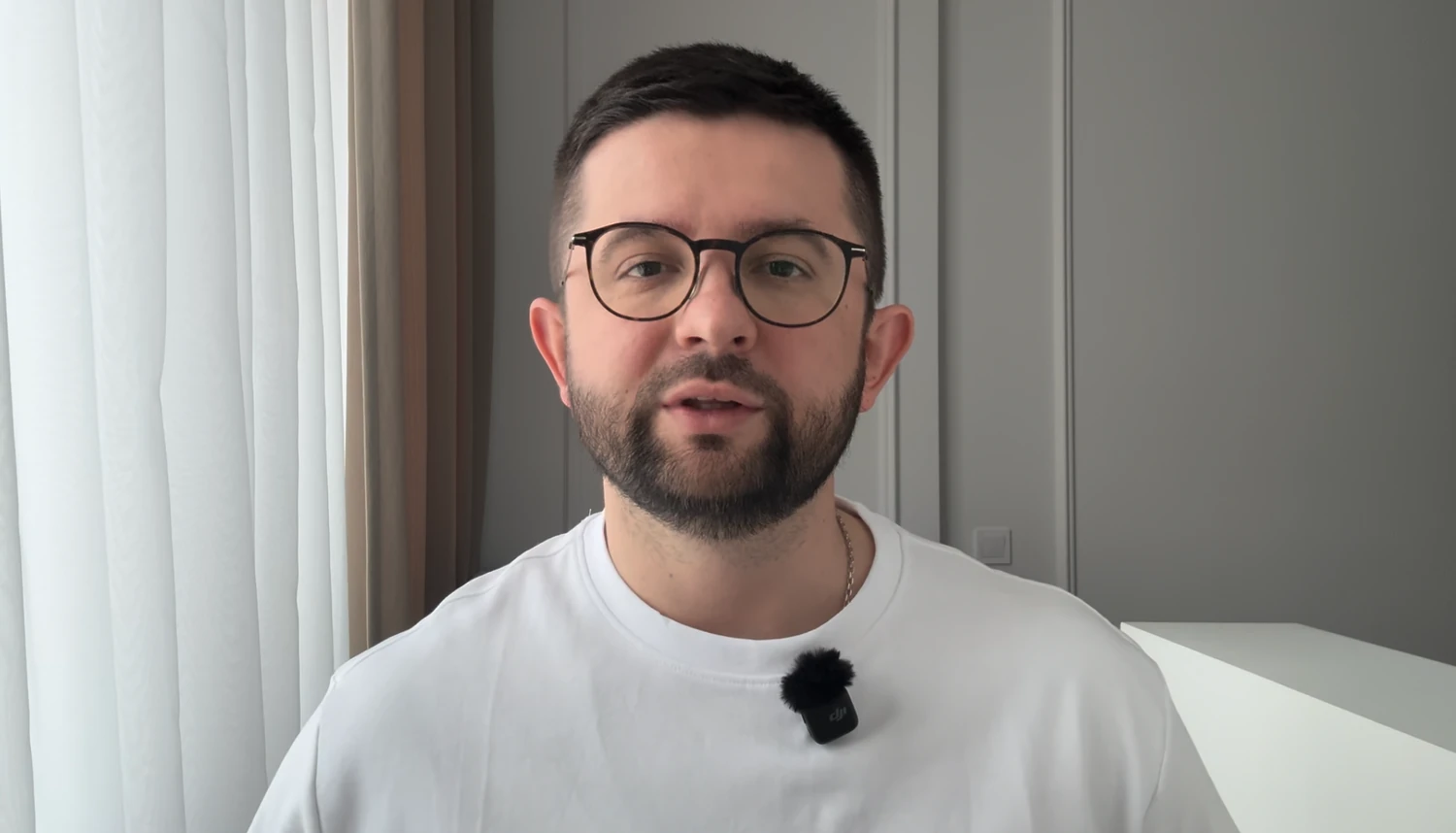
photo from Vitaliy Rusakov's YouTube channel
And here arises a key question: did the doctor have the right to voice this at all? In short – no. And in longer terms – this is not just an "emotional comment," but a potential violation of several legal norms at once. And what is important, not some secondary ones, but basic guarantees enshrined at the level of the Constitution of Ukraine.
As medical lawyer Dmytro Kasianenko explained in an exclusive comment for UNN, any data about a patient's health status is medical confidentiality, and its protection is systemic and comprehensive.
Data on health status, diagnosis, treatment, medical interventions, and the very fact of seeking help constitute medical confidentiality. This is protected by Articles 39-1, 40 of the Fundamentals of Ukrainian Legislation on Healthcare, Article 286 of the Civil Code of Ukraine, and Article 32 of the Constitution of Ukraine. The fact that a doctor is an accused does not give him the right to publicly disclose medical details outside the scope of procedural defense in court. If a doctor publicly voices such data without proper legal grounds, it can be considered a violation of medical confidentiality. And this is already a separate legal problem with possible consequences – from civil liability to Article 145 of the Criminal Code of Ukraine.
And this position is not unique. Lawyers working with medical cases agree on one thing: public statements by a doctor disclosing details of a patient's treatment and health status are not "personal opinion," but a direct transgression of the law.
Moreover, in the professional community, such actions are assessed quite unequivocally: the right to defense does not mean the right to disclose confidential information. And the status of an accused does not grant "indulgence" to ignore basic norms – neither ethical nor legal. This is emphasized by Ihor Kulykov, a lawyer specializing in criminal law at Prikhodko & Partners Law Firm, who stresses that the boundary of what is permissible in such cases is clear and long-established by law.
Every person has the right to defense and to their own position in the public space. But for a doctor, there is a very clear legal boundary – medical confidentiality. The law protects information about a patient's health status, diagnosis, examinations, and course of treatment. If medical details are disclosed during public appearances without proper legal grounds or without the consent of the patient's family, this may be considered a violation of medical confidentiality.
Thus, the situation appears quite paradoxical: while the court tries to limit the disclosure of medical data in the courtroom to protect the privacy of the deceased patient, one of the accused, without hesitation, makes this same data publicly available – in the format of a video blog.
This concerns criminal proceedings opened under Part 1 of Article 140 of the Criminal Code of Ukraine (improper performance of professional duties by a medical worker, which could lead to the patient's death), which is being considered by the Primorsky District Court of Odesa. Two medical professionals are involved in the case: surgeon Vitaliy Rusakov and oncologist Maryna Bielotserkovska. Their actions are the subject of judicial review.
According to the investigation, after surgery at the Odrex clinic, patient Adnan Kivan was not prescribed the necessary antibacterial therapy, and complications were not properly addressed. As a result, sepsis developed, which, according to expert conclusions, could have caused death. The next court hearing in the case is scheduled for April 13.
Recall
The UNN editorial office has already analyzed Vitaliy Rusakov's video blog. And the issues there are not only about a possible violation of medical confidentiality. In addition, his public rhetoric shows signs of outright disrespect for the court – from criticism of procedural decisions to personalized accusations against Judge Larysa Pereverzieva.
Also noteworthy is the manipulative presentation of information: complex legal and medical aspects are simplified to the level of "they prevent me from telling the truth."
And, finally, the main thing is the format. Because when a case about a patient's death is presented in the form of a video blog with emotional inserts and calls to subscribe to the channel, a logical question arises: is this still defending one's honor or already a personal media project?
It seems that in this story, the doctor increasingly acts not as a defendant in a court case, but as a content creator who tries to monetize a criminal case about the death of his patient and gain benefits in the form of popularity. And if this is indeed the case, then the price of such "content" seems too high – after all, it is not about an abstract topic, but about the death of a patient and trust in medical professionals in general.