










How to properly store food and supplies at home in the heat without electricity and water
Kyiv • UNN
Due to Russian shelling and the heat, hourly blackouts are being implemented in Ukraine. UNN reported how much water supply a family needs and how to store food without a refrigerator.

In many regions of Ukraine, due to Russian shelling and abnormal heat, hourly power outages are being implemented. Therefore, the question of how to keep food fresh and avoid food poisoning at temperatures above +34 degrees, without a refrigerator and often without water supply (because without electricity, electric pumps in multi-story buildings do not work) has become urgent again for Ukrainians. After all, water in dirty containers spoils, and food without a refrigerator can cause poisoning.
UNN has found out what minimum food supply you need to have at home, how to properly store water, and what to do with products during prolonged power and water supply outages.
What water supply is needed for an average family
First of all, you need to separate drinking and technical water. Drinking water is needed for consumption, cooking, and taking medicine. Technical water is for washing hands, dishes, cleaning, flushing the toilet, and other household needs.
The approximate norm for one adult is at least 3 liters of drinking water per day. For hygiene and cooking, you should provide at least another 10-12 liters per day. It is advisable to form a minimum home supply for at least 72 hours. For a family of three, this is approximately 27 liters of drinking water for three days, not including technical water.
How to properly store water in the heat
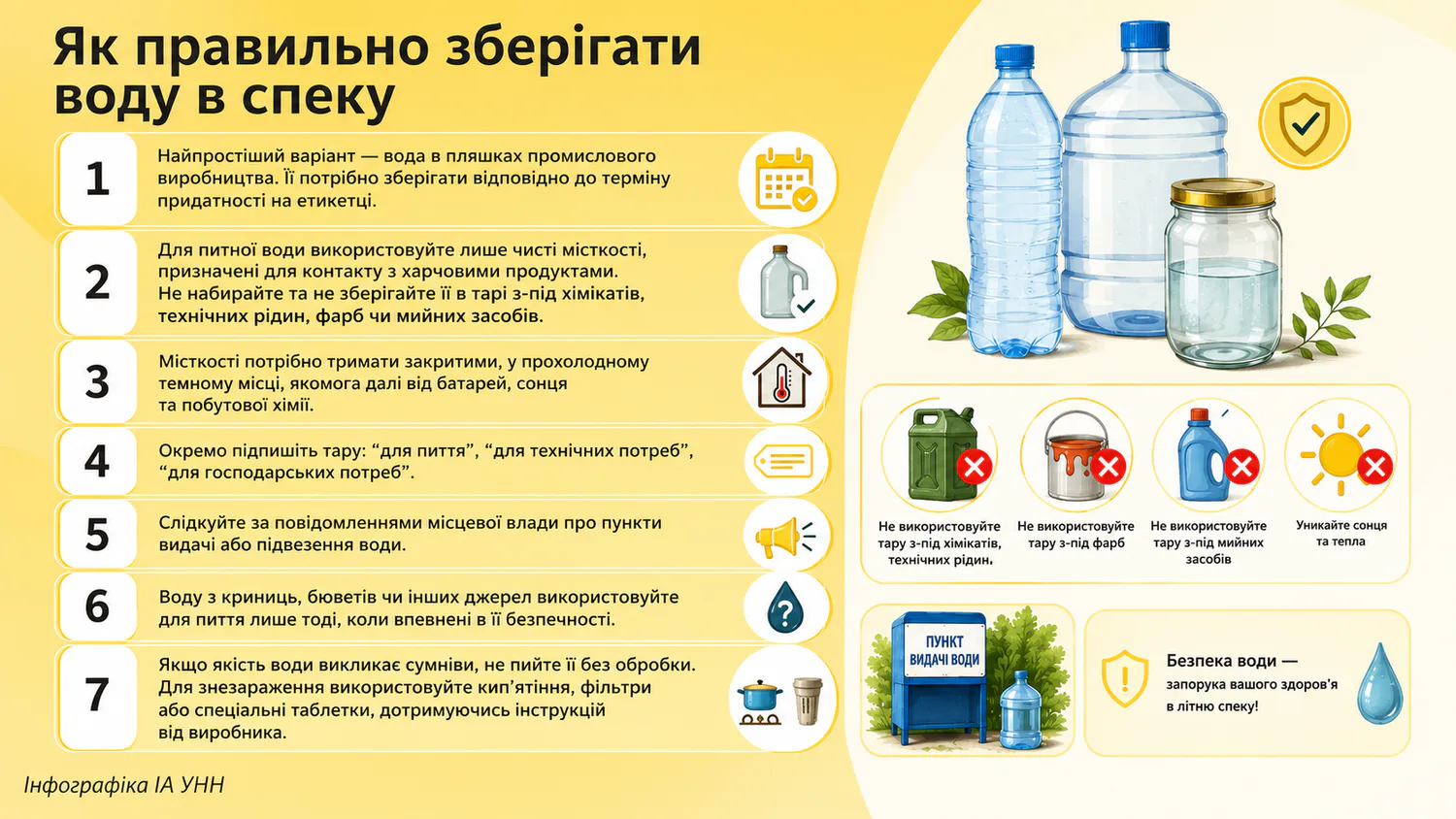
The simplest option is industrially produced bottled water. It should be stored according to the expiration date indicated on the label. If you collect water yourself, the container must be thoroughly washed, and the water itself must be regularly renewed.
For drinking water, only clean containers intended for contact with food products should be used: food-grade plastic bottles, glass jars, or undamaged enameled dishes. Do not collect or store drinking water in containers that previously held chemicals, technical fluids, paints, or detergents.
Containers should be kept closed, in a cool, dark place, as far as possible from radiators, sunlight, and household chemicals. It is worth labeling the containers separately: "for drinking," "for technical needs," "for household needs."
If there is not enough drinking water, you should monitor local authorities' announcements about water distribution points or water deliveries. Water from wells, public fountains, or other alternative sources should only be used for drinking when you are sure of its safety.
If the quality of water is questionable, it should not be drunk without treatment. At home, boiling, filters, or special disinfection tablets can be used to treat and disinfect raw water. In the latter case, you must strictly follow the manufacturer's instructions.
How to store food without electricity in summer
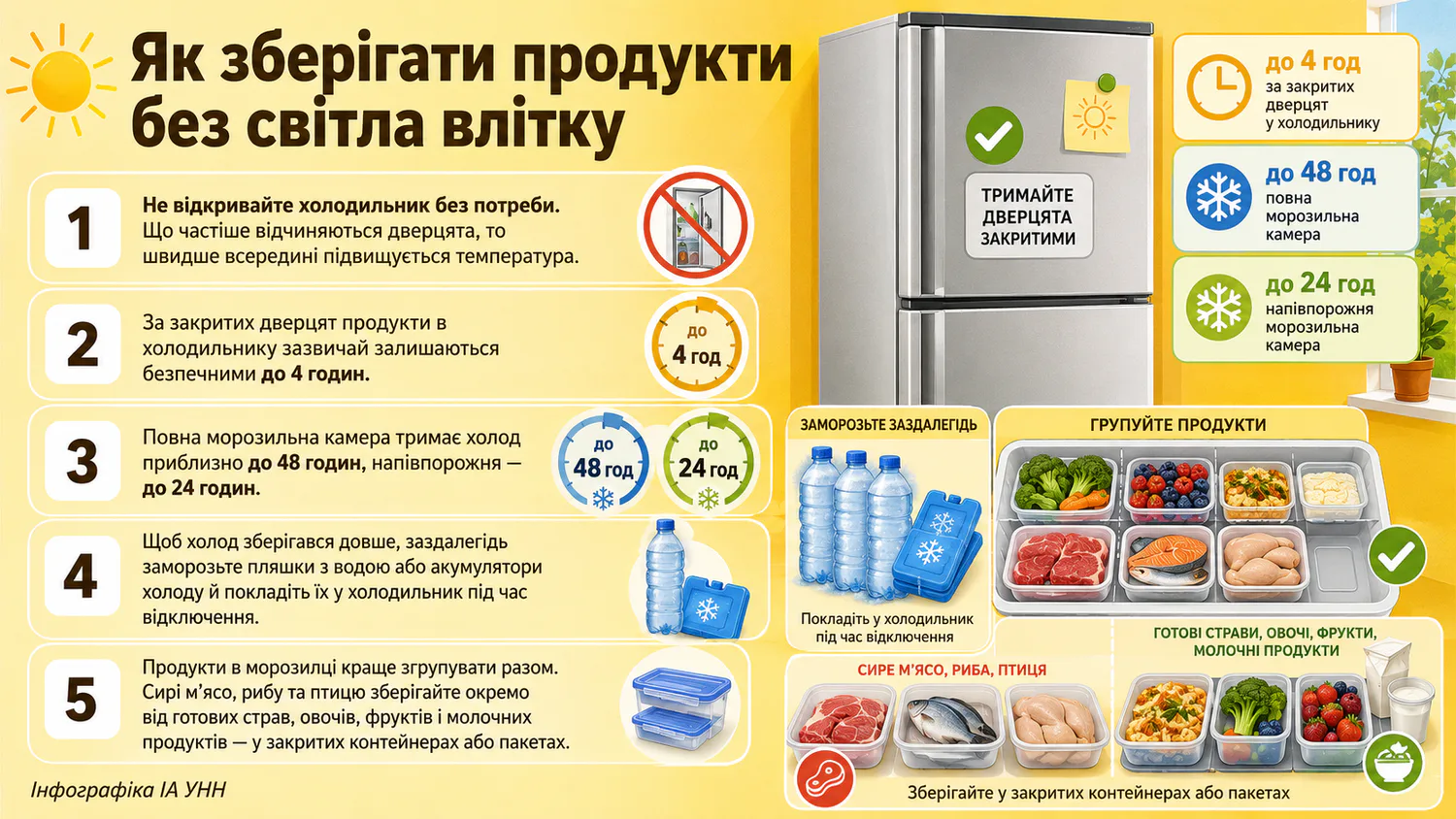
The main rule during a power outage is not to open the refrigerator unnecessarily. The more often the door is opened, the faster the temperature inside rises.
With the door closed, food in the refrigerator compartment usually remains safe for up to 4 hours. A full freezer can maintain temperature for approximately up to 48 hours, a half-empty one for up to 24 hours. To keep the cold longer, you should freeze water bottles or ice packs in advance and put them in the refrigerator during the outage.
It is better to group products together in the freezer. Raw meat, fish, and poultry should be stored separately from ready-to-eat meals, vegetables, fruits, and dairy products, preferably in closed containers or bags.
Which foods to eat as soon as possible in the heat, and which to keep in reserve
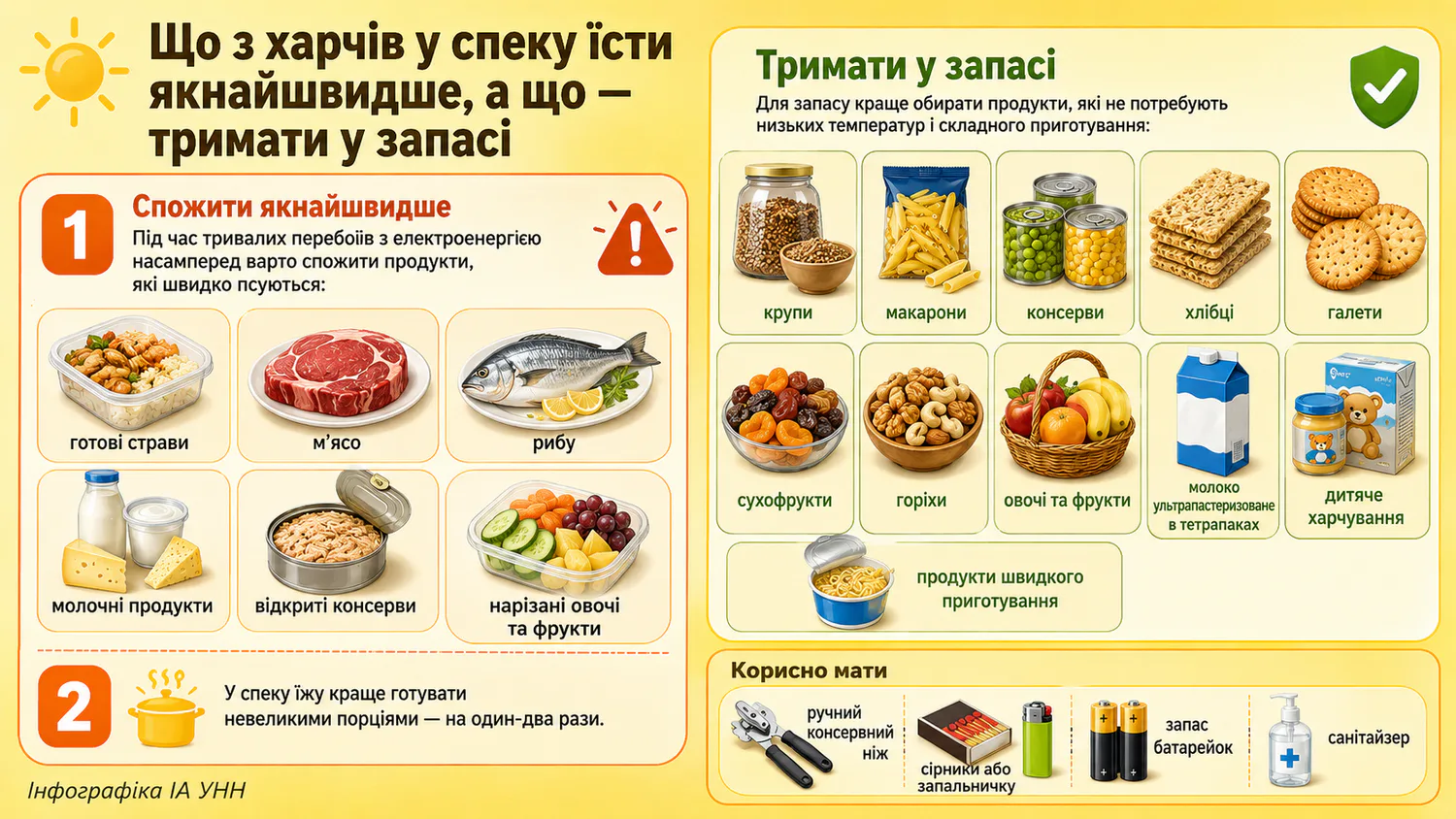
During prolonged power outages, you should first consume products that spoil quickly:
- ready meals;
- meat;
- fish;
- dairy products;
- opened canned goods;
- cut vegetables and fruits.
During this time, it is better to cook food in small portions for one or two meals.
For a reserve, it is better to choose products that do not require storage at low temperatures and complex preparation:
- cereals;
- pasta;
- canned goods;
- crispbreads;
- crackers;
- dried fruits;
- nuts;
- vegetables and fruits;
- ultra-pasteurized milk in Tetra Paks;
- baby food;
- instant foods.
It is also worth having a manual can opener, matches or a lighter, a supply of batteries, and hand sanitizer.
When and which products are better to throw away
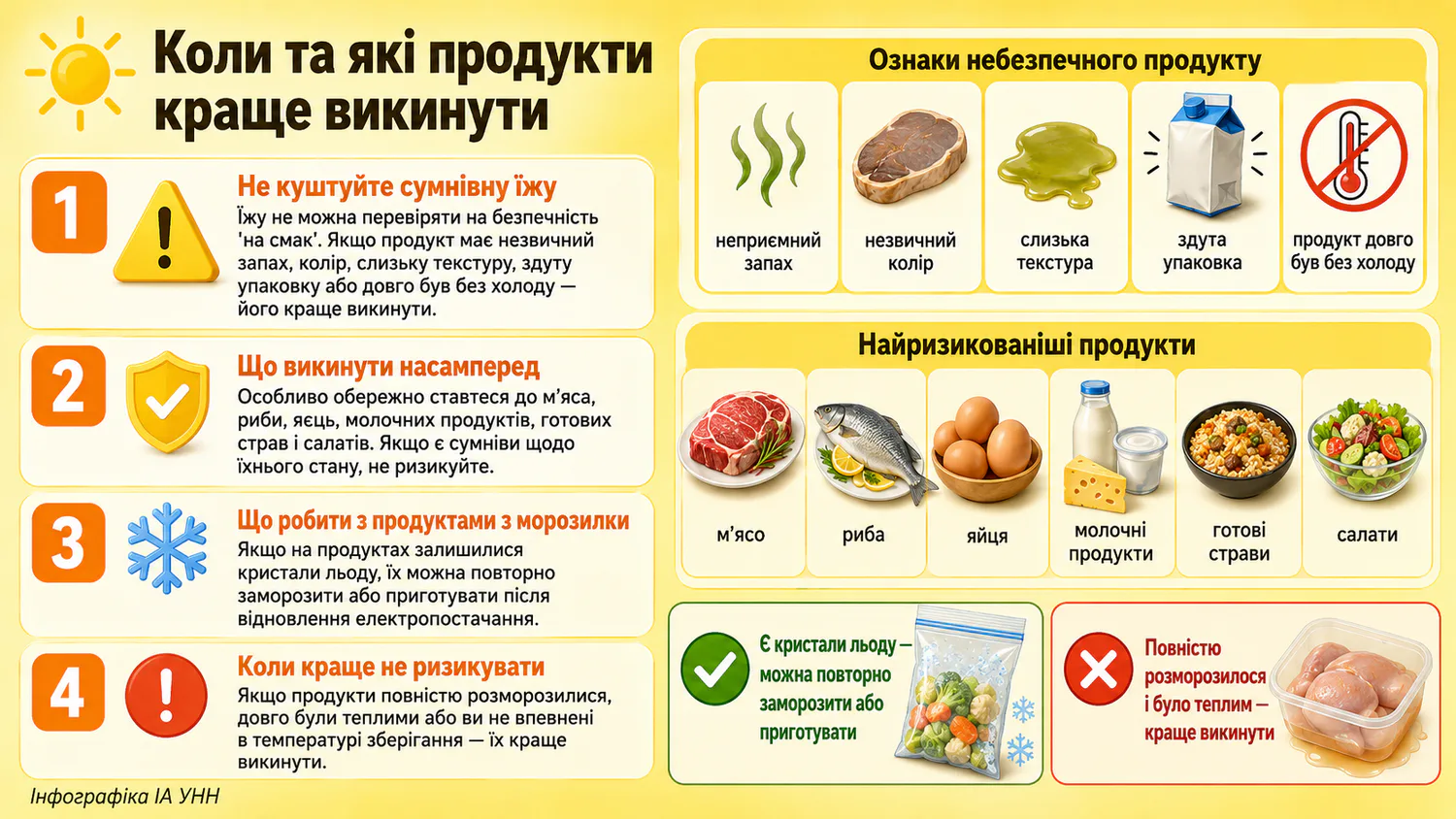
Questionable food should not be tasted "for checking." If a product has an unusual smell, color, slimy texture, swollen packaging, or has been stored without refrigeration for a long time, it is better to throw it away. This especially applies to meat, fish, eggs, dairy products, ready meals, and salads.
If ice crystals remain on products in the freezer, they can be refrozen or cooked after the power supply is restored. If the products have completely thawed, have been warm for a long time, or there are doubts about the storage temperature, it is not worth the risk.
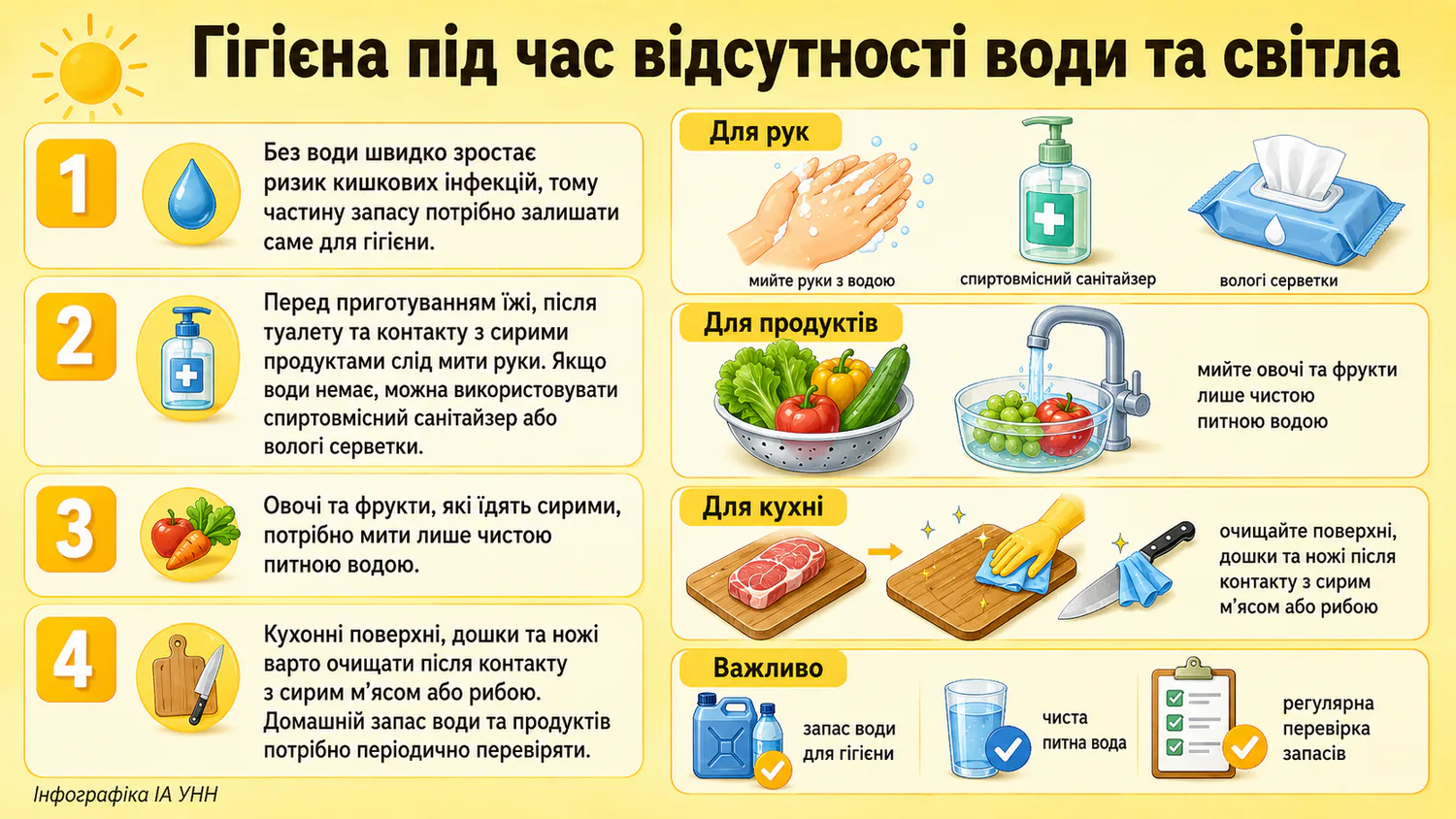
Hygiene during the absence of water and electricity
Without water, the risk of intestinal infections increases rapidly, so part of the supply should be reserved specifically for hygiene. Hands should be washed before preparing food, after using the toilet, and after contact with raw products. If there is no water, you can use an alcohol-based hand sanitizer or wet wipes.
Vegetables and fruits that are eaten raw should only be washed with clean drinking water. Kitchen surfaces, cutting boards, and knives should be cleaned after contact with raw meat or fish. The home supply of water and food should be checked periodically: renew the water and monitor expiration dates.
Reminder
Earlier, the Center for Public Health, against the backdrop of prolonged power outages in winter, explained to Ukrainians the rules for storing food to avoid poisoning.